There are a lot of things to love about Field Day.
Noise on the air isn’t one of them.
But like many aspects of amateur radio, finding the ideal ways to manage RFI on Field Day gives us the opportunity to flex our problem-solving muscles and tackle challenges that can make us better hams.
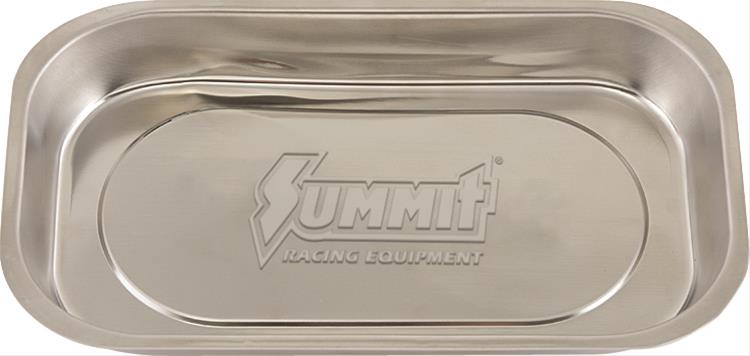
Remember how excited Ralphie’s “Old Man” gets when he needs to fix a flat tire in a “Christmas Story”? For those who approach amateur radio curveballs with the same enthusiasm, Field Day is like Christmas in June. But don’t forget a magnetic tray to keep your antenna hardware in place:

Also read about “Christmas Story” narrator/author, radio personality, humorist, and ham Jean Shepherd, K2ORS (SK), in this article.
Before we get into today’s post (Part 4 of our prepping for ARRL Field Day 2026 series), here are some resources from OnAllBands’ archive of Field Day articles regarding ways to deal with RFI. Click on the links below for insights on how to get the most out of the big weekend, June 27-28, 2026:
- “Noise Management on Field Day”
- “RF Management in the Field”
- “Minimizing Interference on Field Day”
- “Setting Up Multiple Antennas? Four Tips on Avoiding Interference”
Also, check out this excellent article from the May 2026 issue of “QST” magazine by Conrad, N2YCH, “Station Setup Techniques to Prevent Field Day RFI.” The article features Tim Duffy, K3LR, DX Engineering CEO, who noted, among other advice, the importance of having an “RF-quiet environment” and following the guidance of Ward Silver, N0AX, in his book, ARRL’s “Grounding and Bonding for the Radio Amateur, 2nd Edition.”

If you’re not sure of what’s best for your setup, another great resource is the team at DX Engineering—operators who have spent a lifetime mitigating noise issues on Field Day. You’ll also find an array of products at DX Engineering designed to help you make Field Day operating as successful as possible.
DX Engineering HF QRP Band Pass Filters
These filters are designed to confine both transmitted and received signals to one specific amateur band. They significantly reduce out‑of‑band noise, resulting in a noticeably lower noise floor and improved weak‑signal reception. Each filter features a sharp roll‑off just outside the band edges, providing exceptional rejection of adjacent‑band signals and maintaining maximum operating efficiency for QRP applications.
Offered for 80, 40, 20, 15, and 10 meters, they install easily in line with the coax feedline using the BNC connectors provided on each end. With power ratings of 20W SSB and 5W digital, they are ideal for QRP enthusiasts participating in multi‑operator events such as Field Day, POTA, and SOTA.

Check out this document displaying the response curves of each DX Engineering QRP band pass filter (10M example below).

VA6AM Engineering Band Pass Filters
If pre-event testing reveals your radio has a problem, the noise needs to be filtered at the transmitter. This can be accomplished with band pass filters. DX Engineering carries band pass filters from several highly regarded providers, including VA6AM Engineering.
We’ll let Sean, a DX Engineering customer, explain why VA6AM band pass filters may be right for your Field Day setup:
“I have tried cheaper BPFs from other places. These are truly ‘You get what you pay for.’ I have three BPFs from VA6AM: 10, 15, and 20. I have used them independently and also with the multiplexer. They work flawlessly—no detectable interference across bands at all, even from the same antenna. With this setup I can run three radios at the same time to a multiband antenna, like a hexbeam or fan-dipole. It’s a great system—great for Field Day or as we do for multiple people doing POTA at the same time.”

Filters from Pavel, VA6AM, are multi-stage inline passive electronic devices designed to specifically limit the transmitting and receiving RF passband to a single amateur band. They dramatically lower the noise floor for enhanced single-band weak signal reception perfect for DXing, contesting, and Field Day operations. Used individually on monoband radio and antenna combinations, these filters provide the isolation required to eliminate image and harmonic RF interference issues for dedicated monoband operations in multi-radio environments.
Built into durable aluminum enclosures and supplied with SO-239 connectors, these filters boast 60 dB of out-of-band suppression, typical insertion loss of less than 0.25 dB, and return loss of less than 26 dB, equivalent to SWR under 1.1:1.
The filters allow multiple transceivers to be operated on different bands simultaneously on the same antenna with use of a VA6AM HF multiplexer (diplexer: 80/40M; triplexers: 20/15/10M, 80/40/20M, or 160/80/40M). In addition, the VA6AM Split Diplexer covers 20/15/10M and 160/80/40M.
VA6AM 150W PEP band bass filters are available for 160, 80, 40, 20, 15, and 10 meters.


***
Antennas-Amplifiers Band Pass Filters
Also visit DXEngineering.com for monoband (160-10M, including WARC bands and 60M) band pass filters from Antennas-Amplifiers.
Designed for both reception and transmission, the filters boast a low insertion loss and are designed to significantly suppress out-of-band interference. They are enclosed in a robust powdercoated aluminum enclosure and come equipped with silver-plated SO-239 connectors, ensuring minimal SWR and high attenuation of out-of-band signals.

Visit DX Engineering for other band pass filter options: 4O3A XL Series High-Power Band Pass Filters (4,500W 160-6M, including WARC bands) and 200W PEP RF Meca Band Pass Filters (160-10M, including WARC bands).


Also explore the use of ferrite snap-on beads available in kits at DX Engineering, as well as use of common-mode chokes where the feedline attaches to station equipment. DX Engineering carries its own branded versions of 50-ohm and 75-ohm high CMI receive feedline chokes and models from these and other manufacturers:

Also find ferrite RFI suppression kits at DX Engineering.
Stay tuned. OnAllBands will be featuring more gear to get you fully prepared for Field Day 2026!
The post Guide to Prepping for ARRL Field Day 2026: Part 4, Band Pass Filters appeared first on OnAllBands.
OnAllBands