Editor’s Note: OnAllBands is pleased to post a series of articles written by accomplished amateur radio contester and DX Engineering customer/technical support specialist Kirk Pickering, K4RO. The articles, originally published in the National Contest Journal from 2008-11 and updated with current information, offer valuable insights for both contesters new and old.
***
Spending considerable time tracking down RFI, I was reminded of how important it is to deal with the myriad unintentional radiators in and around the house. Several books have been written about RFI, and I suggest reading up on the subject in detail. I will attempt to cover the basics of finding and fixing RFI problems in the contest station and hopefully give you some idea where to start.
Truly Quiet Band
I remember my first time operating at W4AN, Bill Fisher’s place located in northern Georgia. There was a national forest for miles around, and there was no trace of line noise or other interference of any kind. I’m sure that the great antennas and hilltop location played a large role, but even the weakest of signals seemed to pop up out of an incredibly low noise floor. Bill mentioned something about how quiet things were that night, and how important that was to his station’s success. I remember driving home the day after the contest and wondering just how many of those noise-level QSOs were made possible by the quiet receiving location.
Back home at my own station, a closer inspection was in order. I was surprised to find several types of noise across every HF band. I heard power line noise, with its characteristic buzz. It was centered around harmonics of 60 Hz and often covered entire bands. There were little “birdies” and whistles which appeared at regular intervals across an entire band or even several bands. Lots of nice juicy frequencies were made completely unusable by warbling tones that wandered up and down the band, covering 3-5 kHz wherever they happened to land at the moment. Compared to W4AN’s place, half of my usable band segments were essentially useless, littered with all kinds of noise. Where was I to begin?
Editor’s Note: Take a moment to also read this OnAllBands article by Ward Silver, N0AX, “Troubleshooting Hum, Buzz, Crosstalk, and RF Pickup.”
Noise Is Everywhere
It turns out that hunting and eliminating noise sources is an ongoing process which really has no defined end point. With the advent of today’s computerized consumer marketplace, almost every device contains at least one oscillator, plus a noisy switching power supply. Unfortunately, this means that new noise sources continue to appear with each passing month. Population density also plays a role. I have noticed a significant increase in the noise floor where I live. A steady sprawl of housing developments has sprung up around what used to be a semi-rural environment. Each house may contain a dozen or more oscillators—from computers to TVs to cell phone chargers and so forth. It is impractical, if not impossible, to silence every noise source in a neighborhood.
Consider that RFI noise hunting is a bit like peeling an onion. You work on it one layer at a time, starting with the most troublesome sources, then working your way down into the noise floor from there.
Power Line Noise
After listening to all the different noises on the bands, I tried to determine which source appeared to be the worst offender. There was a loud buzzing sound on all of the bands above 10 MHz, and it was wiping out entire bands at a time. After asking some questions and playing the interference to a few of my contesting pals over the phone, the consensus was that I had the dreaded “power line noise” problem. Further reading revealed that this was a fairly common type of interference caused by high voltage arcing, which creates a spark gap transmitter.
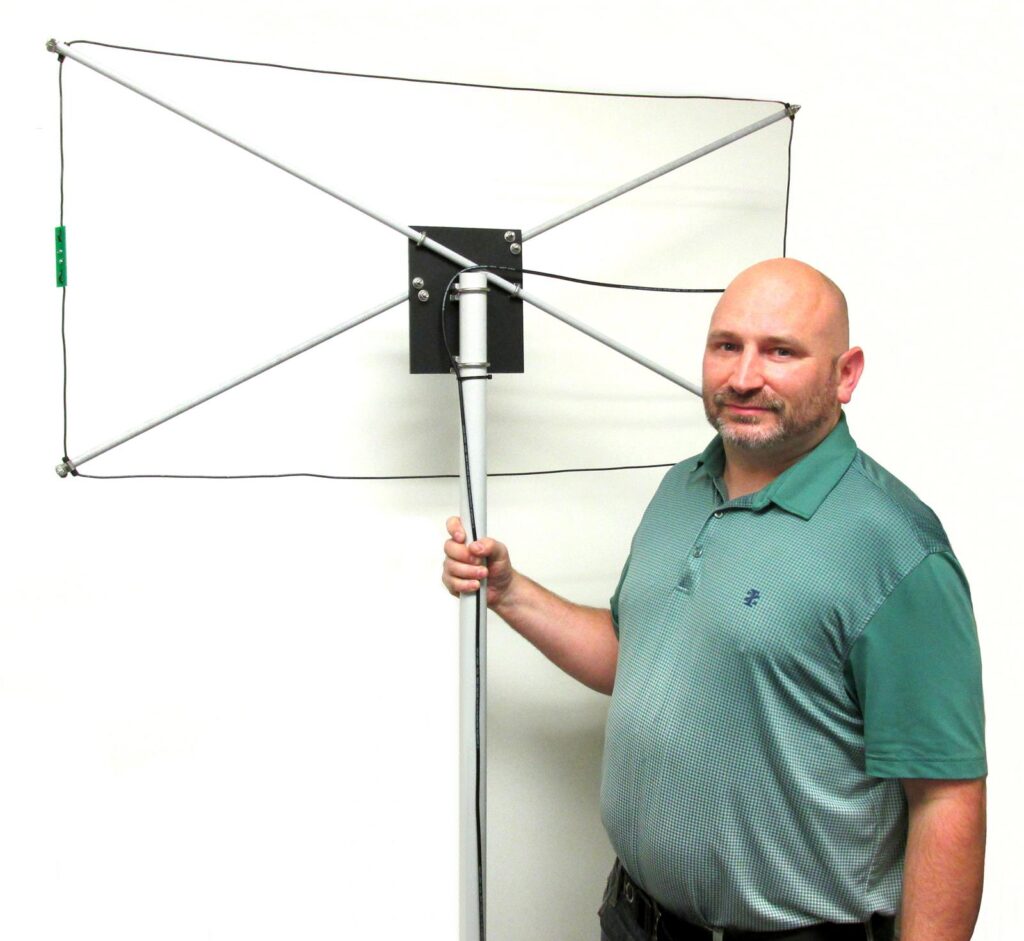
Learning the probable cause was helpful, but I still needed to identify the source. AA4NU came to the rescue with his homebrew 130 MHz Yagi and VHF AM Aircraft receiver. I was able to walk around the neighborhood with the Yagi in search of the noisy telephone pole. (Yes, I still receive strange looks from the neighbors when doing this.) With a little bit of practice, I was able to find areas where the noise seemed to peak and narrowed down the search area to a couple of likely poles. After checking on several successive days, I was convinced it was not just an intermittent issue, and the pole was making a lot of noise every day. The next step was to contact the utility company, ask for their assistance with locating the exact source, then attempt to correct it.
Locally Generated RFI
The second-most troublesome source of interference I heard was a wide band drifting “warbling” sound. The noise was S7 to S9 in strength and covered about 3-5 kHz at a time. The warbles would drift up and down the bands, rendering random frequencies unusable at random intervals. Unfortunately, the interference was not audible at 135 MHz, so the noise-sniffer Yagi was not going to help. By process of elimination, I eventually determined that the noise disappeared when I unplugged the computer monitor.
The best way to determine if a noise is being generated locally within your house is to use a battery-powered radio connected to your antenna system. If your antenna relay system requires power, it will also have to be run from a battery. Shut down all power to the house using the main breaker. Make sure that any UPS or other battery-powered devices are disconnected and powered down. If the interference goes away, then you need look no further than your own home to find the source.
You’ve Got to Find It to Fix It
The two examples listed above are common problems but represent only a fraction of the types of interference sources. The main thing to keep in mind is that locating the source of the problem is the primary objective. I have found that one of the most helpful tools to have available is a handheld receiver covering the frequencies of interest. Several VHF-UHF handie talkies now include wideband HF receivers. The HT can be carried anywhere and be used to “sweep” a room’s electronic devices. When I hear a new RFI source at my station, the first thing I do is grab the handheld receiver and tune it to the same frequency as the interference. Then I go around the house trying to find the source.
An S-meter and attenuator are very helpful to zero in on the source once I get closer. Also, AM mode is a must for tracking down power line noise. New tools are available which allow a visual wideband inspection of noise sources. One of the current experts in the field of RFI sniffing is Don Kirk, WD8DSB. Don has contributed a lot of useful information on solving RFI problems. His work is invaluable.

Fixing the Interference
Once we have successfully located the source of the interference, the next step is to try to cure it. In the case of power line noise, there is not much the contester can do besides enlist the help of the utility company. Do NOT try to climb the pole or use a sledgehammer on it. The best approach is to not touch the pole at all; there could be loose hardware which could pose a safety hazard. Record the pole’s identification number (most have some such marking) and its location. Contact your utility company with the information and give them as much information as you can about the pole and your efforts to locate the problem.
Experience varies greatly from region to region, but forming a helpful alliance is your goal. Courtesy and patience tend to work far better than angry threats and abusive behavior.
In the case of other types of interference, we have a few more options available. Once we have located the offending piece of gear, the most obvious option is to replace the device or just unplug it during contests. Usually this is not an option—especially if the device is part of the contest station or something that other members of the household need to use while you are in front of the radio. The number one cure used by most hams today is some form of common-mode choke, usually constructed from ferrite beads or toroidal cores. Ferrite beads and cores are now available in a large variety of physical configurations and ferrite mixes. A lot of research has been done in this area, and the consensus seems to be that the type “31” Mix is the most useful at HF frequencies.
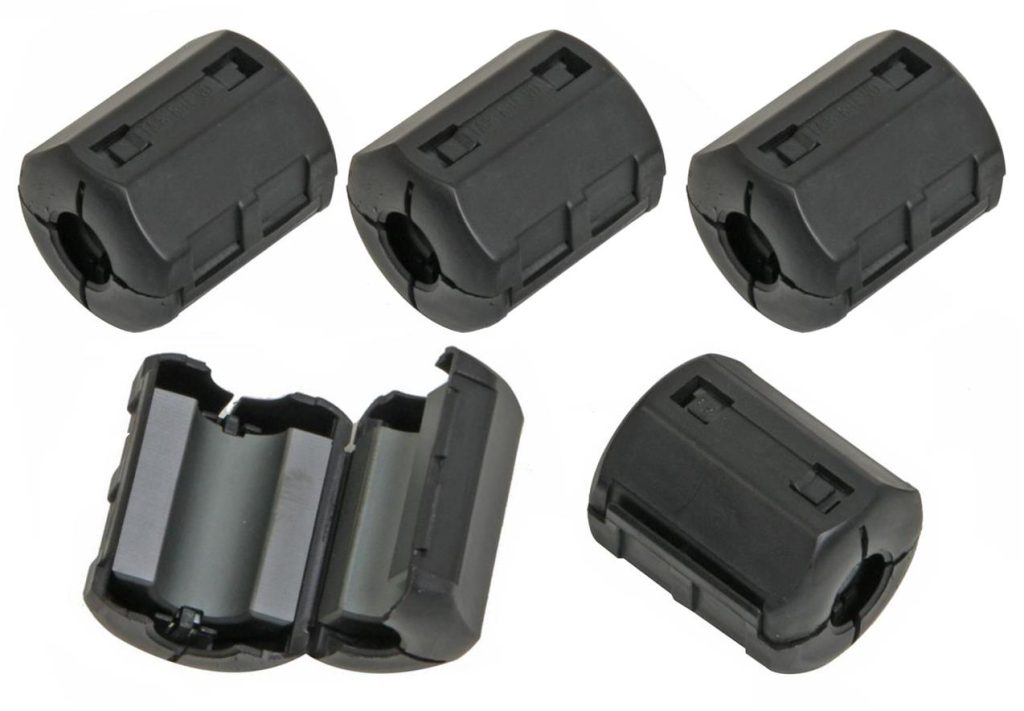
Note that the effectiveness of common-mode chokes at specific frequencies is directly related to the number of cable turns which pass through the ferrite material. The information published by K9YC and W1HIS are required reading to gain an understanding of common-mode chokes and why they matter.
Common Sources
Here are some of the RFI sources I have found over the years:
- Telephone pole arcing insulator
- Telephone pole lightning arrestor
- Track lighting
- Battery charger
- Anything with a switching power supply
- Ethernet routers (especially above 10 MBPS)
- Computers


See you on the bands, and don’t forget to submit your log to the contest sponsor. It helps you, helps the sponsor, and helps the sport of contesting.
The post Contesting 101: Radio Frequency Interference and the Contest Station appeared first on OnAllBands.
OnAllBands