Plus, check out Route 66 collectibles you can add to your garage or shack!
***
Kerchow!
This year marks the 100th anniversary of Route 66, the legendary 2,400-mile highway connecting Chicago and Santa Monica, California. To commemorate this milestone, the Citrus Belt Amateur Radio Club (W6JBT) in San Bernardino is hosting an operating event to celebrate a century of burned rubber since the road was established.
Route 66 On The Air, now in its 27th year, runs from Sept. 12-20 and will feature more than 20 amateur radio clubs situated along the historic route using 1×1 call signs. Visit the W6JBT website for more details as they become available for the 2026 event.
Last year, the event featured a unique aeronautical rover station (using the W6Y call sign). Bill Hartsell, N3WSH, flew his Cessna from Chicago to Santa Monica, allowing ground-based ham radio operators the opportunity to make contact with the plane mid-flight.
Because of high traffic on the airwaves, operators are asked to keep transmissions short and avoid prolonged rag-chewing so everyone gets a chance to make a clean sweep of all available stations.
A Look Back
The event serves as a way for ham radio operators to “relive the ride” and celebrate the 100-year journey. With such a storied past, we figured it’d be interesting to once again take a trip down memory road.
Established in 1926, Route 66 was the first major project to link the West Coast with the nation’s heartland. It was known as the “Mother Road” or “America’s Main Street.” While images of old drum up picturesque views of a paved road through the desert, it was actually a mix of dirt, gravel, and paved segments until 1938 when it was completely paved thanks to funds through Great Depression relief programs. Route 66 was the first highway in America to be fully paved.
Route 66’s development was famously documented in John Steinbeck’s “The Grapes of Wrath,” which centered on the Dust Bowl and its impacts on the people living during that time. Many people traveled Route 66 to the West Coast looking for new jobs in the growing industries in California, according to History.com.
When World War II rolled around, Route 66 turned into an industrial and military corridor, moving troops and supplies. This meant motels and merchants saw an uptick in business from servicemen and their families. Route 66 also helped facilitate one of the largest wartime mobilizations ever as the masses used it to flock to Oregon, California, and Washington to join the war effort and get jobs in defense plants, according to the National Parks Service.
Once rationing restrictions were lifted after the war, more people joined in on traveling the historic road. Car ownership grew dramatically with more than 52 million cars registered in 1955, almost 30 million more than what was registered at the end of the war. Hey, people wanted to hit the road—especially since Disneyland had opened in California in July 1955. Back then it offered five themed lands with 20 different attractions.
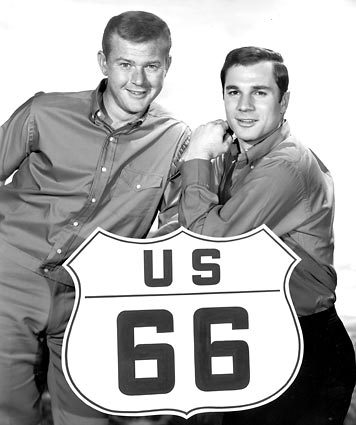
Of course, the route was immortalized in Bobby Troupe’s “Route 66” song and the TV show of the same name. The show was about two down on their luck men working odd jobs as they looked for adventure on the road. But this success and popularity would be short lived because the same powers that made it into a popular road trip destination were the same that sent it into decline. President Eisenhower signed the Federal-Aid Highway Act of 1956—a new network of five interstate highways (I-55, I-44, I-40, I-15, and I-10)—that would be built over the next three decades.

By 1984, the new interstates were completed, and Route 66 was officially decommissioned. While the route led through several smaller towns, connected using backroads, the interstates were designed to let people travel far distances in a short amount of time. There was no real need for it anymore, despite its connection to several important eras in American history.
That connection is what led advocates to fight to keep it alive, and six years later, Congress passed the Route 66 Study Act of 1990. This law recognized Route 66 as a symbol of American heritage—a physical representation of those who traveled it to find better lives for themselves. A special resource study was conducted by the National Park Service and eventually led to the creation of the National Park Service Route 66 Corridor Preservation Program, which helped local individuals, agencies, nonprofits, and others preserve the route, according to the National Park Service.
Route 66 was thrust back into the spotlight in 2006 when Pixar released its mega-hit movie “Cars.” It centered around professional race car Lightning McQueen and his struggles to make the final race of the season while being stuck in a small town on Route 66. Voiced by Owen Wilson, McQueen’s most notable line is his catch phrase, “Kerchow!” The movie unexpectedly gave an adrenaline shot to the many small towns seemingly abandoned along Route 66. Many of them embraced the movie, painting murals and heavily featuring the characters in their towns. A new wave of tourism from fans of the movie came in as well, helping to keep the towns afloat.
In 2008, Route 66 was listed on the World Monuments Watchlist, which marks monuments that are endangered. And work continues to this day to preserve the magic that the road once brought to millions of people either looking for a new life in the west, working to ensure the protection of our country, or vacationing with loved ones.
Celebrate the 100th Anniversary with Summit Racing
Summit Racing, DX Engineering’s parent company, has cool Route 66 collectibles you can enjoy while you’re busy contacting stations along the route:


Enter “Route 66” at SummitRacing.com for more blasts from the past!
The post Get on the Air to Celebrate 100 Years of Route 66 appeared first on OnAllBands.
OnAllBands