Let’s talk about assembling a POTA station on a budget. This won’t be an article about how to assemble a station using old computer parts or twigs and berries. Rather, it’s about assessing what’s actually needed to get you started in portable operations without breaking the bank.
It’s true that a trip to DX Engineering can be therapeutic, but that’s not always possible. So, we need to work with what we have available. As I’ve said in previous articles, the best POTA station is sometimes that station you already have. But what if you don’t have a station that can work in the field? Well, let’s assemble one.
The Transceiver
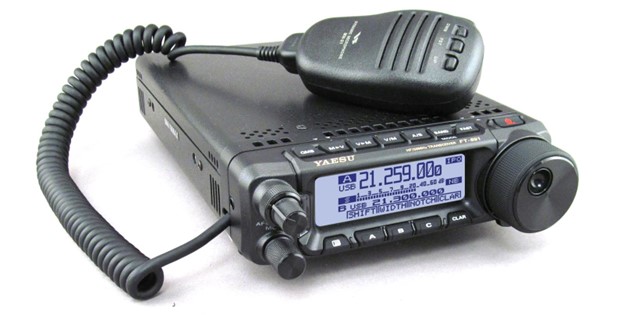
Since the rig is what you’re going to spend the bulk of your money on, let’s start there. The Yaesu FT-891 is a popular rig for POTA. At just under $700 new, it’s within the budget of most amateurs. You can save further by searching for one on the used market. My most recent one came from a local ham for $400. I consider the FT-891 to be a perfect rig for POTA, and I found myself returning to it for most activations even after using another good rig. One feature I love is the voice and CW memory, which is a real plus when calling CQ.

If you’d like to jump into QRP (5-10W) exclusively, a Google search will help you find options that will get you on the air on a budget.
There’s an extensive number of older used solid-state radios out there at $300 or less. Check with your local club members, hamfests, or swap and shops. For instance, a couple of Kenwood TS-140S’s sold recently for $150 each here in northeast Ohio. Over the last 40 years, there have been a lot of solid-state rigs produced which would be a great choice for anyone looking to hit the field. These radios usually don’t have computer control or DSP, but they’re still good portable rigs. If you operate CW, you may want to find one with the CW filter installed. This was an add-on feature for a lot of the older rigs.
A lot of these older rigs are heavier as well. Take the Kenwood TS-140S, which weighs around 13.5 lbs. Compare it to the FT-891 at just over 4 lbs., or the Xiegu G90, which is a bit lighter at 3.6 lbs. This will be relevant if you are planning to backpack on an activation.

Power
Having the rig for an activation is great, but you need a way to power it. In the long term, some source of 12-volt power is a must-have. LiFePO4 (Lithium Iron Phosphate) batteries are the perfect power source for POTA activations. One of my go-to batteries is a Bioenno Power 12Ah. It supplies plenty of power for my adventures and is light and long-lasting. If it doesn’t fit in your budget, that battery you’ve “borrowed” from your lawn tractor will get you going in the short term.

Feedline
Feedline is a part of your station you really shouldn’t scrimp on, but there are ways to save money. Most experienced activators will tell you that DXE 400MAX (which is a popular feedline for the home station) is an overkill for stations in the field. RG-8X feedline is an excellent option in those scenarios; it’s small and relatively low loss.
Taking it a step further, I’ve been playing recently with DX Engineering’s Hi-Viz Orange RG-174 feedline. It’s cheaper and more flexible. The loss is higher than RG-8X, but this shouldn’t be an issue for most POTA operations. Our activations normally use shorter runs of cable, so the loss is negligible. My feedline length is normally under 40 feet if I’m operating picnic-table portable and less than 20 feet if I’m operating from the cab of my truck. RG-174 will handle 100 watts at up to 150 megahertz. Since I rarely exceed 30W, this is perfect for my style of operating.

Antennas
Antennas are where you can really save some money when assembling your POTA station. There are a lot of antennas out there with prices into the hundreds of dollars, and I’ve heard that they work well. But assembling a station on a budget doesn’t mean taking out a loan. Let’s look at some lower-cost options; some are homebrew, some aren’t. My recommendations for budget-friendly POTA antennas are some sort of dipole or end-fed half-wave (EFHW) antenna.
The EFHW antenna is simple, works well, and fits easily in your go bag. Whether you want to build one or get to activating right out of the box, there are plenty of options out there.
I’m going to start off with a couple dipoles that I’ve recently written articles on: the linked dipole and the simple dipole. Either antenna can be built for well under $40 and will get you on the air in an afternoon.
One in particular that I plan to try soon is the Spooltenna EFHW4010. It handles 100W SSB and 50W CW/Digital. Michael, KB9VBR, did a YouTube review on this one—it looks interesting; simple to deploy and easy to stow.

There are also a few miscellaneous accessories I wouldn’t want to do without:
- For Yaesu radios I highly recommend the Yaesu FH-2 Remote Control Keypad. It’s available new, but there are also some third-party options on the internet that are a little more budget friendly. The FH-2 accesses your CW and voice memories. It does a bit more as well, but for POTA, I enjoy being able to call CQ with the touch of a button.

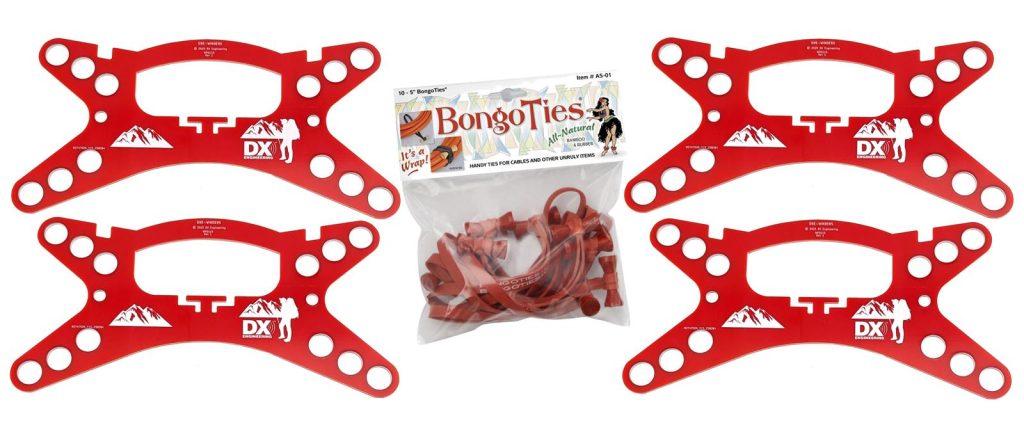
Winders: DX Engineering sells SOTAbeams winders, or you can print your own if you have access to a 3D printer. DX Engineering also offers a set of four of its own winders in a combo with BongoTies tie wraps.
- Rope: Whatever type you choose, keep enough extra in your go box. You’ll never know when you may need that extra length of paracord. Again, bring more than you think you’ll need.
- Throw-Weight: Every POTA activator should have a throw-weight. They are super handy for hoisting lines over trees. Mine is a 14-ounce arborist weight. Not all parks will allow you to hoist antennas into trees, so make sure to check with park officials about your plans.

Remember, don’t wait for the perfect gear; that’ll keep you stuck at home. Just get out there, put that station on the air, and go activate something.
73 DE WG8X
The post Ham Radio Portable Operating Insights: Assembling a POTA Station on a Budget appeared first on OnAllBands.