Here in Ohio, the weather is often unpredictable, with rapid shifts between seasons. We have a saying, “If you don’t like the weather, wait five minutes.” We often joke about experiencing all four seasons in one day—and occasionally twice before lunch. But we’re not alone. It seems like the weather across the United States has become more erratic—and severe.
Whether you live in Ohio, Florida, or Alaska, bad weather significantly impacts ham radio antennas by altering their resonance, increasing static noise, or causing structural damage. Moisture from rain or snow can cause erratic SWR, while wind and ice can cause antenna failure.
Protecting antennas from weather damage is essential for maintaining performance, longevity, and safety. Because antennas are often installed outdoors—on rooftops, towers, or poles—they are constantly exposed to environmental stress (and whatever mood the sky happens to be in that day). A well-protected antenna system requires attention to both mechanical durability and electrical integrity.
Moisture & Oxidation
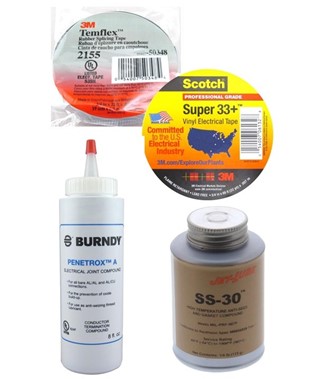
One of the primary concerns is moisture intrusion. Water can enter coaxial connectors, baluns, and feedlines, leading to corrosion and signal loss. Over time, even small amounts of moisture can significantly increase resistance and reduce efficiency—kind of like slowly turning your antenna into a very expensive, very ineffective resistor. To prevent this, all external connections should be sealed carefully. A common method involves wrapping connectors with a layer of Temflex 2155 rubber splicing tape, then a protective outer layer such as Scotch 33+ UV-resistant vinyl tape. This layered approach ensures both waterproofing and resistance to sunlight degradation.
Another critical factor is corrosion resistance. Dipole antennas are typically made from conductive materials like copper or aluminum, which can oxidize when exposed to air and moisture. While aluminum forms a protective oxide layer naturally, connections between dissimilar metals (such as copper wire and aluminum components) can cause galvanic corrosion—nature’s way of reminding you that not all metals get along. Using compatible materials or applying anti-oxidation compounds like Jet-Lube or Penetrox at junctions can mitigate this problem. Stainless steel hardware is often preferred for antenna fasteners and mounting because it resists rust and maintains structural integrity over time.

Gone With the Wind
Wind presents a mechanical challenge, especially for longer antennas that span significant distances. Strong gusts can cause dipole antennas to sway, stretch, or even snap—sometimes with dramatic timing during a contest or net. To address this, proper tensioning is important. The antenna should be taut but not overly tight, allowing for some flexibility. Incorporating strain-relief elements, such as end insulators and support ropes made from UV-resistant synthetic materials (such as polyester), helps absorb some mechanical stress.
Additionally, pulleys and counterweights help support dipole antennas between trees, preventing wire breakage caused by wind-induced tree movement. A pulley—ideally stainless steel—is attached to the tree using a sturdy hook, with a rope running over it to hold a weight, keeping the wire taut while allowing it to move. Use just enough weight to keep the antenna from sagging, but not enough to audition for a suspension bridge. A plastic container filled with water or sand, or a 1- to 5-lb. piece of concrete or metal, usually does the trick.

If a weight is impractical, consider using 2- to 3-foot marine-grade bungee cords. Rubber tarp straps are also a good choice. Those made with EPDM are rated to withstand sun exposure for 20 years or more. Storm door springs are another option—look for corrosion-resistant ones.

Ice Cold
Ice and snow accumulation can add substantial weight to the antenna, increasing the risk of sagging or breakage. You’d think a small amount like a quarter inch of ice wouldn’t be much, but it can add approximately 100 to 500 pounds of weight to a single span of power line (depending on length). According to electric utilities, this significant weight can cause lines to sag or begin to snap. A half-inch layer of glaze ice acts as a massive overload, often exceeding power line design limits and causing them to break and cut power.
You can imagine what ice would do to an 80m dipole or sky loop—and it’s usually not good. Adapting antenna systems to colder climates is the best way to minimize damage. Designing the antenna with a gentle slope from the center toward the ends can help shed ice and snow more effectively, minimizing accumulation. An inverted-V with steep slopes would be an even better option. If you have the pulley system described in the preceding section, you could lower the ends until your antenna thaws—assuming you’re willing to venture outside to do it.
Other adaptations include using slightly thicker wire or stranded wire rather than solid wire to improve durability. Stranded wire is more flexible and less likely to fracture under load—because sometimes flexibility really is strength. Using 12- or 14-gauge stranded wire, along with heavier Dacron rope attached to the insulator, improves structural integrity.
Heat & UV
You’d think a sunny day wouldn’t be much of a threat to your antenna. But ultraviolet (UV) radiation from the sun can degrade many antenna materials over time, especially plastics—quietly and persistently, like a slow-motion failure you didn’t sign up for.
Coaxial cables and insulators are particularly vulnerable. To combat UV damage, it is important to use materials specifically rated for outdoor use. UV-resistant jackets on coaxial cables and UV-stabilized plastic insulators can significantly extend the lifespan of the antenna system. Regular inspection for cracking, fading, or brittleness is also important, as these are early signs of UV degradation.
Dark-colored or black ropes generally last longer in the sun because they have UV-stabilized pigments that absorb or reflect harmful rays, preventing them from breaking down the fiber. Polyester and polyethylene blends offer good UV resistance and strength while being lightweight. Also, most modern 550 paracord (Type III nylon) is UV-resistant, making it suitable for long-term outdoor use.
Keep an eye on traps, baluns, and common-mode chokes with plastic housings that are exposed to UV. Cracked plastic end caps or failed seals allow water inside. If this water freezes, it expands, causing the plastic or seal to split further. If you live in an area with summer temperatures in the triple digits, painting those plastic parts with white paint can help prevent meltdowns.
Antenna Mounts
Proper mounting and placement also contribute to weather protection. Positioning Yagi antennas away from trees can reduce the risk of damage from falling branches or abrasion from moving limbs during storms.
At the same time, the mounting structure itself must be robust enough to withstand environmental forces. Using guys for vertical antennas, taller masts, or towers can improve stability in high winds. Concrete bases for taller towers, made to the manufacturer’s specifications, provide the necessary stability and peace of mind when the wind picks up at 2 a.m.
When mounting antennas on roof tripods or securing masts to the house, anchor into roof rafters, not just decking or fascia, and waterproof at roof contact points with roofing sealant or pads. Add a guy wire kit for masts over 10 feet tall to provide extra stability. Use heavy-duty, rust-resistant fasteners, and maintain a minimum of 20 feet from power lines—because that’s one kind of contact you definitely don’t want to make.
I Have a Guy
Guying helps protect against environmental loads such as ice accumulation. In colder climates, ice can form on antennas and masts, adding significant weight. This extra load increases the structure’s stress and can lead to sagging or collapse if not properly supported—gravity is very consistent about this. Guy lines help bear this additional weight by sharing the load with the ground anchors, reducing the strain on the mast itself.
Rope guy lines are extensively used in antenna installations, particularly when non-conductive, lightweight, or flexible support is required. These are common in amateur radio and temporary setups. Rope is used to support the ends of dipoles or the center of inverted-V antennas, tying them to trees, masts, or ground anchors. Small to medium-sized vertical antennas and portable masts frequently use non-conductive rope guy lines to keep the antenna upright without interfering with the RF radiation pattern. Heavy-duty guy lines for towers are typically made of galvanized steel or other corrosion-resistant materials, such as Phillystran, to withstand long-term exposure to the elements. Both the rope and the heavy-duty guys must be properly tensioned—not too loose or too tight (the antenna equivalent of “just right”). Turnbuckles are often used to adjust tension on large towers precisely. The angle of the guy wires is also important; wider angles provide better lateral stability, while multiple evenly spaced wires ensure balanced support.

Shocking Experiences
Lightning and static buildup are additional hazards. Installing a proper grounding system is crucial. This includes grounding the antenna support structure and using a lightning arrestor in the feedline. The arrestor should be connected to a good earth ground, providing a path for excess voltage to dissipate safely—the shorter the path, the better. Disconnecting the antenna during severe storms is another simple but effective precaution. It’s better than learning about lightning the hard way.
Storm Checklist
Here are some suggestions to protect ham radio antennas before a storm:
- Disconnect and ground all coax cables, preferably outside the home.
- Lower temporary masts, wire antennas with pulleys, and crank-down antennas. Tighten guy lines as necessary on poles and towers.
- Check feedline strain relief, drip loops, and connectors before snow/ice loading can happen.
- Power up the station to confirm everything still works before bad weather—troubleshooting in a storm is never fun.
- Have a simple, rapidly deployable antenna (e.g., an end-fed wire) prepared in a “go-kit” for immediate use after the storm, along with backup power (battery or generator).
Keep on Top of Things
Procrastinate and things will always get worse—antennas are especially good at proving this point. Routine maintenance, often overlooked, is essential for long-term reliability. Periodic inspections should include checking for loose connections, worn insulation, corrosion, and mechanical stress points. Any signs of damage should be addressed promptly to prevent further deterioration. Cleaning connectors and reapplying weatherproofing materials as needed can restore performance and extend service life.
Protecting your antenna from weather damage involves a combination of good materials, careful installation, and ongoing maintenance. Key strategies include sealing connections against moisture, preventing corrosion, ensuring mechanical stability against wind and ice, using UV-resistant components, accommodating temperature changes, and implementing proper grounding. By taking these steps, operators can ensure that their antennas remain reliable and efficient—even when the weather isn’t.
The post Ham Radio Tech: Protecting Antennas from Weather Damage appeared first on OnAllBands.