Author: Source Author

  • HAARP to Conduct Research Campaign Supporting PARS Summer School

    HAARP to Conduct Research Campaign Supporting PARS Summer School

    Read More

    The following is a press release from the High-frequency Active Auroral Research Program at the University of Alaska Fairbanks:

    The High-frequency Active Auroral Research Program (HAARP) will be conducting a research campaign August 12–14 UTC, with operating times specified in the table below. Operating frequencies will vary, but all HAARP transmissions will be between 2.8 MHz and 10 MHz. Actual transmit days and times are highly variable based on real-time ionospheric and/or geomagnetic conditions. All information is subject to change.

    This campaign is being conducted in support of research proposals from the Polar Aeronomy and Radio Science (PARS) Summer School. PARS is primarily funded by the Subauroral Geophysical Observatory award (#2054361) from the National Science Foundation, and brings students from across the nation to HAARP to conduct research. This year, 21 unique experiments will take place. Scientific goals of these experiments range from studies on the effects of ionospheric conditions on GPS satellite signals to generation and propagation of extremely low frequency/very low frequency (ELF/VLF) waves. More information on PARS can be found at https://haarp.gi.alaska.edu/pars2026

    Note that due to the number of experiments and the need to make real-time schedule adjustments based on ionospheric conditions, no frequencies are specified in the table below. The included transmission notice supplement contains information on the frequencies HAARP is authorized to transmit. HAARP transmissions will only occur on our authorized frequencies. There are no specific data collection requests from funded investigators, but reception reports are appreciated and may be submitted to our online form at https://haarp.gi.alaska.edu/form/reception-reports.

    August 12
    0000-0515 UTC

    August 13
    0115-0630 UTC
    2200-2400 UTC

    August 14
    0000-0315 UTC

    For updates on ionospheric conditions in Gakona, please consult ionograms from the HAARP Diagnostic Suite: https://haarp.gi.alaska.edu/diagnostic-suite

    Additional Resources for Reading Ionograms

    Understanding HF Propagation and Reading Ionograms from Bootstrap Workbench:
    https://www.youtube.com/watch?v=oTFKNCo3Cl8

    Reading Your Ionogram–Keeping It Simple from John (VE6EY):
    https://play.fallows.ca/wp/radio/shortwave-radio/reading-your-ionogram-keeping-it-simple/

    General Information for HAARP Radio Enthusiasts

    1. The HAARP Ionospheric Research Instrument (IRI) transmits in the frequency range 2.750 to 9.600 MHz, with certain frequencies blocked out as specified in the FCC license for call sign WI2XFX. The frequency authorization chart below shows the HAARP transmission frequencies.
    2. The emission bandwidth may be up to 46 kHz; the actual value depends on the frequency, modulation and experiment requirements.
    3. The lower frequency transmissions many times are based on a harmonic of the local ionosphere’s gyro frequency; the actual frequency depends on the experiment. The fundamental gyro frequency above HAARP varies from roughly 1.5 MHz at lower altitudes to 1.2 MHz at higher altitudes. The 2nd or 3rd harmonic is often used to heat the ionosphere in conjunction with another frequency to produce low frequency effects.
    4. The mid-range frequencies often are used for artificial airglow experiments but, again, the frequencies used will depend on the experiment as well as time of day, season, solar activity and sunspot cycle.
    5. The higher frequency transmissions many times are based on the critical plasma frequency for the F2 region (foF2) as measured by the Gakona ionosonde (https://haarp.gi.alaska.edu/diagnostic-suite). The transmission frequencies may be above, below or at the critical frequency depending on the experiment. The critical plasma frequency in the vicinity of HAARP varies widely depending on, among other things, time of day, season, solar activity and sunspot cycle.
    6. One or two carriers are transmitted and one or both of the carriers may be modulated. The types of modulation vary with the experiment requirements. Modulation may be AM, FM, or Pulse, including Linear FM (LFM) or a complex waveform or a time sequence of different modulations. LFM is very common. Communications modulations and protocols such as SSB, PSK, FSK, and QAM are never used. A glossary and brief description of the modulation modes is provided at the end of the original document.
    7. Frequencies and timing are precise to allow synchronization with diagnostics. Both are controlled by locking them to the Global Positioning System (GPS).
    8. Most experiments depend on ionospheric and geomagnetic conditions that are mostly unpredictable. The transmission frequencies for a given experiment may change to track changes in those conditions with little or no notice.
    9. A scheduled experiment that depends on certain ionospheric or geomagnetic conditions may be rescheduled or cancelled if the required conditions do not occur.
    10. Additional information can be found on the HAARP webpage at: https://haarp.gi.alaska.edu/

    Monitoring HAARP IRI Transmissions with a Software Defined Radio Receiver

    1. Listeners with an SDR receiver capable of 8 MHz bandwidth can monitor the entire frequency band noted above. A center frequency of 6.35 MHz may be used with 8 MHz bandwidth.
    2. The HAARP IRI uses Coordinated Universal Time (UTC) for all operations. Transmissions most often are programmed to Start at the top of the minute, i.e., HH:MM:00, but some start at 30 seconds, i.e., HH:MM:30. Transmissions usually Stop on the 30-second mark, i.e., HH:MM:30, to allow time to retune the transmitter/antenna for the next experiment. There may be exceptions to the Start and Stop times.
    3. The SDR software should be run on a PC whose real-time clock is synchronized to UTC using the Network Time Protocol (NTP).
    4. When a carrier is seen to pop up on the SDR’s displayed spectra, listeners can identify the center frequency using the SDR software and then reduce the bandwidth to further analyze the signal.
    5. If two SDRs are available, one can be used in a wideband mode to locate the signals and the other can be used in a narrowband mode to analyze specific signals after they are identified.
    6. A useful method for locating IRI transmissions that are on or near the ionosphere’s critical frequency f0F2 is to view the latest Gakona Ionogram (Ionosonde tab at https://haarp.gi.alaska.edu/diagnostic-suite). Find the current f0F2, which is labeled in the upper-left corner of the Ionogram, and then tune the SDR to that frequency with a moderate displayed frequency span.
    7. SDRs with a 50 kHz bandwidth setting are able to monitor the modulated carrier after it is located. However, the center frequency may be stepped through a range of frequencies or may change according to experiment requirements to another, far-removed frequency. Carrier frequency changes > 200 kHz require at least 30 seconds for retuning.
    8. Not all experiments use a modulated carrier or the full emission bandwidth; some use only a pure carrier.
    9. Some experiments require a transmitter On – transmitter Off cycle. The cycle times and On-Off ratios vary from experiment to experiment but Off times typically are minutes or fractions of a minute. Transmission On times can last from a couple of minutes to a few hours.
    10. Radio propagation conditions and the IRI beam direction will affect the reception of the IRI transmissions or cause a fadeout at the receiving antenna location. Propagation conditions and beam directions can change significantly and rapidly during an experiment.
    11. Some experiments require the IRI beam to be pointed along or near the local magnetic zenith. This means the beam is pointed parallel or nearly parallel to the local magnetic field lines. The magnetic zenith at the HAARP facility is approximately 76° elevation and 16° west of south.
    12. Although the HAARP IRI transmits only in the HF range, the transmissions can, and some experiments are designed to, generate ELF, SLF, ULF, and VLF emissions in the D- and E-regions of the ionosphere. Other experiments may not be designed to generate these low frequency emissions but the emissions are generated as a side effect. Modulated heating of the D- and E-region electrons by the HF transmissions in turn modulates the plasma conductivity, which generates a virtual antenna at altitudes between 70 and 85 km. Emissions up to 20 kHz have been demonstrated but most are below a few kilohertz. These low frequency emissions can propagate in the Earth-Ionosphere Waveguide or by other mechanisms, depending on frequency, and conceivably can travel great distances.

    Source: HAARP

    ​ Amateur Radio Daily

  • IP400 Project Enters Third Phase

    IP400 Project Enters Third Phase

    Read More

    ADRCS has posted an extensive update to their ongoing IP400 project. The updates, currently in beat testing, aim to bring mesh networking to any off the shelf radio. A new OFDM data mode will push data rates up to 57 kbit/s.

    The firmware, now known as the Unified Firmware Platform (UFP), adds Orthogonal Frequency Division Multiplexing (OFDM), a modern-day technique that is used in cellular telephony, cable modems and digital subscriber lines. Although in those applications is uses direct on-air modulation, for amateur use it was implemented to operate within the bounds of the audio range of FM transceivers, therefore designated as OFDM-AB. By selecting a bandwidth that is matched to the radio capabilities, coupled with various data constellations, rates from as low as 2600bits/second up to as fast as 57000 bits/second have been realized.

    For a deep dive into these developments, see the most recent issue of Zero Retries. Steve Stroh (N8GNJ) provides a detailed introduction to the entirety of the IP400 Project.

    Source: ADRCS

    ​ Amateur Radio Daily

  • Z81Q – South Sudan

    [INFO] by Alex, HB9FND. The (Z81Q) station is currently under construction, so please bear with me a little longer before I become fully QRV. I plan to be active from 80m to 10m using wire antennas only, with CW as my preferred mode. SSB will also be available, and there are plans to activate QO-100 […] This post appeared first on:​ DX-World Want to know more about it? Read More

  • Contesting 101: The Art of the Possible—Gaining Perspective

    Contesting 101: The Art of the Possible—Gaining Perspective

    Read More

    Editor’s Note: OnAllBands is pleased to post a series of articles written by accomplished amateur radio contester and DX Engineering customer/technical support specialist Kirk Pickering, K4RO. The articles, originally published in the National Contest Journal from 2008-2011 and updated with current information, offer valuable insights for both contesters new and old.

    ***

    One aspect of contesting that took a while for me to figure out is what I now call the “art of the possible.” After several years of operating, sometimes in frustration at why “the East Coast always won,” I started to gain some perspective on the contesting game in general.

    I grew to understand the impact of specific limitations upon my scores. Some limitations I could work toward overcoming, like my CW copying ability. Other limitations, such as the geographic location of my station, were fixed. Wishing to operate my own station and not interested in moving to a different part of the country, I chose to work within my geographic limitations. I later discovered that even top operators could not win a major DX contest in the Single Op All Band High Power category from multi-tower stations in east Tennessee. So, what was the point if the game was stacked against us?

    One of the unique aspects of radiosport competitions is that the beginners are competing in the same game as the seasoned professionals. Featherweight stations compete on the same bands at the same times as the heavyweight powerhouses. Folks operating from the “Black Hole” of the U.S. Midwest operate alongside stations within spitting distance of the Atlantic Ocean. Guys with a tri-bander at 50 feet are in the pileups against stations with monoband stacks up 200 feet and higher.

    I’ve heard from newcomers who got turned off from contesting by the seemingly impossible un-level playing field. Let’s face it—operating a major DX contest from an area with poor propagation using low power and a low wire antenna is like trying to drive a go-kart in the middle of a NASCAR race.

    Understanding the Competition

    What is the beginning contester to do? I found it helpful to take a moment and realize what I was up against. For starters, most of the guys beating me had many years (if not many decades) of experience which I did not have. They spent hundreds (more likely thousands) of hours honing their operating skills, and I was not going to catch up overnight. They also had spent years (often decades) building, improving, and investing in their stations. They knew how to get the most out of every piece of gear. In short, I had to develop some respect for just how tough the competition was, especially at the top of the game.

    Overnight wonders were rare, and the same operators and stations were found at the top of the score lists, year after year. I realized that if I wanted to rise up in the score standings, it was going to take a lot of effort and practice before I was even worthy.

    Capitalize on Your Strengths

    Once again, the path toward improvement begins with operating a lot of contests—DX, domestic, state QSO parties and, of course, the NCJ contests. Operate the big ones and the small ones. The more contests that you operate, the more you will learn about the capabilities and the limitations of your station. You may discover that you do better in certain kinds of contests. Try to figure out why. Talking to other local contesters in your area can give you some insight, but there is no substitute for on-the-air experience.

    Find out for yourself when the bands open and close by being on the air during the contests and paying attention to patterns that you discover. You may discover some weaknesses that can be addressed within your time and budget limitations. You will also ultimately find limitations that cannot be overcome without starting over again at the realtor’s office, perhaps in another state or country. For example, I discovered that I could place higher in the standings in domestic contests than the DX contests, in part because of my favorable geographic location for domestic contests. I also discovered that having the largest station was not quite as important in the domestic contests. The DX contests seem to require more hardware for success, especially on the lower frequencies.

    The hardware “arms race” is constantly escalating, and I was limited in real estate and resources. I found that I could place higher in the low-power competitions. Some of that was due to the fact that the top-tier operators at the super-stations tend to compete in the high-power categories, leaving a “smaller pond” of competition in the other categories. State QSO parties provide a great competitive environment. A super-station is typically not required to achieve top honors in a state QSO party, just great operating skills and perseverance. Regional write-ups have been a helpful motivator to measure scores among closer peers in the DX contests.

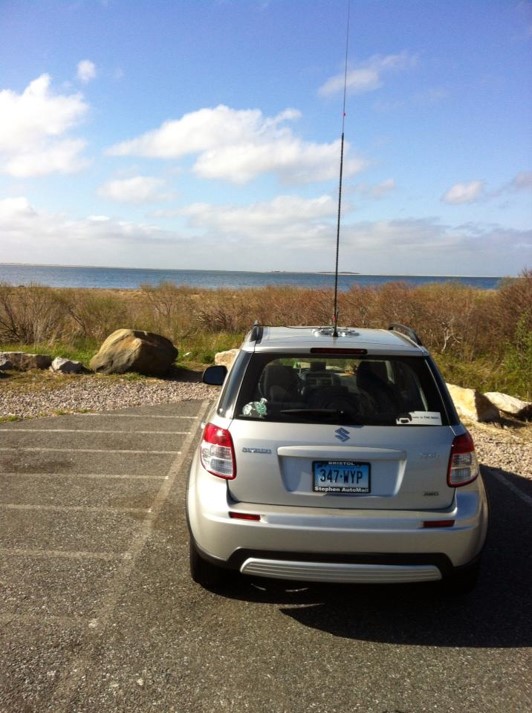
    car with a large antenna mast on back
    Activating a county during a state QSO party. (Image/Sean, KX9X)

    Constant Improvement

    The main thing to strive for is constant improvement. The real joy is in the operating and the learning, not simply in winning. I realize that it sounds cliché, but it’s true. I still operate the big DX contests, even though my chances of winning SOAB are next to nil. Every contest has something to offer and something to learn from. Also, sometimes miracles DO happen, but you have to be present to win. Sometimes it takes decades for a win to happen, but wins do happen to the dedicated contester. Operate whenever you can. Make your own advantages wherever possible. A great station without a great operator is very unlikely to win, but a great operator at a capable station will always be a serious competitive threat. Technology is necessary and can make a lot of difference, but it’s the operator who really matters in the end.

    Guest Operating

    All of my guest operating has been done in multi-ops, but there are several top competitors who regularly operate in the Single Operator category from stations built and maintained by other hams. It is not uncommon these days to find much of the Top Ten box filled with champion guest operators who traveled to competitive stations in order to maximize their chances of winning the contest. The “arms race” can be quite intense at the top, and the new SOHP scenario has been described by OH2BH as “Formula 1” style, where an entire team supports the efforts of a single operator. The point is, if you are planning to compete at the highest levels of competition and cannot build a super-station of your own, you had better start developing relationships with station owners who can help you toward your goal. Most importantly, you must develop your skills to the point where you will be considered worthy of a seat at a super-station.

    Everyone Is Not Cheating

    Another thing to keep in mind is that the vast majority of contesters DO play by the rules. While there are some cheaters out there, chances are very high that the person who beat you in the last contest was NOT cheating. More likely, they just out-operated you, and that’s that. While cheating is something that should be taken very seriously when it is encountered, the newcomer should realize that huge scores are possible without breaking the rules. Some folks have the technical skills to build very efficient antenna systems and conserve every dB. Their 100 watts may sound like a kW to you under certain conditions, but it’s very likely not. To put it quite bluntly, competitive contesting is not about complaining. While there may be plenty of things to complain about at any given moment, the whiners rarely improve as much as the folks who concentrate on becoming better operators. Work on improving your own scores and let the contest adjudicators worry about how to handle the bad apples. That’s all for this installment. See you on the bands, and don’t forget to submit your log to the sponsor, no matter how many QSOs you made. It helps you, helps the sponsor, and helps the sport of contesting.

    The post Contesting 101: The Art of the Possible—Gaining Perspective appeared first on OnAllBands.

    OnAllBands

  • HK0/W1SRR – San Andres Island

    Mike, W1SRR is currently active from San Andres island as HK0/W1SRR. Not much info is known so far about this activity but he’s been working on 20m FT8 & FT4. Mike is a keen POTA activator. Keep an eye on Ham Alert. QSL likely via LoTW (as per homecall info). Will update when more info […] This post appeared first on:​ DX-World Want to know more about it? Read More

  • J68TT – St Lucia

    Seth, N4XTT will again be active from St Lucia during August 15-21, 2026 this time as J68TT. He plans to activate many POTA parks on the island with J69Z. Also QRV from a rental house on 10-40m and possibly 80m. QSL via direct via N4XTT or through Club Log OQRS. LoTW will be uploaded upon […] This post appeared first on:​ DX-World Want to know more about it? Read More

  • Product Spotlight: A Look at the KiwiSDR2 Receiver (Video)

    Product Spotlight: A Look at the KiwiSDR2 Receiver (Video)

    Read More

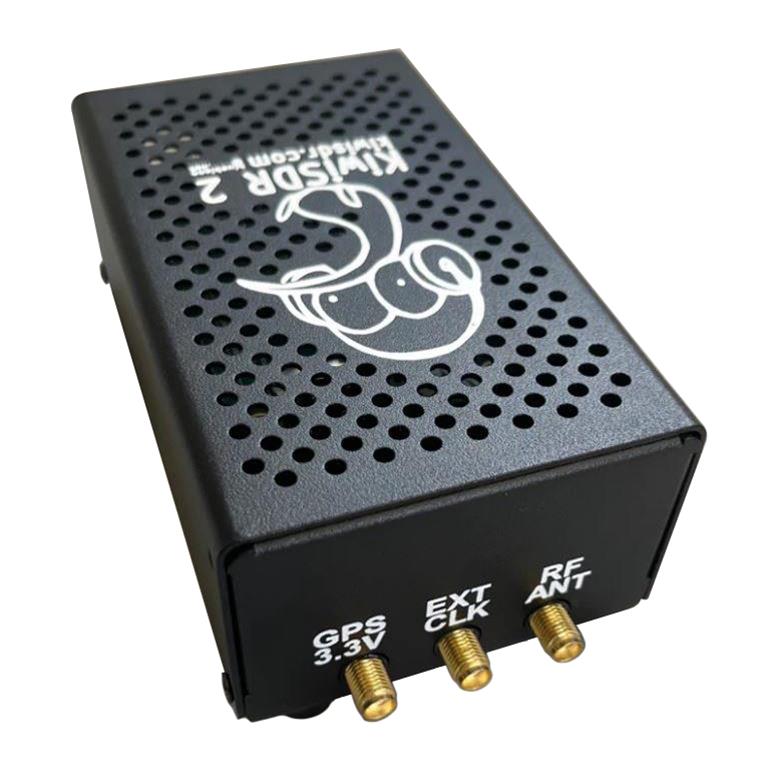
    Thanks to its own built-in computer, the KiwiSDR2 is a standalone software defined radio receiver that covers 10 kHz to 30 MHz. All you need to hook it up is an antenna, a 5VDC power source, and an ethernet connection—which means it’s incredibly easy to get up and running quickly.

    Kiwi SDR Module
    (Image/KiwiSDR)

    The receiver comes pre-installed with OpenWebRX and features an integrated GPS receiver. The device attaches to your local network and is optionally accessed through the internet. A browser is used to connect to the user interface. Most other SDRs generate raw IQ data and need to be connected directly to a PC or laptop running OS-specific, installed software.

    Watch Michael, KI8R, give a tour of the KiwiSDR2, including its simple setup procedure and capabilities.

    Check out the KiwiSDR2 Independent SDR Network Receiver and KiwiSDR V2 SDR Protection Circuit at DXEngineering.com.

    The post Product Spotlight: A Look at the KiwiSDR2 Receiver (Video) appeared first on OnAllBands.

    OnAllBands

  • DX-World Weekly Bulletin

    [#674] The latest FREE NON-SUBSCRIPTION DX-World Weekly Bulletin written by Bjorn ON9CFG is available to download. Click below to get the newest edition which this week runs to 18 pages. Previous bulletins can all be found here. Please contact Bjorn with any updates or errors. DOWNLOAD THE LATEST BULLETIN ===== This post appeared first on:​ DX-World Want to know more about it? Read More

  • Send Malawian Radio Operators to Tokyo Ham Fair

    Help Two Young Leaders from Malawi Reach the World Through Amateur Radio Imagine growing up in a country where opportunities to meet scientists, engineers, and technology leaders from around the world are almost impossible to find. Now imagine receiving an invitation to one of the world’s largest amateur radio conventions—an invitation that could change your […] This post appeared first on:​ DX-World Want to know more about it? Read More

  • VK2LHW – Lord Howe Island

    Team consisting of DL2AWG, DF4GV, DL2AMD, DL2SAX, DL1KWK, DL4SVA, DL6RY, DL4VK, DJ7TO & EA5GV will be active from Lord Howe island as VK2LHW during May 24 to June 7, 2027. QRV on HF bands; CW, SSB & Digi. 4 stations running 24/7. QSL via Club Log OQRS or DL2AWG. Webpage. Guenter, DL2AWG says: We are […] This post appeared first on:​ DX-World Want to know more about it? Read More