Author: Source Author

  • Ham Radio Portable Operating Insights: Transitioning from a POTA Activator to Hunter

    Ham Radio Portable Operating Insights: Transitioning from a POTA Activator to Hunter

    Read More

    For the last several years, my emphasis in amateur radio has been on activating parks for the National Parks on the Air (NPOTA), Parks on the Air® (POTA), and World Wide Flora & Fauna (WWFF) programs. While I maintain a station at home, it seems to be used surprisingly rarely.

    National Parks on the Air 2016 marquee graphic
    Run by the ARRL in 2016, the National Parks on the Air program was a one-year event to celebrate the 100th anniversary of our National Parks. (Image/ARRL)
    POTA Parks on the Air compass logo
    Parks on the Air is very much active. Visit the POTA website for much more information. (Image/POTA)
    WWFF World Wide Flora & Fauna logo
    For all the details on World Wide Flora & Fauna, click here. (Image/WWFF)

    That all changed this summer, thanks to a couple of surgeries—one planned, the other not so much. Suddenly, my portable operating adventures were put on hold, and I found myself spending a lot more time at home.

    So, I decided it was time to flip the script and talk about transitioning from activating to hunting.

    This won’t be an all-inclusive “how-to-do-it” type of article. Instead, I’ll be sharing thoughts on hunting from my perspective, along with some tips on setting up a home shack, finding the time to operate, and a few of the tools and utilities I’ve found useful along the way.

    Of course, hunting from your perspective may be quite different. That’s one of the things I enjoy about amateur radio—there’s rarely only one way to do something. But perhaps you’ll pick up a tip or two that will help you.

    The Home Shack

    This section assumes that you may not already have a home station, so if you do, feel free to skip ahead.

    The home shack is wherever you can set it up. One of my friends uses his kitchen table. It works very well for him, but I consider myself extremely blessed to have a dedicated room that serves as both my office and my ham shack.

    Over the past 40-plus years, I’ve set up stations in basements and on above-ground floors of the house. I must say, though, that I much prefer having a window to the world. There’s just something about being able to see outside while I’m working or on the air.

    At its most basic, all you really need for a ham shack is a place for the radio, a source of electricity, and a way to get your antenna wires outside. That last one can be a challenge, especially for apartment dwellers. Just ask another friend of mine about that!

    ham radio station with large monitors
    The author’s home station. (Image/WG8X)

    Electricity is usually the easy part. You no longer need to have a dedicated electrical line run to your shack just to get on the air. Today’s radios are remarkably efficient, and a typical station can operate quite comfortably from a standard household circuit.

    Of course, as your ham radio addiction—and it is an addiction—progresses, you may start thinking about adding an amplifier. Whether you’re talking about an HF amplifier or something for VHF/UHF, that’s when it might be time to have a conversation with your electrician about whether your existing electrical service can handle the additional load.

    As for the location, the usual rules apply. You’ll want a spot that’s somewhat removed from the noise and activity of the house, but not so far removed that the kids start asking who that person is when you wander out of the shack at dinnertime.

    Normal heating and cooling are also a must. As a teenager, my first ham shack was an uninsulated attic. You couldn’t pay me to do that again!

    man sitting at a ham radio station
    The author at his home station. (Image/WG8X)

    Finding the Time

    After spending so much time at home, you might think that you’d have nothing but time to operate. But isn’t it funny how quickly free time slips away as life happens?

    I know what you’re thinking: Just take all the time you used to spend activating parks and hunt instead.

    Yeah, I found out real quick that it doesn’t work that way.

    When you’re an activator, you generally have a specific goal. You pack up the radio, drive to a park, set up your station, make your contacts, tear everything down, and head home. There’s a beginning and an end to the operation.

    Hunting from home is different. The radio is always there, waiting for you. You can sit down for five minutes, or you can spend the entire afternoon. And, somehow, those five minutes can disappear without you realizing it.

    Amateur radio is one of the greatest ways I know to spend time, but life has a way of sneaking in. There are always chores to be done, projects waiting for attention, and someone who needs you to do something right now.

    I’m still trying to find the right balance between the things I need to do and the things I want to do. But I’m also discovering that hunting can fit into those small pieces of available time in a way that activating sometimes can’t.

    And that’s probably one of the biggest advantages of having a home station.

    Plug-ins & Utilities

    There are plenty of tools available to help keep track of your POTA activities. For more information about some of the tools I’ve used over the years, take a look at my November 2025 article, “Ham Radio Portable Operating Insights: Plug-Ins and Utilities for Your Logs.”

    The pages I use most often when hunting are pretty simple:

    1) POTA Spotting Page

    This is where I go to see who’s out there and what parks are currently being activated. I like to use the table view for this page, but that is a personal choice. You can enable/change views by clicking the hamburger icon (three stacked lines) at the top left of most POTA pages. Then look for the slider marked “Prefer Table View.” This will be in the left sidebar.

    Parks on the Air activity log screenshot
    Visiting the POTA Spotting Page is a must for any hunter. (Image/WG8X)

    2) POTA My Stats Page

    This is where I keep an eye on my progress and see how I’m doing as I add new parks and contacts to my hunting totals.

    Parks on the air personal stats page screen shot
    Keeping track of your hunter and activator stats is simple when you know where to look. (Image/WG8X)

    3) My QRZ Page

    On my QRZ page, I’ve added a plug-in from WD4DAN that gives me a nice display of my current progress, both as a hunter and as an activator. You can learn more about this by going to Dan’s page here. As with any plug-in and app, clicking on the donate button helps ensure that the developer continues to support the app. In Dan’s app, there is a “Buy me a coffee” link on his page for this purpose.

    WG8X POTA Logbook screenshot
    The WD4DAN plug-in on my QRZ page is something I refer to regularly. (Image/WG8X)

    Beyond those pages, there are a ton of websites and utilities popping up that can help you track your progress as a hunter. There are probably more than I can keep track of, and I’m sure that by the time you read this, there will be a few more.

    To be honest, though, I tend to stick with the tried-and-true POTA account. It works, and if I ever have a problem, help is only an email to the POTA help desk away.

    I’ve also used Excel spreadsheets to keep track of my progress. There’s nothing wrong with that approach, and some people really enjoy building elaborate spreadsheets to track every possible statistic.

    Me? I’d much rather be operating than updating spreadsheets.

    And perhaps that’s the biggest lesson I’m learning as I transition from activator to hunter: The tools are there to help you enjoy the hobby. Don’t let keeping track of the hobby become more work than actually enjoying it.

    That’s where hunting is easier than activating. POTA only requires activators to upload their logs—not hunters. I’m not saying that uploading logs is difficult; it’s actually a piece of cake. But when you’re hunting, your contacts automatically appear as the activators upload their logs, making the whole process even simpler.

    After this summer, have I become a super hunter, ready to sell my gear that I use for activating? Not quite. I’m counting down the days until I can get back out on the road as an activator. I find hunting a lot of fun, but I find activating more fun.

    With that, I’ll end this article and wish you good DX—and Good Hunting!

    73 DE WG8X

    The post Ham Radio Portable Operating Insights: Transitioning from a POTA Activator to Hunter appeared first on OnAllBands.

    OnAllBands

  • XR0Z – Alexander Selkirk Island, SA-101

    Moisés CE3VTZ & Felipe XQ7IR will be QRV from Alexander Selkirk Island, IOTA SA-101 as XR0Z for approximately 10 days during October 2026. Operation will be from 160 to 10m; FT8, CW & SSB modes. Felipe explains more: The shelter where we will set up our radio station is located at an elevation of 1,057 […] This post appeared first on:​ DX-World Want to know more about it? Read More

  • WB8YJF/4 – Ocracoke Isl, NA-067

    Jon WB8YJF will again be active from Ocracoke Island, NA-67 (USI NC001S, Hyde county) from September 6-19, 2026. QRV on CW, FT8/FT4, RTTY, and some SSB. QSL via home call, LoTW, Club Log, QRZ.com.  This post appeared first on:​ DX-World Want to know more about it? Read More

  • CHOTA 2026: Churches and Chapels on the Air

    CHOTA 2026: Churches and Chapels on the Air

    Read More

    Churches and Chapels on the Air (CHOTA) will be active on Saturday September 12th. CHOTA was first established in 2013 and encourages fellowship among both activators and chasers.

    A list of participating stations (XLSX) is available on the CHOTA 2026 website. CHOTA is managed by The World Association of Christian Amateurs and Listeners (WACRAL).

    Source: K4FMH

    ​ Amateur Radio Daily

  • Happy 50th Anniversary to the Araucaria DX Group!

    Happy 50th Anniversary to the Araucaria DX Group!

    Read More

    OnAllBands and DX Engineering offer a hearty huzzah to one of amateur radio’s most accomplished DXing and contesting organizations—the Araucaria DX Group (GADX). Let’s join together in congratulating them on 50 years of inspiring the amateur radio community with their supreme skills and unwavering ambassadorship to the world’s best hobby.

    Named after the Araucaria pine tree found in southern and southeastern Brazil, the group has roots that spread far and wide, with 300 members representing Brazilian states and five continents. Members today operate several high-profile multi-operator contest stations across South America.

    50 year dx group logo
    (Image/Araucaria DX Group)

    Watch DX Engineering CEO Tim Duffy, K3LR, celebrate the Araucaria DX Group’s 50th anniversary in this video:

    Based out of Curitiba in Paraná, Brazil, the group was established in 1976 by prominent Brazilian and international amateurs, including Atilano de Oms, PY5EG; Peter Sprengel, PY5CC; Donald Murden, PY5ZBU; Jim Hoffman, N5FA; Vani Emanuel, PY5VM; and Nelson Otavio Maia, PY5CA. In 1994, PY5EG, representing GADX, was inducted into the CQ Contest Hall of Fame.

    The GADX’s main objectives, as stated on their website, include improving the quality of amateur radio in Brazil, encouraging young people to take up amateur radio, promoting and improving the image of amateur radio across all segments of society, and creating a center of excellence for amateur radio.

    The group established the GADX Hall of Fame to recognize those who had made major contributions to the ham radio community.

    In addition to supporting major DXpeditions like KP5/NP3VI Desecheo Island, the GADX has run several landmark operations of its own, including St. Peter and St. Paul Rocks (PT0S) in November 2012 and Fernando de Noronha (ZX0F) in October 1999.

    The GADX also created and sponsors the 24-hour CW/SSB/RTTY World Wide Iron Ham Contest (last full weekend of December), as well as sponsoring awards for the DX Marathon and other competitions.

    On behalf of the entire amateur radio community, here’s to another 50 exceptional years on the air!

    73!

    The post Happy 50th Anniversary to the Araucaria DX Group! appeared first on OnAllBands.

    OnAllBands
  • DX-World Weekly Bulletin

    [#675] The latest FREE NON-SUBSCRIPTION DX-World Weekly Bulletin written by Bjorn ON9CFG is available to download. Click below to get the newest edition which this week runs to 18 pages. Previous bulletins can all be found here. Please contact Bjorn with any updates or errors. DOWNLOAD THE LATEST BULLETIN ===== This post appeared first on:​ DX-World Want to know more about it? Read More

  • WB2OIL/VY0 – Broughton Isl, NA-130

    Mark, WB2OIL let’s us know that he will be active from Broughton Island, NA-130 as WB2OIL/VY0 during August 16 to September 1, 2026. QRV on 40-15m; mainly FT8 with some CW & SSB using a Xiegu G90 transceiver, and a Buddistick antenna. Mark will be on a scientific expedition, as yet he doesn’t know how […] This post appeared first on:​ DX-World Want to know more about it? Read More

  • Tell Your Lawmakers to Back the Amateur Radio Preparedness Act (Now, Non-Hams Can Also Easily Lend Their Support Too!)

    Tell Your Lawmakers to Back the Amateur Radio Preparedness Act (Now, Non-Hams Can Also Easily Lend Their Support Too!)

    Read More

    The proposed federal legislation prevents HOAs from enacting restrictive antenna rules. Use the link in the article to send your letters of support. It’s quick, easy, and will make a difference.

    Also, we’ve included a link at the bottom so non-hams can send letters as well.

    ***

    If you haven’t done so already, now’s an important time to let your representatives in Washington, D.C. know how homeowner’s association (HOA) antenna limitations negatively impact the vitality of amateur radio and could have serious consequences when emergency communication is needed during a disaster.

    In September 2025, the ARRL The National Association for Amateur Radio® launched a nationwide letter-writing campaign to support the passage of the Amateur Radio Emergency Preparedness Act, which was reintroduced in February 2025 by U.S. Senators Roger Wicker, R-Miss., and Richard Blumenthal, D- Conn., and Representatives August Pfluger, R-Tex., and Joe Courtney, D-Conn. 

    As of June 2026, more than 156,000 letters had been sent. John Robert Stratton, N5AUS, ARRL West Gulf Division Director, talks about the importance of continuing this letter-writing effort in this video.

    The bipartisan House and Senate bills would prevent restrictive HOA rules that currently prohibit or severely limit the installation of amateur radio antennas, even when these antennas are hidden in trees, placed in attics, mounted on vehicles, or look like flagpoles, per the ARRL. The passage of the legislation would grant amateur radio operators the same rights to install antennas on their property as those enjoyed by users of TV antennas, wireless internet, and flagpoles.

    Click on these links to read the bills:

    From the ARRL, passage of the bill would:

    • Prohibit HOAs from outright banning amateur radio antennas
    • Establish an approval process for installation
    • Create a federal right of action for hams in disputed cases

    ***

    The ARRL is encouraging every radio amateur in the U.S. to send letters to Washington via this form.

    ***

    You do not have to be an ARRL member to use the form. Just enter your call sign, name, address, and email address, and click “Send My Letters” to add your voice to this important issue. The letters will automatically be sent to your elected officials, encouraging them to support the bills.

    ***

    New! Share this blog post with non-hams so they can support the legislation as well!

    The ARRL has now made it simple to let your non-licensed friends and family lend their support.

    They can send letters to lawmakers using the form for non-hams here.

    ***

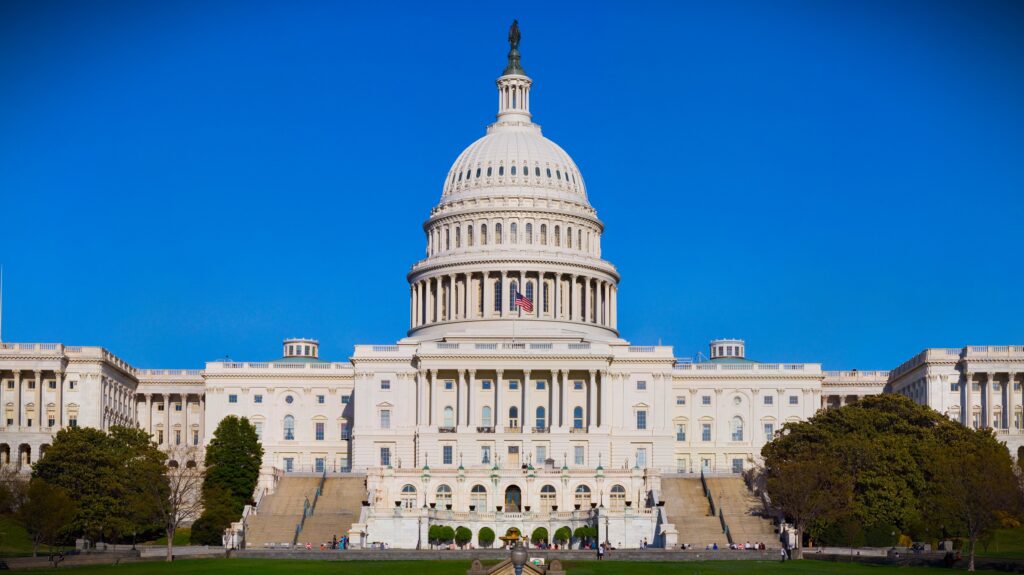
    The United States Capitol Building Dome
    (Image/Public Domain)

    The post Tell Your Lawmakers to Back the Amateur Radio Preparedness Act (Now, Non-Hams Can Also Easily Lend Their Support Too!) appeared first on OnAllBands.

    OnAllBands

  • Ways Amateur Radio Fosters Independence in Young Hams

    Ways Amateur Radio Fosters Independence in Young Hams

    Read More

    When I got my amateur radio license in 2019, I was a very shy ten-year-old who probably would have been nervous giving a presentation to her class at school. Somehow, getting an amateur radio license helped me become a much more confident and independent version of myself that the shy ten-year-old would never recognize.

    The hobby has taught me countless lessons and has led me to become much more independent than I ever imagined I would have been at this point in my life.

    The learning process of amateur radio begins with the exam. I got my license before I had taken so much as a formal algebra class—and long before I had exams that mattered for very much. My amateur radio license exams taught me how to study, which is a skill I have used almost every day since. Passing your licensing exam is something that you work for and earn, and the process helps instill a sense of independence in you. This continues even after getting your license. After you’re allowed to get on the air, it’s time to start assembling your station. While you may get some help from other hams, this is really your own project. Quite a bit of initiative is needed to be successful.

    As you get more involved in the hobby, you must figure out what parts of amateur radio you want to pursue more deeply. This encourages—and almost forces—a sense of independence because you’re making decisions for yourself about what you want to pursue and how you want to do it. You have to take ownership of your learning and time, which helps build independence.

    young woman at controls of a remote ham radio station
    A youth operator practices CW. (Image/KE8LQR)

    Amateur radio opens doors for those who are independent and motivated. There are seemingly endless opportunities for young people in the hobby, but one needs to be independent to take advantage of them. Nobody will work to get you where you want to be in the hobby other than yourself. Even though this can be challenging, it is a process full of lessons to be learned.

    For me, the most valuable lessons in independence that amateur radio has taught concern traveling and my relationships with others. I was around twelve years old when I first began to travel for amateur radio. My parents took me on trips to various hamfests on the condition that I planned all of them. I was responsible for finding a hotel and rental car, if we needed one; figuring out the logistics of how long transportation would take; calculating how much the trip would cost and how much we could save; and creating our itinerary.

    This was quite a challenge for the first trip or two, but it became significantly easier. I ended up enjoying planning the trips and traveling so much that it eventually led me to go on a study abroad program. Since then, I’ve traveled quite a bit independently, although never really “solo” thanks to the wonderful and supportive community of amateur radio operators around the world.

    Regarding the amateur radio community mentioned above, one of the most important lessons in independence is how to form and maintain all sorts of relationships with people, especially in situations where it’s not simple to do. Many of my friends are now people I’ve met through amateur radio, which means most of them do not live anywhere near me. This has taught me how to manage relationships that are not fueled by the convenience of seeing each other every day.

    Perhaps even more importantly, amateur radio has taught me how to make connections and form/maintain professional relationships with others. Most teenagers don’t have a good (or any!) chance to start networking before they are a few years into college, but those who are involved with amateur radio have the perfect opportunity to do so. Networking and forming relationships with mentors are aspects of amateur radio that nobody can do for you—you need to be independent about it.

    Amateur radio itself won’t automatically make young people independent, but it gives them opportunities to develop that trait themselves. The environment to develop and practice independence is one that is not common for youth these days, and it’s incredibly important to help young people develop real skills in today’s world.

    The post Ways Amateur Radio Fosters Independence in Young Hams appeared first on OnAllBands.

    OnAllBands
  • Ham Fair 2026 Updates: Kenwood and Uniden to Showcase New Radios

    Ham Fair 2026 Updates: Kenwood and Uniden to Showcase New Radios

    Read More

    hamlife.jp reports that both Kenwood and Uniden have announced significant anniversary milestones to be celebrated at Ham Fair 2026 in Japan. Both companies are teasing new radio equipment intended to be showcased at the event on August 29th.

    Kenwood will celebrate 80 years in production with a special musical event at their booth. The recently announced TM-D750S and TM-D750 will also be on full display and available for attendees to interact with.

    Uniden is celebrating 60 years in production and is teasing what appears to be a new handheld transceiver to be revealed at Ham Fair. Details are thin, including whether or not this radio will be marketed outside of the Japanese market. Uniden will also showcase wide-band receiving equipment targeted to users in Japan.

    Source: hamlife.jp

    ​ Amateur Radio Daily