Social media has proven to be a rather controversial topic in the amateur radio community, particularly among older generations. I’ve heard remarks such as “social media is ruining ham radio” and “these kids and their social media” countless times.
I can certainly understand where these comments come from. I use some social media platforms, so I have a firsthand idea of why this has become a controversial topic today. What is missing from these negative generalizations is that everything is unhealthy without moderation, and social media is no different.
With these thoughts in mind, social media does have a place in the world today, even in an amateur radio context.
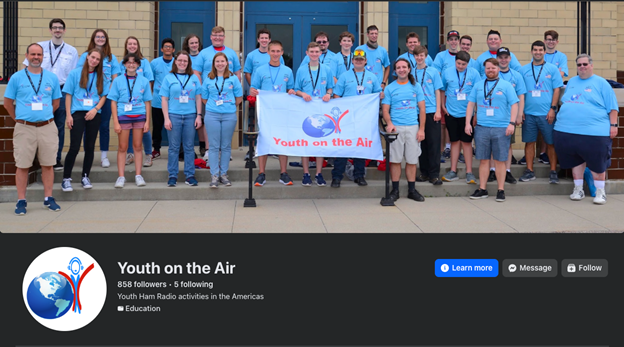
Like any other community of people, amateur radio operators have established numerous groups on social media which help to connect people despite their geographical disparities. As I mentioned, I am a social media user, and though I do not appreciate every aspect of it, I am immensely grateful for how it has connected me to the community of young (and older) hams. After following YOTA (Youth on the Air) and other amateur radio accounts when first creating a profile, I found a number of other young hams who have since become some of my closest friends. I also learned about other opportunities for youth in amateur radio.


These community groups (the list seems endless) can also be a very valuable resource. There is a group for almost any part of the hobby—contesting, satellites, Dayton Hamvention®, CW, and even segments for straight key enthusiasts, bug users, and other subtopics. There are also plenty of support groups for anyone who has questions about a specific issue. You can find many groups dedicated to clubs and organizations, where members can share opinions and advice. This makes social media a good place to speak about things you feel strongly about or feel you could help to improve.
I also recognize that arguments frequently arise in these groups. This is a valid reason to consider whether social media is really beneficial to hams, though arguments will surface regardless of the platform or setting.
The role of social media in amateur radio can also be considered a tool to bridge the gap between hams and the general public. Amateur radio is a technical, jargon-heavy hobby, which can make it challenging to share with the public without significant explanation of terms and norms. I’ve run the YOTA Americas social media accounts for a few years. When creating content to post, I consider how amateur-radio-friendly it is for non-hams and beginners since a large portion of the community that interacts with our social media pages is new to the hobby. Others are likely parents of young hams who may have little or no experience with amateur radio. By focusing on helping amateur radio become more accessible for people who are looking to get involved, social media can be a great way to spread the enjoyment and magic of the hobby.
I encourage anyone who is skeptical of social media’s role in amateur radio to consider the good it can do to help others find our hobby and let those who have already found be introduced to a community where they can find support and meet people with common interests. Communication has always been the goal of ham radio. Social media, even with its faults, opens up a door to many new methods of communication that can help us enhance the hobby for future generations of amateur radio operators.
Editor’s Note: You can check out news, videos, interviews, product announcements, technical information, and more about amateur radio from DX Engineering on Facebook and Instagram.
The post Youth Ham Radio Insights: The Role of Social Media in Amateur Radio appeared first on OnAllBands.