Dom, VK2HJ travels to Norfolk Island regularly for work and when he has free time will operate as VK9HJ from the island. His antenna is a simple telescopic 1/4 wave vertical covering 20m through to 10m running 100w. QSOs logged via QRZ.com.
Author: NA4DA
-
E6MGA – Niue
Murray, ZL1MGA will be active from Niue as E6MGA during April 25 to May 1, 2026. QRV on 40 & 20m, possibly 15m too; SSB & FT8. No paper QSLs. Updates here.
-
NCDXF Elects Two New Directors
A special Board Meeting of the Northern California DX Foundation took place on Monday evening, April 20, 2026. At the meeting the Board accepted the resignation of Board Director George Wallner, AA7JV. The Board thanks George for his unmatched support to the Board and for spearheading the development of the Radio-In-a-Box (RIB) technology that continues […]
-
4W/EA2TA, 4W/EA3NT & 4W/IZ7ATN – Timor-Leste
With licenses in hand, look out for George, 4W/EA2TA, Christian 4W/EA3NT and Simon 4W/IZ7ATN to be active from Timor-Leste (OC-148) during April 21-28, 2026. QRV on 80-6m; CW, SSB & FT8. (60m not allowed in 4W). QSL all calls via IZ7ATN, LoTW. Further updates and pics to follow here on DX-WORLD.
-
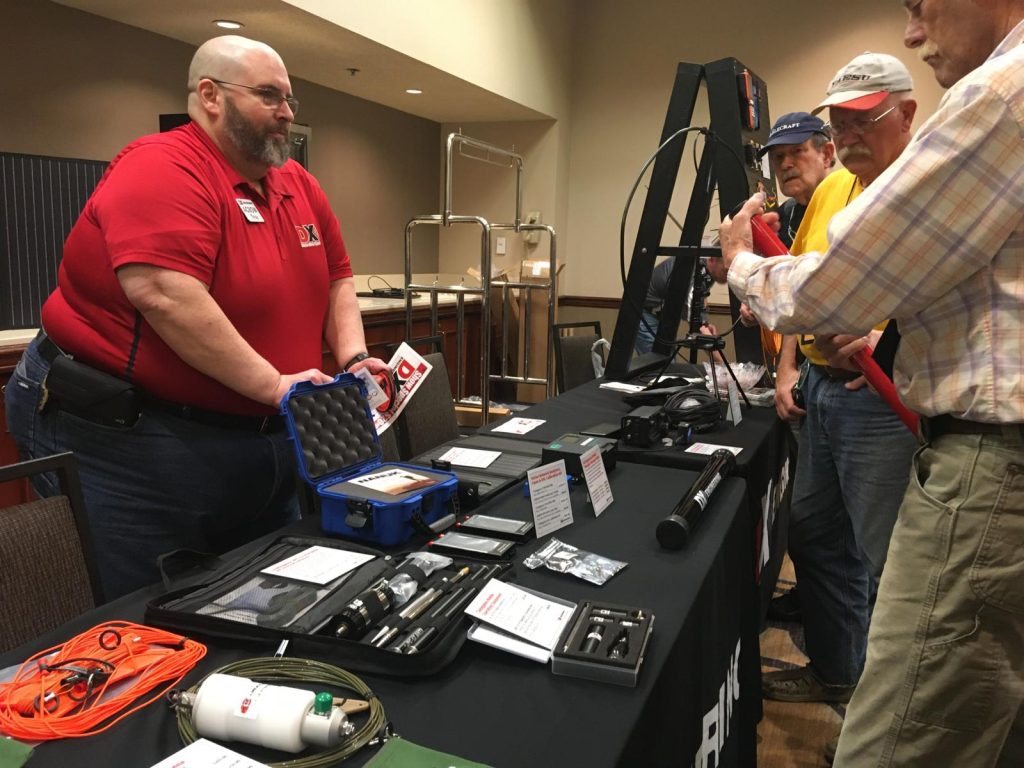
New DX Engineering Gear for QRP Portable Ops: Antenna Feedpoint Kit, Baluns, UNUN & Filters
Plus, Four Days in May is on the way!
***
Here’s great news for you QRP fans out there! DX Engineering has a nice selection of new gear designed for amateur operators who prefer the challenge of doing more with less power during their POTA, SOTA, and other outdoor activations.
The DX Engineering team is looking forward to once again participating at Vendor Night during the 2026 edition of Four Days in May (May 14-17)—the annual gathering of QRP Amateur Radio Club International in Fairborn, Ohio. This will be the 30th anniversary of the event, which is always pulsing with high energy from the low-power enthusiasts who come from around the world to enjoy a full slate of activities and plenty of good fellowship.

Troy, AC8OW, DX Engineering customer/technical support specialist and OnAllBands blogger, at DX Engineering’s FDIM table in 2025 (Image/DX Engineering) 
FDIM Vendor Night 2025. (Image/DX Engineering) More Ways to Go Low-Power Portable from DX Engineering
Here’s some of the new POTA- and SOTA-friendly QRP gear DX Engineering will have on display at Four Days in May. Want to order today? Check the links below for product availability.
TWIG End-Fed Half-Wave QRP Antenna Feedpoint Kit
This compact feedpoint kit is an essential component for building a QRP end-fed half-wave antenna system. Perfect for portable operations and outdoor activities, it simplifies setup while delivering reliable performance. The TWIG EFHW QRP Antenna Feedpoint Kit is rated for 25W SSB, 10W CW, and 5W digital, delivering an SWR of less than 2:1 without an antenna tuner.
The kit features a 49:1 transformer that matches the impedance of the user-supplied half-wave element wire to 50 ohms, ensuring compatibility with most QRP transceivers. The BNC female connector pairs easily with recommended coax cables. When the element wire is properly tuned, no external tuner is required, reducing the amount of gear you need to carry.

TWIG End-Fed Half-Wave Antenna Feedpoint Kit (Image/DX Engineering) The kit includes a built-in quick connector designed for 24/26 AWG antenna wire. Two end insulators and clips are also provided, ensuring reliable strain relief and easy deployment in the field. No additional counterpoise wire is necessary; the coax cable serves that function when installed correctly. DX Engineering offers these recommended RG-174 orange coaxial cable assemblies with BNC connectors:
- DXE-174VDB025: 25 feet (between TWIG and optional low-power choke)
- DXE-174VDB035: 35 feet (between TWIG and optional low-power choke)
- DXE-174VDB003: 3 feet (between optional choke and QRP transceiver)
For best results, use optional 24/26 AWG wire such as Consolidated Wire CEW-VIZ24-YEL100, a high-visibility, PVC-insulated stranded copper wire.
A typical setup uses a sloper configuration, with the feedpoint about 6-7 feet above ground and the wire sloping upward to 25-30 feet. Adding an optional DX Engineering DXE-LPFC-BNC Feedline Choke at the transceiver end is suggested. While the antenna supports multiple configurations, wire length will vary based on installation.
DX Engineering TWIG QRP 1:1 Choke Balun
This QRP choke balun was engineered as the key component for building a low-power dipole antenna. It incorporates a 1:1 transformer to keep the feedline impedance of the half-wave element wire down to 50 ohms. The connector is a BNC female and matches up with the recommended coax and most QRP transceivers. When properly installed and the element wire is accurately tuned, the system can achieve an SWR below 2:1 without the need for an external antenna tuner. It’s rated for 25W SSB, 10W CW, and 5W digital. Kit comes with the TWIG QRP 1:1 Choke Balun, two insulators, and three clips.

(Image/DX Engineering) DX Engineering TWIG QRP 9:1 UNUN
This UNUN matches a high-impedance, non-resonant end-fed/random wire antenna (33 to 84 feet long) to the 50-ohm unbalanced load required by amateur radio transceivers. The DXE TWIG-9-1 covers 1.8-30 MHz and is ideal for portable QRP or HOA-restricted antennas. Its BNC female connector mates with the recommended 35 to 50 feet of coax cable, which is used as the counterpoise. In some cases, an external wide range tuner may be needed. This UNUN may not provide a perfect 1:1 SWR on all bands without an additional tuner and may experience heating at higher power due to impedance mismatches.

(Image/DX Engineering) Typically, 9:1 UNUNs are used for random wire, end-fed long wire, and inverted-L or sloper antennas.
DX Engineering TWIG QRP 4:1 Current Balun
This is designed to be used as the feedpoint of a very low-power off-center-fed dipole (OCF) antenna. The TWIG-4-1C incorporates a 4:1 transformer to convert the OCF antenna impedance of 200 ohms to the desired 50 ohms to match the coaxial cable feedline. It also has a 1:1 feedline choke to prevent current imbalance, detuning, and the addition of unwanted noise.
The connector is a BNC female and mates with the recommended coax and most QRP transceivers. When properly installed and the element wire is properly tuned, you should not need an external tuner. This current balun handles 25W on SSB, 10W on CW, and 5W on digital modes when the antenna SWR is less than 2:1, without the use of an antenna tuner.

(Image/DX Engineering) DX Engineering HF QRP Bandpass Filters
Thesefilters are designed to confine both transmitted and received signals to one specific amateur band. They significantly reduce out‑of‑band noise, resulting in a noticeably lower noise floor and improved weak‑signal reception. Each filter features a sharp roll‑off just outside the band edges, providing exceptional rejection of adjacent‑band signals and maintaining maximum operating efficiency for QRP applications.
Offered for 80, 40, 20, 15, and 10 meters, they install easily in line with the coax feedline using the BNC connectors provided on each end. With power ratings of 20W SSB and 5W digital, they are ideal for QRP enthusiasts participating in multi‑operator events such as Field Day, POTA, and SOTA.

(Image/DX Engineering) DX Engineering TWIG Broadcast Interference Filter
This filter lets you improve the performance of your QRP POTA or SOTA station. Engineered specifically for low-power amateur radio applications, the compact module attenuates strong AM broadcast band signals below the 80-meter amateur band. By suppressing these out-of-band signals, the filter helps lower your receiver’s noise floor, resulting in cleaner, more reliable reception of weak signals.The DXE TWIG BCFIL is equipped with BNC female connectors for quick, inline installation in the field. Ideal for portable, field, and low power fixed station use, it provides an effortless way to reduce unwanted broadcast interference without adding complexity to your station setup. Power is rated at a maximum of 20W PEP.

(Image/DX Engineering) For more QRP gear, enter “QRP” at DXEngineering.com. You’ll find Par EndFedz® QRP End-Fed Half-Wave Antennas, Moonraker Whizz Whip and Whizz Loops, QRP reference books, transceivers like Yaesu’s FTX-1 Series, and much more.
The post New DX Engineering Gear for QRP Portable Ops: Antenna Feedpoint Kit, Baluns, UNUN & Filters appeared first on OnAllBands.
-

📡 DXLook Gets a Full Rebuild — Same Map, Sharper Everything
The following is a press release from DXLook:
After a lot of work behind the scenes, DXLook has been completely rebuilt and is now live in production.
This isn’t just an update. It’s a full rewrite of the frontend — the part you interact with — designed to make the site faster, cleaner, and much easier to use across all devices.
What changed?
If you’ve used DXLook before, the idea is the same:
A single place to see real-time propagation using data from PSK Reporter, WSPR, RBN, DX Cluster, POTA, SOTA, APRS, and space weather.What changed is how it feels to use it.
- The site loads faster
- Mobile finally behaves like a proper mobile app
- Tablet users now get a real layout (not just a stretched phone view)
- Widgets are cleaner and more stable
- Navigation is more predictable
Nothing you rely on is gone — it just works better.
What’s new for operators
A few things you’ll notice right away:
- Band Activity widget
- A quick way to see which bands are active and where, using DXLook’s data.
- Improved layout and controls
- Less overlap, less jumping around, more focus on the map.
- Better Events page
- Easier to use when planning operating activity.
Why this matters
The previous version of DXLook had grown a lot over time, and it was starting to show its limits.
This rebuild removes those limits.
It means:
- Faster updates and improvements going forward
- Better performance on all devices
- More flexibility to add new features and tools
In short, this is the foundation for what comes next.
A quick note
This is a fresh release.
If you notice something off, it’s probably real — and feedback is welcome.About DXLook
DXLook is a free, ad-free, web-based tool for amateur radio operators to visualize real-time propagation and activity across multiple data sources, all in one place.
Built and maintained by
Rodrigo Vazquez — AK6FP / LU6ERV73,
Rodrigo – AK6FP / LU6ERVSource: DXLook
-
Helping NASA Track Artemis II’s Orion Spacecraft
The University of Pittsburgh’s Panther Amateur Radio Club (PARC) had a unique opportunity last week…helping NASA track Artemis II’s Orion spacecraft on its mission to the moon and back!
Faculty advisor Juan Manfredi, NAØB, said the club responded to a request from NASA to submit a proposal. “We submitted our proposal in September 2025 and were notified in November that our proposal was accepte…
-

Wrap-Up of the S21WD Next Generation DXpedition from Bangladesh (Video)
DX Engineering supports the future of DXing with critical equipment for this highly successful activation.
***
For today’s OnAllBands post, we turn our attention to the excellent work of the youth-oriented S21WD DXpedition team. They made more than 73,000 SSB, CW, RTTY, FT8, and QO-100 Satellite QSOs during 12 days of activity from Char Kukri Mukri in the Bay of Bengal.

(Image/S21WD) Despite technical and environmental challenges, the S21WD Next Generation DX Club exceeded its goal of 70,000 QSOs during the venture in late March. Here is a list of S21WD team members and their ages:
- Philipp, DK6SP, 28, lead
- Sven, DJ4MX, 23, co-lead
- Jamie, M0SDV, 25
- Leon, DL3ON, 21
- Anup, S21TV, 46, local logistics
- Apon, S21ABO, 23, local logistics

(Image/S21WD) From the S21WD website:
“The team had the privilege to operate from Char Kukri Mukri, located in the very south of Bangladesh. Reaching this remote location required extensive logistics, including approximately 18 hours of travel one way within the country, using a combination of speedboat, tuk-tuk, cargo tricycle, ferry, and moped.
“A special thank you goes to Apon S21ABO and Anup S21TV for their outstanding involvement and commitment throughout the project. Their local support was essential for both preparation and execution.”
***
One of around 700 islands in Bangladesh, 9.7-square-mile Char Kukri Mukri is home to the Char Kukri Mukri Wildlife Sanctuary. Its mangrove ecosystem supports more than 380 species of plants as well as a number of mammals, including the fishing cat and small-clawed otter.
Wondering what a tuk-tuk is? So were we. Also known as an auto-rickshaw, a tuk-tuk is a three-wheeled motorized vehicle mostly used as a taxi for short-distance transport in Africa, Asia, and Latin America. Its name derives from the sound of its two-stroke engine.

A tuk-tuk in Madagascar. (Image/Public Domain) DX Engineering Helps Make It Happen
A proud supporter of youth-focused ham radio activities, DX Engineering provided a range of equipment used on Char Kukri Mukri, including:

(Image/Icom) 
(Image/Samlex) 
(Image/Icom) 
(Image/Yaesu) The team also employed Yaesu FTDX10 Transceivers and ACOM 1200S and 500S amplifiers during the activation.
Watch Tim Duffy, K3LR, DX Engineering CEO, interview members of the S21WD DXpedition team in the video below. Topics include their troubles with RFI, thankfully resolved issues with food poisoning, and what’s next for the talented Next Generation DX Club.

(Image/S21WD) For a look at Bangladesh QSL cards collected by DX Engineering’s team of active operators over the years, click here.
The post Wrap-Up of the S21WD Next Generation DXpedition from Bangladesh (Video) appeared first on OnAllBands.
-
FO/VA7YM – Marquesas Islands
[CANCELLED] – Info by Chungki, VA7YM. While on our way to Nuku Hiva, we unfortunately had to cancel the trip and turn back toward San Diego. We’re sorry to share that our plan to depart from La Paz at the end of March for Nuku Hiva has been cancelled due to ongoing transmission issues with […]
-

SteppIR Returns to Amateur Radio Market
In a message posted to the SteppIR website, the company has announced their return to the amateur radio market. SteppIR originally exited the amateur radio market back in June of 2025. Going forward, their products will be available through online sales.
We will be bringing back select antennas that will be purchased as kits on our website – Urban Beam Yagi 40m-6m (dipole on 40m/30m), 3 element Yagi 20m-6m, 4 element Yagi 20m-6m. The 3E and 4E Yagi will also have the 40/30 loop dipole option available.
Warranty and services will accompany new sales.
Source: SteppIR