ADRCS has posted an extensive update to their ongoing IP400 project. The updates, currently in beat testing, aim to bring mesh networking to any off the shelf radio. A new OFDM data mode will push data rates up to 57 kbit/s.
The firmware, now known as the Unified Firmware Platform (UFP), adds Orthogonal Frequency Division Multiplexing (OFDM), a modern-day technique that is used in cellular telephony, cable modems and digital subscriber lines. Although in those applications is uses direct on-air modulation, for amateur use it was implemented to operate within the bounds of the audio range of FM transceivers, therefore designated as OFDM-AB. By selecting a bandwidth that is matched to the radio capabilities, coupled with various data constellations, rates from as low as 2600bits/second up to as fast as 57000 bits/second have been realized.
For a deep dive into these developments, see the most recent issue of Zero Retries. Steve Stroh (N8GNJ) provides a detailed introduction to the entirety of the IP400 Project.
[INFO] by Alex, HB9FND. The (Z81Q) station is currently under construction, so please bear with me a little longer before I become fully QRV. I plan to be active from 80m to 10m using wire antennas only, with CW as my preferred mode. SSB will also be available, and there are plans to activate QO-100 […] This post appeared first on: DX-World Want to know more about it? Read More
Editor’s Note: OnAllBands is pleased to post a series of articles written by accomplished amateur radio contester and DX Engineering customer/technical support specialist Kirk Pickering, K4RO. The articles, originally published in the National Contest Journal from 2008-2011 and updated with current information, offer valuable insights for both contesters new and old.
***
One aspect of contesting that took a while for me to figure out is what I now call the “art of the possible.” After several years of operating, sometimes in frustration at why “the East Coast always won,” I started to gain some perspective on the contesting game in general.
I grew to understand the impact of specific limitations upon my scores. Some limitations I could work toward overcoming, like my CW copying ability. Other limitations, such as the geographic location of my station, were fixed. Wishing to operate my own station and not interested in moving to a different part of the country, I chose to work within my geographic limitations. I later discovered that even top operators could not win a major DX contest in the Single Op All Band High Power category from multi-tower stations in east Tennessee. So, what was the point if the game was stacked against us?
One of the unique aspects of radiosport competitions is that the beginners are competing in the same game as the seasoned professionals. Featherweight stations compete on the same bands at the same times as the heavyweight powerhouses. Folks operating from the “Black Hole” of the U.S. Midwest operate alongside stations within spitting distance of the Atlantic Ocean. Guys with a tri-bander at 50 feet are in the pileups against stations with monoband stacks up 200 feet and higher.
I’ve heard from newcomers who got turned off from contesting by the seemingly impossible un-level playing field. Let’s face it—operating a major DX contest from an area with poor propagation using low power and a low wire antenna is like trying to drive a go-kart in the middle of a NASCAR race.
Understanding the Competition
What is the beginning contester to do? I found it helpful to take a moment and realize what I was up against. For starters, most of the guys beating me had many years (if not many decades) of experience which I did not have. They spent hundreds (more likely thousands) of hours honing their operating skills, and I was not going to catch up overnight. They also had spent years (often decades) building, improving, and investing in their stations. They knew how to get the most out of every piece of gear. In short, I had to develop some respect for just how tough the competition was, especially at the top of the game.
Overnight wonders were rare, and the same operators and stations were found at the top of the score lists, year after year. I realized that if I wanted to rise up in the score standings, it was going to take a lot of effort and practice before I was even worthy.
Capitalize on Your Strengths
Once again, the path toward improvement begins with operating a lot of contests—DX, domestic, state QSO partiesand, of course, the NCJ contests. Operate the big ones and the small ones. The more contests that you operate, the more you will learn about the capabilities and the limitations of your station. You may discover that you do better in certain kinds of contests. Try to figure out why. Talking to other local contesters in your area can give you some insight, but there is no substitute for on-the-air experience.
Find out for yourself when the bands open and close by being on the air during the contests and paying attention to patterns that you discover. You may discover some weaknesses that can be addressed within your time and budget limitations. You will also ultimately find limitations that cannot be overcome without starting over again at the realtor’s office, perhaps in another state or country. For example, I discovered that I could place higher in the standings in domestic contests than the DX contests, in part because of my favorable geographic location for domestic contests. I also discovered that having the largest station was not quite as important in the domestic contests. The DX contests seem to require more hardware for success, especially on the lower frequencies.
The hardware “arms race” is constantly escalating, and I was limited in real estate and resources. I found that I could place higher in the low-power competitions. Some of that was due to the fact that the top-tier operators at the super-stations tend to compete in the high-power categories, leaving a “smaller pond” of competition in the other categories. State QSO parties provide a great competitive environment. A super-station is typically not required to achieve top honors in a state QSO party, just great operating skills and perseverance. Regional write-ups have been a helpful motivator to measure scores among closer peers in the DX contests.
Activating a county during a state QSO party. (Image/Sean, KX9X)
Constant Improvement
The main thing to strive for is constant improvement. The real joy is in the operating and the learning, not simply in winning. I realize that it sounds cliché, but it’s true. I still operate the big DX contests, even though my chances of winning SOAB are next to nil. Every contest has something to offer and something to learn from. Also, sometimes miracles DO happen, but you have to be present to win. Sometimes it takes decades for a win to happen, but wins do happen to the dedicated contester. Operate whenever you can. Make your own advantages wherever possible. A great station without a great operator is very unlikely to win, but a great operator at a capable station will always be a serious competitive threat. Technology is necessary and can make a lot of difference, but it’s the operator who really matters in the end.
Guest Operating
All of my guest operating has been done in multi-ops, but there are several top competitors who regularly operate in the Single Operator category from stations built and maintained by other hams. It is not uncommon these days to find much of the Top Ten box filled with champion guest operators who traveled to competitive stations in order to maximize their chances of winning the contest. The “arms race” can be quite intense at the top, and the new SOHP scenario has been described by OH2BH as “Formula 1” style, where an entire team supports the efforts of a single operator. The point is, if you are planning to compete at the highest levels of competition and cannot build a super-station of your own, you had better start developing relationships with station owners who can help you toward your goal. Most importantly, you must develop your skills to the point where you will be considered worthy of a seat at a super-station.
Everyone Is Not Cheating
Another thing to keep in mind is that the vast majority of contesters DO play by the rules. While there are some cheaters out there, chances are very high that the person who beat you in the last contest was NOT cheating. More likely, they just out-operated you, and that’s that. While cheating is something that should be taken very seriously when it is encountered, the newcomer should realize that huge scores are possible without breaking the rules. Some folks have the technical skills to build very efficient antenna systems and conserve every dB. Their 100 watts may sound like a kW to you under certain conditions, but it’s very likely not. To put it quite bluntly, competitive contesting is not about complaining. While there may be plenty of things to complain about at any given moment, the whiners rarely improve as much as the folks who concentrate on becoming better operators. Work on improving your own scores and let the contest adjudicators worry about how to handle the bad apples. That’s all for this installment. See you on the bands, and don’t forget to submit your log to the sponsor, no matter how many QSOs you made. It helps you, helps the sponsor, and helps the sport of contesting.
Mike, W1SRR is currently active from San Andres island as HK0/W1SRR. Not much info is known so far about this activity but he’s been working on 20m FT8 & FT4. Mike is a keen POTA activator. Keep an eye on Ham Alert. QSL likely via LoTW (as per homecall info). Will update when more info […] This post appeared first on: DX-World Want to know more about it? Read More
Seth, N4XTT will again be active from St Lucia during August 15-21, 2026 this time as J68TT. He plans to activate many POTA parks on the island with J69Z. Also QRV from a rental house on 10-40m and possibly 80m. QSL via direct via N4XTT or through Club Log OQRS. LoTW will be uploaded upon […] This post appeared first on: DX-World Want to know more about it? Read More
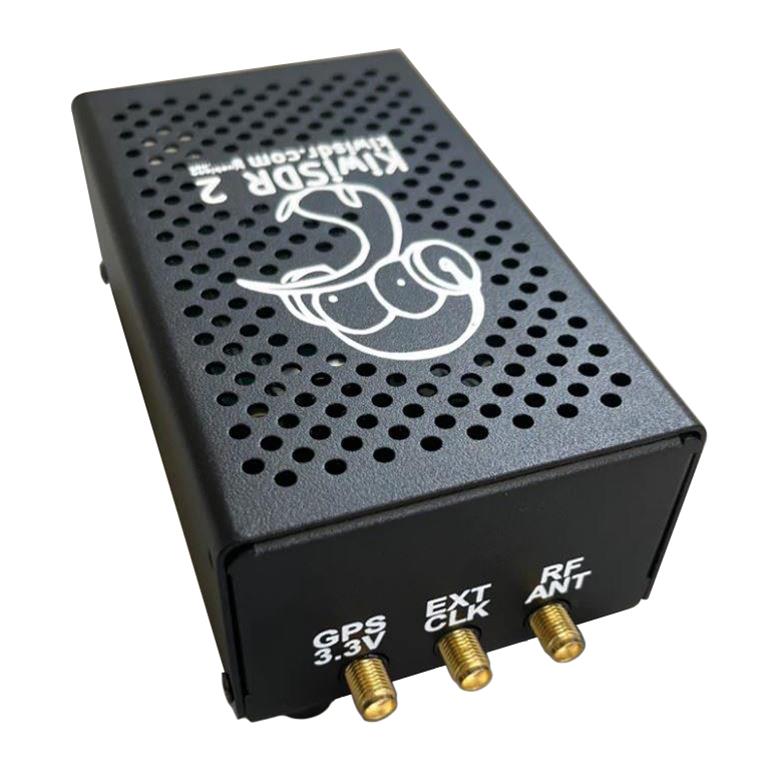
Thanks to its own built-in computer, the KiwiSDR2 is a standalone software defined radio receiver that covers 10 kHz to 30 MHz. All you need to hook it up is an antenna, a 5VDC power source, and an ethernet connection—which means it’s incredibly easy to get up and running quickly.
(Image/KiwiSDR)
The receiver comes pre-installed with OpenWebRX and features an integrated GPS receiver. The device attaches to your local network and is optionally accessed through the internet. A browser is used to connect to the user interface. Most other SDRs generate raw IQ data and need to be connected directly to a PC or laptop running OS-specific, installed software.
Watch Michael, KI8R, give a tour of the KiwiSDR2, including its simple setup procedure and capabilities.
[#674] The latest FREE NON-SUBSCRIPTION DX-World Weekly Bulletin written by Bjorn ON9CFG is available to download. Click below to get the newest edition which this week runs to 18 pages. Previous bulletins can all be found here. Please contact Bjorn with any updates or errors. DOWNLOAD THE LATEST BULLETIN ===== This post appeared first on: DX-World Want to know more about it? Read More
Help Two Young Leaders from Malawi Reach the World Through Amateur Radio Imagine growing up in a country where opportunities to meet scientists, engineers, and technology leaders from around the world are almost impossible to find. Now imagine receiving an invitation to one of the world’s largest amateur radio conventions—an invitation that could change your […] This post appeared first on: DX-World Want to know more about it? Read More
Team consisting of DL2AWG, DF4GV, DL2AMD, DL2SAX, DL1KWK, DL4SVA, DL6RY, DL4VK, DJ7TO & EA5GV will be active from Lord Howe island as VK2LHW during May 24 to June 7, 2027. QRV on HF bands; CW, SSB & Digi. 4 stations running 24/7. QSL via Club Log OQRS or DL2AWG. Webpage. Guenter, DL2AWG says: We are […] This post appeared first on: DX-World Want to know more about it? Read More
OnAllBands is thrilled to feature articles from noted author and amateur radio DXing legend Bob Locher, W9KNI. Bob will be sharing his favorite DXing memories along with insights on what it took to capture the rarest of the rare.
Be sure to read part 1 of this series—his account of making contact with Gough Island, ZD9—in this OnAllBands article.
***
Bob Locher, W9KNI (Image/W9KNI)
Virtually all my life, I have been a student of geography. I was never that interested in the politics of a place. My interest was more imaginative—waves breaking on a coral strand, ice flows and penguins, steamy jungles, endless sand dunes and the like. Chasing DX redefines the term “Armchair Traveler” for myself and others. Ham radio DXing has always been the perfect catalyst for my imagination.
I always tried to have good equipment for DXing, but another treasured possession was a really good atlas that included maps of the oceans and the islands on them. Whenever I worked a juicy bit of DX, my next move was invariably a session with the atlas. It also had the benefit of being a gift non-ham family members could understand. (But you will surely have a better result if you select the atlas you want. Most atlases have great coverage of their home country, while the rest of the world is an afterthought. But true world atlases do exist. Shop for a good one.)
So, for me, working an exotic new country or a remote island was always a thrill.
Thinking about it, I came to realize that the discovery of a new island for a Westerner was always an adventure, whether the island had a native population or not. And indeed, hundreds or thousands of years earlier, there had to be a first discovery by someone who founded the native population. Mostly, such stories are lost, except for the DNA footprints in the passages of time. Nonetheless, it was all—and still is—fuel for my fertile imagination…
Looking South
It was the late 1970s. I was living in a Chicago suburb and working hard to build up a DXCC count. My site was not a very good one—a low spot—but it was what I had. I had a 40-foot tower and a two-element cubical quad on top. I had a homebrew amplifier good for 600 watts output, essentially the legal limit in those days. I had just gotten my Extra Class license, so I had full access to all of 20 meters.
On an October evening, I was tuning 20 meters, looking for a new one. I quickly discovered conditions were lousy, thanks to some sort of solar event or magnetic storm. There were no signals at all from the Eastern Hemisphere, unlike most days. Looking over the North Pole was fruitless—no signals. This is a typical pattern for auroral or magnetic storms. But usually, the normal propagation paths to Central and South America stay open. I decided to turn my antenna to South America and began a careful tune of 20-meter CW. I still needed Paraguay and Bolivia. Maybe I could get lucky there.
That path proved to be open, as I had hoped. I heard Brazilians, Argentines, and one signal from Uruguay, none of which I needed. Signal strengths were reasonably good, but there were only a few stations on the band. I was not really that surprised, though, considering it was very late at night at local time in those countries. People not crazy enough to be DXers were asleep in their warm beds.
This is the part of the band that virtually all CW DX is found in. I checked the phone part of the band. Again, I heard a couple stations in contact speaking Spanish. I listened carefully, knowing little of Spanish or Portuguese. I did manage to copy calls—Argentines and a Brazilian. Nothing new there.
I went back to the CW band, mentally starting to figure I’d throw in the towel for the night. The bottom 30 kilohertz offered little change from earlier—very little activity. I decided to check the next 30 kilohertz higher, outside the usual DX window on 20-meter CW. That segment seemed even more empty. I tuned up to 14.060 kHz, then started back down, turning the knob the other way. Huh? There was a signal at 14.055, decent copy, an honest 569 signal.
I listened for a moment. The station seemed to be rag-chewing at a comfortable speed…and in English. I continued tuning down but only for a moment. Bells were going off in my head. I turned the receiver back to that frequency and station. To use the vernacular of today, “What’s wrong with this picture?” Hmmm. I know I had tuned cross that frequency within the last three minutes and had heard nothing.
But I was hearing a fellow rag-chewing with someone else—obviously someone else I could not hear. And during the whole operating session I had heard no American stations above about S-3 at all. Ergo, it seemed very likely that the station was a non-American but fluent in English, so probably not South American. I listened to the contact while trying to figure anything out. I had not long to wait: “OK George. Got to QRT here now. Commercial schedule in two minutes. Best to Sarah. Cheers mate. G3XXX de VP8GL 73.” Wow! VP8— the Falkland Islands. New for sure, but he was going QRT.
I looked at the clock: 9:29 local time. Obviously, his commercial schedule was on the half hour. I waited on frequency with bated breath and heard the traditional “dit dit.” I knew I had only one shot— kind of a long one, but that was all I had. I called, matching his speed, “VP8GL de W9KNI W9KNI 579 579 BK.” Yessss! “W9KNI 579 579 73 VP8GL QRT.” I responded, “TNX, WILL QSL 73 did dit.” I got back his “did dit” so he copied that. I was good! I whooped and gave a fist pump in the air.
After I finished logging it, I got out the tool of the DX Community of those days: “The Radio Amateur DX Callbook.” I looked him up and got another shock, albeit it a very pleasant one. He was not on the Falklands at all—he was on the much rarer South Georgia Island! South Georgia! The island already lived in my consciousness thanks to having read about the great and heroic Antarctic misadventure of Ernest Shackleton and his crew. South Georgia figured very prominently in the accounts. And indeed, the famous man was buried on South Georgia.
Ernest Shackleton (Image/Public Domain)Ernest Shackleton gravesite on South Georgia Island. (Image/Public Domain)
The glow of my success mixed with icy shivers up and down my spine. This was truly “armchair traveling” at its very best! I headed for bed. It took me a long time to get to sleep, still immersed in a golden glow. But as I finally slipped away, I suddenly came to a realization—I still needed the Falkland Islands.
Until about three years ago, VP8 was the correct prefix for South Georgia. A change has been made in callsign allocations, and the new prefix for South Georgia is VP0.
Cubical Quad antennas: The quad was a fairly common DXing antenna in the last part of the 20th century. They were relatively low cost, needed only a light-duty rotator, and competed well with two-element Yagis. But also, they made very good tri-banders. They had their faults; they were difficult to put up because of their geometry, and they rarely survived any kind of ice storm. They have since been replaced in most cases by hexbeams. Hexbeams have the same operational advantages, require less parts, and are MUCH easier to assemble and install. That said, well-designed larger aluminum Yagis are superior and much longer lasting, but at greater expense, requiring stronger towers, beefier rotators, etc. But hexbeams offer a lower cost entry to expanded DXng.