[INFO] by Ren, PY8WW – I am very pleased to finally announce that the HD4W DXpedition to IOTA SA-056 – Esmeraldas Province Group, Ecuador, is now officially confirmed. This project has been in the planning since the beginning of this year. For many months, however, one essential piece was still missing: the operating license. Without […] This post appeared first on: DX-World Want to know more about it? Read More
Author: Source Author
-
ISS SSTV Weekend Sprint
ARISS has announced an upcoming SSTV event transmitted from the International Space Station (ISS) beginning this coming weekend on October 2nd and continuing through October 6th. This is SSTV Series 33 and will be the first SSTV event from ISS Expedition 75. The image content is expected to highlight student education.
Dates
October 2 through October 6Mode
Robot 36Frequency
437.500 MHz +/- Doppler shiftReceived images may be submitted to the ARISS SSTV Gallery.
Source: ARISS
Amateur Radio Daily
-
JW6VM, JW7XK & JW9DL – Svalbard
LA6VM, LA7XK & LA9DL will again be active from Svalbard during October 7-12, 2026. QRV as JW6VM, JW7XK & JW9DL on HF bands, CW, SSB & FT8. Activity as JW5X during the SSB Scandinavian Activity Contest (Oct 10-11). QSL via H/cs. JW5X via LA5X. This post appeared first on: DX-World Want to know more about it? Read More
-
Nothing But Net—When a Frequency Becomes a Community! Learn the Basics of Enjoying Ham Radio Nets
At first, a ham radio frequency is just a frequency. It is a number on the dial, a place where signals appear and disappear, and perhaps a convenient spot to stop while turning the VFO knob. But spend enough time listening to a regular ham radio net and something interesting happens. That frequency starts to feel less like a piece of the radio spectrum and more like a friendly neighborhood.
You recognize the voices. You know who is likely to check in early, who is always running five minutes late, and someone who manages to turn a simple signal report into a 20-minute story about the weather, antennas, or the time he repaired a transmitter using parts that probably belonged in a toaster.
The word “net”comes from network. But in this case, it’s a human network of ham radio operators connected by a common frequency.
The Magic of a Ham Radio Net
A net is simply an organized gathering of amateur radio operators on a particular frequency. There may be a net control operator who keeps things moving, calls for check-ins, handles traffic, and makes sure everyone gets a chance to speak. Some nets are highly structured. Others are relaxed enough that they feel more like a group of friends sitting around a virtual coffee table.
The equipment may be sophisticated like a full-blown DX station or extremely simple like a handheld transceiver. The participants might be separated by a few miles or several states. Yet for the duration of the net, they share the same invisible meeting place. And unlike a coffee shop, nobody has to worry about who is going to pick up the check.
More Than a Roll Call
One of the simplest types of nets is the regular check-in net. The net control operator announces that the net is beginning and invites stations to check in. Operators respond with their call signs, and sometimes a name, location, or short comment. It sounds simple—and it is. But this routine has a surprisingly important purpose.
A regular net gives people a reason to get on the air. Without a net, an operator might turn on the radio, listen for a few minutes, hear nothing interesting, and turn it off. With a net scheduled for 7 pm every Tuesday, however, there is somewhere to go. The regular appointment creates consistency.
After a while, operators begin planning around it. They know that Tuesday evening means the net. They may even find themselves looking forward to participating. The radio has quietly become social media without the scrolling, advertising, algorithms, or arguments about politics.
Everyone Has a Place
One of the strengths of a good net is that it can bring together operators with very different levels of experience. The newly licensed ham may be nervous about getting on the air. A net provides a relatively stress-free environment for making that first contact.
The experienced operator, meanwhile, has an opportunity to help. He or she can explain procedures, answer questions, and offer advice without making the new operator feel as though they have accidentally wandered into an advanced physics class.
This is particularly important because amateur radio can sometimes seem intimidating from the outside. There are antennas, radios, power supplies, SWR meters, coaxial cables, digital modes, propagation charts, regulations, and enough abbreviations to make the hobby look like a secret society. A friendly net cuts through all of that. You don’t have to know everything. You simply have to know your call sign and how to say, “Good evening.”
Nets Build Familiarity
A funny thing happens when you hear the same people regularly. You begin recognizing voices before you hear call signs. “Oh, there’s Mary. I’ll bet she’s going to mention the weather again.”
Eventually, you know where people live, what radios they use, what antennas they have, and which ones are currently undergoing the traditional ham radio maintenance procedure known as waiting for the parts to arrive.
You also learn about people’s lives. Someone may mention a new grandchild. Another operator may talk about a camping trip built around a POTA activation. One may have just completed a challenging antenna project. These little details turn operators into people rather than simply call signs. That is when a frequency becomes a community.
The Net Control Operator (NCO)
Every good net needs someone to keep things organized. Enter the net control operator. The NCO is part traffic cop, part host, and part referee. The job may involve calling the net to order, taking check-ins, recognizing stations, handling announcements, and keeping conversations from wandering completely off into the weeds.
And keeping a ham radio conversation from wandering into the weeds can be a difficult undertaking. A simple question such as, “How is everyone doing tonight?” can sometimes lead to a detailed discussion of antennas, lawn tractors, solar panels, boat anchors, and the weather forecast for the next seven days.
A good net control operator doesn’t necessarily shut down conversation. Instead, the operator keeps it moving while allowing people enough room to enjoy themselves. The best net control operators are organized without being authoritarian and friendly without allowing the net to become an audio free-for-all.
Nets Serve a Purpose
Not every net is simply social. Some are designed for emergency and public service communications. Others handle traffic—formal messages passed from one operator to another. There are nets devoted to specific radio activities such as chasing DX, working all states awards, technical discussions, equipment, clubs, or contesting.
Weather nets can become especially important during severe storms. Think of the Skywarn nets taking reports during severe weather. When normal communications are disrupted, amateur radio operators may provide information from locations that are otherwise difficult to reach. A trained net can collect reports, pass them to emergency organizations, and help maintain communication when conventional systems are overloaded or unavailable.
This is one reason regular participation matters. You don’t become effective during an emergency by reading the “NWS Field Spotter’s Guide” five minutes after the tornado warning appears. Regular nets provide training and practice. Operators learn procedures, learn how to communicate clearly, and learn how to work as a team.
Keeping a Net Healthy
A net can be technically perfect and still fail. The secret is participation.
Net control operators should make it easy for people to join. Long, complicated procedures can discourage newcomers. Excessive formality can make a friendly net sound like a congressional hearing. A good net should have enough structure to prevent chaos but enough flexibility to remain enjoyable. It also helps to give people a reason to check in.
Our local net poses a weekly question that can generate conversation, such as:
- What was your first ham radio?
- What’s your favorite antenna?
- What one thing would you take to a deserted island?
- What’s the strangest thing you’ve ever heard on the radio?
That last question could require several net sessions. The important thing is to create opportunities for participation rather than simply gathering a list of call signs.
Participation may also include general announcements—ones about upcoming club events, meetings, hamfests, news, and classes. Got something for sale? Here’s a good opportunity to let a group of potential buyers know about the FT-818, in immaculate condition, that you’re willing to part with. Need some operators to help out with the 4th of July parade? This is the place to enlist some volunteers.
The Importance of Listening
Participating in a net doesn’t always mean talking. Listening is valuable, too. New operators can learn a tremendous amount simply by hearing how experienced operators conduct themselves. They learn when to transmit, how to identify themselves, how to keep transmissions concise, and how to handle interference.
They also learn something that can’t easily be taught from a book or YouTube video: radio etiquette. You discover that being heard isn’t nearly as important as being polite. You’ll learn that nobody really needs to hear your complete life story every time you key the microphone. And eventually, you may even discover that your microphone has an uncanny ability to make you forget your own call sign.
A Community without Walls
Perhaps the most remarkable thing about a ham radio net is that it creates community without requiring everyone to be in the same physical place. The operator in the next neighborhood may be there. So may someone 20 miles away. Depending on the band and conditions, the group might stretch much farther. Yet everyone gathers at the same time and shares the same frequency.
There are no physical walls, no parking problems, and no requirement that everyone live in the same neighborhood. The only real requirement is that everyone can get a signal into the meeting. Sometimes that signal is strong and clear. Sometimes it arrives with static, fading, and enough noise to make everyone wonder if they’re standing near a food processor.
More Than Radio
A good ham radio net is ultimately about people. The radios are simply the devices that make the gathering possible. The frequency is the meeting room. The net control operator is the host. The operators are the neighbors. Conversations are the reason everyone keeps coming back.
And over time, something changes. A frequency that once meant nothing becomes familiar. You hear a call sign and know the person behind it. You notice when someone doesn’t check in. You hear a familiar voice after a long absence, realizing that you missed it. That is when amateur radio becomes much more than just a technical hobby.
A net can turn a collection of strangers into friends, a group of operators into a team, and a number on the dial into a place where people belong. In a hobby built around invisible signals traveling through the air, it’s one of the most human connections amateur radio can make.
Looking for a Net?
Listening on local repeaters or the HF bands can be a good starting point. Here are a couple online sources that can help you connect with a net:
- netfinder.radio (Find a group on the air you can call home.)
- arrl.org/arrl-net-directory-search (The ARRL Online Net Directory helps you find registered nets through their database.)
- w0xz.com/v/hfnets/ (The HF nets SDR tuner. Subject to band conditions and net schedules.)
The post Nothing But Net—When a Frequency Becomes a Community! Learn the Basics of Enjoying Ham Radio Nets appeared first on OnAllBands.
OnAllBands
-
FW3GT – Wallis & Futuna
Gavin, GM3GAV informs DX-World that he will be active from Futuna Island (OC-118) as FW3GT during October 31 to November 14, 2026. QRV mainly 40-10m plus some 60 & 80m; CW with some FT8, using multiband vertical and amplifier (600w) next to the seashore. Gavin says the NW of the island has an excellent take-off […] This post appeared first on: DX-World Want to know more about it? Read More
-
C21DA – Republic of Naoero
[ON THE SCENE / AUDIO] – C21DA is up and running and has been QRV mainly on 40 & 10m SSB. Today, we received a nice flag picture from operator Darren VK4MAP and his helper on the newly named Republic of Naoero – tnx guys! 🙂 Audio recording by DX-World. [SEPTEMBER 23] by Darren, VK2MAP. I’m […] This post appeared first on: DX-World Want to know more about it? Read More
-
3DA0GY – Eswatini
[NEW ACTIVITY] – by Morten, LA9GY: If everything goes according to plan, I will be QRV as 3DA0GY from Eswatini during October 15 to November 2, 2026. I will likely set up the antenna at the same location as last year — Piggs Peak, situated in the mountains of the Hhohho region. A year ago, […] This post appeared first on: DX-World Want to know more about it? Read More
-
Ham Radio Operating Insights from Salty Walt: Portable HF Activations—Preparing for Success
OnAllBands is excited to present articles from experienced portable DXer, author, and popular YouTuber Walt Hudson, K4OGO, known to hams everywhere as Salty Walt. Look for more posts and plenty of good operating advice from K4OGO in the days to come.
***
Currently one of the most popular activities in amateur radio is portable operations, and the biggest part of that trend is portable HF activations. With the amazing growth of Parks on the Air® (POTA), the idea of getting outside and operating is taking the hobby by storm and is also contributing to a wonderful growth cycle in the ham community.

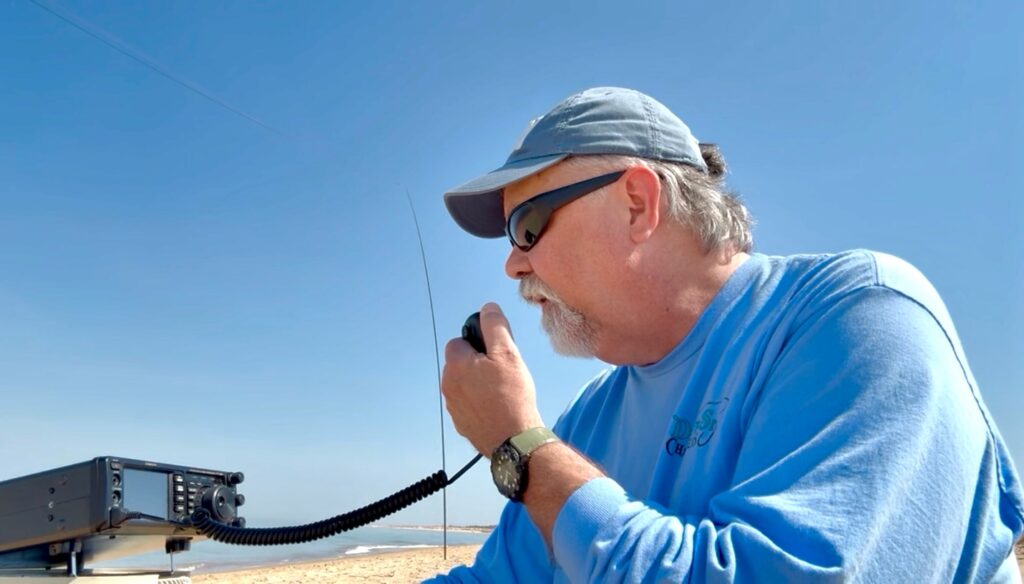
(Image/K4OGO) POTA is great, but there are many other reasons to get out and activate portable. Those reasons range from emergency communications to the necessity of having to get out of a restricted homeowners association to enjoy the hobby. For me, the reason I prefer to operate portable on the HF bands is to take advantage of a location that will increase my ability to make long-distance contacts. Living by the ocean, that location is at the beach beside saltwater, which greatly enhances my signals on both transmit and receive.
Yes, I’m fortunate to live on the coast, but no matter where you’re located there is a place nearby that is optimal for improving your operational situation, whether it’s an elevated summit or just an open park free of power lines, people, and noise. Getting outside portable can improve your experience and is also a great way to experiment with different equipment and antennas. It’s a place to learn and grow as a ham radio operator.
After hundreds of portable HF activations, the one thing I have learned the hard way is to be prepared. Thinking out an activation and setup is key to having a great time and experiencing a good activation. Going over every detail before packing up and setting off can make or break an activation. Trust me, I’ve made all the mistakes, including making a 100-mile trek out to the middle of nowhere only to find that my PL-259 coax connectors won’t work with the BNC connectors on the transceiver I brought along because I forgot to pack a simple adapter.
With that said, let’s go over the steps of preparing for a successful portable HF activation.
Let’s start with the question, “What’s your mission?” Here’s what I mean by that. Are you going out with the plan to make 100 POTA contacts in an hour and fill up the logbook or are you trying to make long-distance contacts? Are you going out for an hour or two or is this an all-day “Field Day” type of activation? Are you practicing for an emergency situation? All these things matter very much when it comes to band selection, equipment selection, antenna selection and, most of all, location selection. Carefully take all these into consideration when planning a portable outing.
After we have determined our goal or mission, the most important step to think out is antenna selection. Throwing the trusty end-fed halfwave antenna over a tree and hooking it up might be great for a quick, casual POTA activation but not ideal for a DXing day atop a summit or on the beach. In the same manner, that 5/8-wave vertical you built for portable DXing isn’t the antenna for practicing and preparing for emergency comms. In that situation it might be best to investigate and build a Near Vertical Incidence Skywave (NVIS) antenna to concentrate your signal in a regional geographic area. You can have the best equipment money can buy, but without the right antenna it really doesn’t matter.
Another key ingredient for a successful HF portable outing is band selection and having a good idea which band you’re going to use before even setting out. Checking, understanding, and preparing to use a certain HF band or bands is extremely important in antenna selection and setup. Simply said, we’re not going to do much DXing at 3 pm in the afternoon on the 40 meter band, but we might make a great number of regional POTA contacts using that band.
On the other hand, at that time of day if band conditions are good, we might make some incredible DX contacts around the world on the 15, 12 or 10 meter bands if they are open, as well as some great contacts on 20 meters around the country with some DX sprinkled in. Understanding the characteristics of the HF bands and when to use them is key to planning and having an enjoyable experience.
Then comes the part of the setup that gets all the glory—the transceiver. Choosing and using a good transceiver that fits your needs is kind of like choosing the type of automobile you drive. Some prefer, or are loyal to, a certain brand while others just want something that’s affordable and works. Regardless of where you stand, having the right transceiver is another crucial part of the HF portable equation.

(Image/K4OGO) Are you pulling up to a park and operating in or beside your vehicle? Then maybe that big 100-watt rig with all the latest features is your thing. Are you climbing up a summit or walking over a dune and across sand for 200 meters? Then maybe that lightweight 20-watt or QRP rig is the answer. Do you need a rig with an internal antenna tuner (ATU) in order to use non-resonant multiband antennas? Putting some thought into it and having the transceiver that suits your needs is extremely important.
Last, but definitely not least, are all the supporting items to finish off your setup or go-bag:
- The proper battery or power source to power everything
- Selecting the right coax and thinking it out as far as coax type, length, and connector types to match your antenna and transceiver
- Do you need a choke for your antenna feedline?
- Do you need an antenna tuner?
- How will you deploy your antenna? Do you need a telescoping pole?
- How will you deploy the pole?

A DX Engineering Nomad Portable Telescopic Mast. (Image/K4OGO) 
(Image/K4OGO) 
(Image/K4OGO) It goes on and on. But thinking out all the details ahead of time is the key to having that day out portable you will never forget.
Take it from someone who has had hundreds of unforgettable days out HF portable but has also driven home disappointed because he forgot something simple or didn’t plan accordingly. Really thinking it out and even making a checklist and going over it several times are the most important parts of your portable activation.
The post Ham Radio Operating Insights from Salty Walt: Portable HF Activations—Preparing for Success appeared first on OnAllBands.
OnAllBands
-
PJ4K – Bonaire
Team consisting of K1DG, K9VV, KM3T, N3RD, N6KT, VA7RR, W1MD, W4PA and WA3LRO will be active as PJ4K during the CQWW SSB contest (Oct 24-25). Category: M/2. QSL via KU9C. Some ops may be QRV as PJ4K/homecall before / after the contest. This post appeared first on: DX-World Want to know more about it? Read More
-
DX-WORLD Weekly Bulletin
[#681] The latest FREE NON-SUBSCRIPTION DX-World Weekly Bulletin written by Bjorn ON9CFG is available to download. Click below to get the newest edition which this week runs to 19 pages. Previous bulletins can all be found here. Please contact Bjorn with any updates or errors. DOWNLOAD THE LATEST BULLETIN ===== This post appeared first on: DX-World Want to know more about it? Read More