Don KW7R became active from Kwajalein Atoll OC-028, Marshall Islands as V73KW in October ’24. His activity is limited due to other commitments but when he gets free time he will QRV on various bands using CW and FT8. The good news is he’s stationed there on and off throughout the coming years. QSL via […] This post appeared first on: DX-World Want to know more about it? Read More
Author: Source Author
-

Call for Zero Retries Digital Conference (ZRDC) 2026 Technical Papers
Technical papers are sought for the Proceedings of the (second annual) Zero Retries Digital Conference (ZRDC) 2026, to be held at the Roundhouse Conference Center in San Ramon, California, USA on Friday, October 16, 2026. This coincides with the first day of Pacificon 2026.
ZRDC 2026 is being hosted by the Zero Retries newsletter. Papers will be published in the Conference Proceedings of the ZRDC. Authors do not need to present at the conference to have their papers included in the Proceedings, although presenters are highly encouraged to submit a separate technical paper (for the Proceedings). (All presenter presentations will also be published in the Proceedings.)
A typical technical paper for ZRDC is a short (typically 5-10 pages) but in-depth explanation of a project, experiment, or new technique. A technical paper typically includes the problem(s) to be solved and how the solution was built and tested, and what was learned. Diagrams, data, and code are often included. The intended audience for technical papers are not just the attendees of a particular ZRDC – they’re intended to help others implement or enhance the subject of the technical paper.
A ZRDC technical paper is different from a presentation slide deck:
- A technical paper is self-contained – all of the needed detail is in the text of the technical paper. A presentation slide deck provides speaking points – the detail is in the presentation narration.
- A technical paper explains the idea in depth for the long term. A presentation slide deck is a “snapshot” of an idea at that moment in time.
- Very generally, a technical paper explains the details of how you did something. A presentation slide deck explains (generally) what you did to expose the idea to those who aren’t familiar.
ZRDC 2026 Paper Submission Details
- Paper submission deadline is Monday, September 28, 2026 23:59 UTC. Submissions received after this date will not appear in the Proceedings.
- Submit papers via email to zrdcpapers@zeroretries.net
- Papers must be submitted as a .PDF format, with sufficient resolution for print publication. (Export or Save As… PDF).
- It is requested that ZRDC papers not use inline web hyperlinks. (Hyperlinks often do not persist through format changes.) In lieu of inline web hyperlinks, simply type out the full URL of the link. For longer URLs, please use footnotes with the full URL in the footnote.
- Papers will be published exactly as submitted.
- Paper authors retain all rights.
- Papers with multiple authors are encouraged.
- Papers are limited to 12 pages (letter-size).
- In addition to ZRDC archives, ZRDC technical papers will be archived for posterity in the Digital Library of Amateur Radio & Communications (DLARC), a project of the Internet Archive.
Technical paper topic areas include, but are not limited to digital radio, radio networking, mesh networks over radio, Software Defined Radio (SDR), digital voice/data systems, digital satellite communication, use of LoRa in Amateur Radio, digital signal processing (DSP), HF digital modes, Spectrum Management, Global Positioning System (GPS), Automatic Packet Reporting System (APRS), Linux in Amateur Radio, AX.25 and other protocols, mesh and peer-to-peer wireless networking, emergency and homeland defense backup digital communications in Amateur Radio.
Zero Retries is an independent newsletter promoting technological innovation that is occurring in Amateur Radio, and Amateur Radio as (literally) a license to experiment with and learn about radio technology. Radios are computers – with antennas! Zero Retries is now in its sixth year of publication, with over 3500 subscribers.
The latest information on ZRDC 2026 will be maintained at https://www.zeroretries.org/p/conference, or just click the Conference link on the top bar of the Zero Retries web page (https://www.zeroretries.org/).
Source: Zero Retries Digital Conference
Amateur Radio Daily
-
EY35S – Tajikistan
Girts, YL2KL and Kaspars, YL1ZF will be active from Khujand, Tajikistan as EY35S during the WAE DX CW contest (August 8-9). Entry class: M/S. QSL via LoTW or W0VTT. This post appeared first on: DX-World Want to know more about it? Read More
-

SDRoxide: Software-Defined Radio Transceiver
The following is a message from Josef (OE3JJS):
SDRoxide is a completely new project written in Rust, supporting many SDR interfaces (CAT/Audio, CAT/IQ, SoapySDR, HPSDR, TCI) and with loads of features built in that used to require extra programs: FT8/FT4, SSTV, RTTY, PSK, OLIVIA, THOR, FSQ, a CW/RTTY/PSK skimmer, there’s dx cluster and sota/pota spotting, a logbook with integrations for QRZ.com, HamQTH, eQSL, LoTW, there’s neural-network noise reduction, a 3D “hamclock” that visualizes QSOs, satellites, Aurora, CME cones, with up-to-date images of the sun’s surface, and you can run the client locally, remote with native binary, or remote via the web (WASM).
Future plans include a TCI Server (so it can act as a Anything-to-TCI bridge for example), Hellschreiber, and eventually digital voice modes for HF.
The current version is v0.5.0, the project is open source and is looking for testers on Windows and Mac.
A powerful SDR transceiver client with a GPU panadapter, dual VFOs, neural noise reduction, built-in skimmers, a full stack of digital modes and a live 3D space-weather globe — wrapped in a cyberpunk interface and running native on Linux, macOS & Windows, or streamed to any browser.
Source: SDRoxide
Amateur Radio Daily
-
A Look at DXpedition Funding
As you work DX, you will eventually find yourself needing DXCC entities where there are either no ham radio operators or no permanent population of people—period. This gap is what most DXpeditions try to fill, bringing an amateur radio presence on the air so the community at large can work it. Everyone hears them on the air and likely sees the teams’ latest updates, but how are DXpeditions made possible?
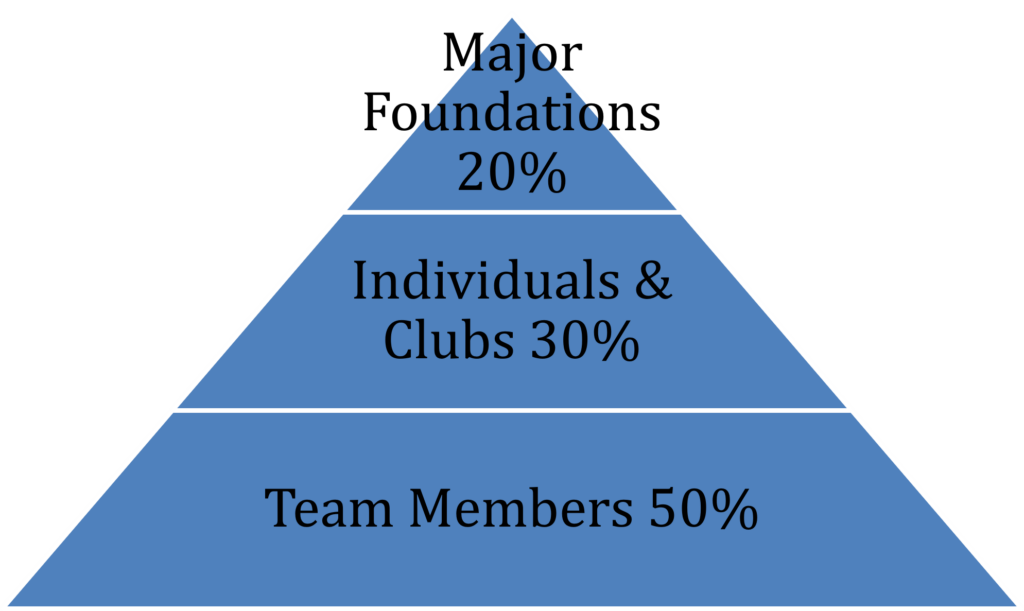
Funding a DXpedition is really like engaging in any other fundraising effort. They will get a small amount of large donations, then a larger amount of smaller donations, and so on. A good way to visualize this is with a fundraising pyramid. Using an example budget of $50,000, you’ll want X amount of contributions at this size, X amount at this size, all the way up to what is hopefully one or two contributions of X amount. This closely models the different sources of DXpedition contributions.
Let’s go over these different funding sources, why each is important, and how they come together to make a DXpedition go!
Team Contribution
DXpedition operators own their expedition, including being the foundation for the operation’s financial side. The common trend for major DXpeditions is 50% of the total cost is covered by the operating team. If a team has estimated a total budget of $100,000, and the entity is generally rare, somewhere around $50,000 will come out of community fundraising with the rest being covered by the team.

(Image/N4ML) This number fluctuates depending on the expedition, and team financial responsibilities have trended upward on recent DXepditions. For instance, the 3Y0K DXpedition to Bouvet Island in 2026 had a significant majority of their funding come from the team. For contest expeditions, which is when someone chooses to go somewhere desirable for a contest, they usually pay 100% of their costs.
It’s also worth mentioning operators traveling on a DXpedition are also on the hook for budget shortfalls if they arise. Most external partners want to be paid on the agreed-upon terms, and those contracts and dates are set before you know how much money will be fundraised.
Foundations
Foundations provide two key supports to DXpeditions: a large donation and positive press for their support. When it comes to securing major funding, amateur radio nonprofit foundations, whose core missions are to advance the hobby, are often your heaviest hitters for dollars raised in a single donation. The two big players here are the Northern California DX Foundation (NCDXF) and the International DX Association (INDEXA). Like any grantor, these foundations have strict rules as to what they fund and what amount they will contribute (by dollar amount and as a percent of your budget). NCDXF has a focus on providing funding to operations going to the top 100 most-wanted DXCC entities, with a specific focus on the top 20. A grant request to one of these DX foundations will require:
- An outline of your plans
- A budget broken down into specific line items
- For the team to agree to specific terms, like uploading the contacts made to Logbook of the World within a given time frame
NCDXF provides prospective DXpedition teams with a sample budget, which serves as a hint as to what they want to see and what portions of an expedition they wish to fund.
By jumping through these hoops and demonstrating commitment and planning to the DXpedition, you’ll secure the largest single donation to the project early on. This is very important for managing cash flow and having enough capital early on to pay bills. Additionally, receiving a grant from a major DX foundation acts like a megaphone, generating great positive press for the rest of the DX community, which will help out with raising the rest of the needed funds and bringing attention to your operation.
Clubs
Moving a step below focused DX nonprofits on our fundraising pyramid, many amateur radio clubs have money in their own budgets earmarked to fund public projects, especially clubs focused on DXing. These clubs are often regional rather than national or international. Getting support from clubs is a much different job than applying for a grant. Think of it like a roadshow drumming up support for your DXpedition. Clubs will ask you to attend a meeting and present your plans, or they may want some sort of writeup to share with their membership, or both.
There are hundreds of clubs that have funded DXpeditions, so this can take up a lot of time! Thankfully, this process has been made significantly easier in the 21st century with the advent of remote presentations. One key benefit of going around giving club presentations is the word of mouth between people in local communities. A presentation to an area’s DX club will probably be talked about at general purpose clubs, which may lead to them reaching out to see how they can help.
Individuals
Individual contributors have their own habits and schedules unique from any other funding source. There will always be some amount of incoming donations from individuals starting when a DXpedition is announced to when it concludes. What makes individuals unique is the volume of donations is correlated to specific events related to the project. An influx will come in when an expedition is announced, when a status update is made public, when the project is the subject of a YouTube video or podcast, when the team leaves for the expedition, and once the team is on the air from the location. Yes, there will be received donations to account for after everything is paid for.
Equipment Sponsors/Loans
A savvy DXpedition will look to reduce costs as well as maximize donation income. This is where equipment sponsors provide a lot of assistance. Instead of buying three to eight radios for a single expedition or bringing a piecemeal of the various radios the team members may have, a radio manufacturer may offer equipment to use for the duration of the operation. This is most often in the form of a long-term loan. This is good for the DXpedition because they now have the same radio to deal with as far as configuration and setup, saving time, and it serves as a great marketing opportunity for the manufacturer: “Our radio was used successfully on this remote island.”
Equipment sponsors can also be from groups you don’t expect, and they need not be radio-specific. A lot of DXpeditions to remote locations require the team to set up all of the infrastructure needed not just to operate, but to survive. Outdoor brands that manufacture tents or camping rations may want to test their equipment in these harsh conditions and will provide such equipment with an ask to provide feedback or testimonials on performance in that location.
A specific shoutout goes to DX Engineering for its continued support of DXpeditions. So many expeditions credit DX Engineering for providing assistance with their project, and this comes in the form of all the line items you don’t think about, like coax, adapters, and the items you probably have in your shack and would prefer they stay there.
Putting It All Together
With all these funding sources now explained, how do they all work together to make a successful DXpedition? Let’s pretend we’re planning a DXpedition with a team of 12 people.
The key costs are:
- Travel
- Accommodations
- Actual radio equipment
Based on some known costs, this means the budget will be somewhere in the $150,000 range before financial support from the community. Taking that number and dividing it by the 12 team members brings us to a raw cost of $12,500 per team member.
If this entity is in the top 50 or so, we can expect some serious community support. NCDXF has decided to contribute $15,000, and INDEXA has decided to contribute $5,000, bringing our total foundation support figure to $20,000. Now each team member is paying $10,833.
After giving a few dozen club presentations, 15 clubs decide to contribute what totals to another $7,500. Now each team member is contributing $10,208 to make the operation happen.
Between a couple manufacturers and retailers, we’re now able to remove all the costs associated with radio equipment at about $30,000. Now, each operator is contributing $7,708, because after the foundation grants, club donations, and equipment loans the remaining budget to account for is $92,500. This is a 38% reduction in cost for the team.
After a long campaign on social media and public press releases, individual contributors from around the world bring in another $15,000 before we depart for the island. We’ve now successfully managed to cover about 50% of our budget from the community, meaning each team member will now contribute somewhere around $6,500.
Cost or Donation Expected Operator Contribution Total Cost $(150,000) $12,500 Foundation Support – NCDXF $15,000 $11,250 Foundation Support – INDEXA $5,000 $10,833 Club Support $7,500 $10,208 Equipment Loans (combined radio+survival) $30,000 $7,708 Individual Support $15,000 $6,458 (~50% reduction) The post A Look at DXpedition Funding appeared first on OnAllBands.
OnAllBands
-
DX-World Weekly Bulletin
[#672] The latest FREE NON-SUBSCRIPTION DX-World Weekly Bulletin written by Bjorn ON9CFG is available to download. Click below to get the newest edition which this week runs to 17 pages. Previous bulletins can all be found here. Please contact Bjorn with any updates or errors. DOWNLOAD THE LATEST BULLETIN ===== This post appeared first on: DX-World Want to know more about it? Read More
-
YM7KK/0 – Giresun Island, AS-154
[INFO] by TA7AZC, Gölkem. On July 26, 2026, TA7AZC Gölkem and TA7EK Emre will carry out a one-day amateur radio operation from Giresun Island (AS-154). During the activity, we will activate the island for the IOTA Contest as well as operate for the WWF, POTA, and WCA programs. As there is no electricity infrastructure on […] This post appeared first on: DX-World Want to know more about it? Read More
-
Guide to Amateur Radio Amplifiers 2026: Part 4, 4O3A Power Genius XL Amplifiers
4O3A produces amateur radio equipment that’s built to perform, built to last, and built for hams looking to seriously upgrade their capabilities.
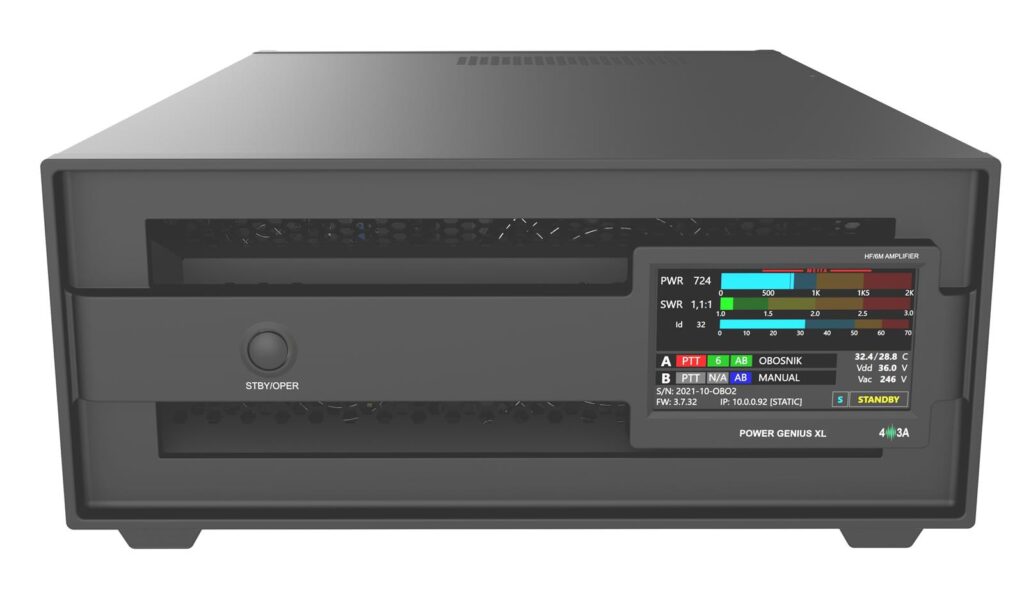
Case in point—the company’s solid-state Power Genius Amplifiers. They deliver 1,500W-plus of output across the 160-6M bands using dual NXP MRF1K50H LDMOS transistors, each rated for 1.5 kW. Users can expect high headroom, low IMD, clean signal output, and a host of other benefits.
4O3A Power Genius XL Amplifiers come in two versions: the SO2R model with true SO2R capability, offering 70 dB of isolation between two inputs; and the 3X1 version that features a 3-to-1 antenna switching module, allowing you to connect three antennas to a single radio.
DX Engineering is the exclusive U.S./Canada distributor of 4O3A amplifiers, Tuner Genius XL Antenna Tuners, the Antenna Genius 8×2 Plus Antenna Switch, and other equipment. Find the full lineup of 4O3A products available at DX Engineering here.

4O3A Power Genius XL SO2R Amplifier (Image/4O3A) 
(Image/4O3A) How do DX Engineering customers describe their 4O3A Power Genius Amplifiers? As one satisfied user said, it’s “bullet proof,” “built like a tank,” “and your last amp for sure.”
We’ll let Michael, a DX Engineering customer, go into more detail in his five-star review at DXEngineering.com:
“I finally got my hands on the 4O3A Power Genius XL HF/6M SO2R amplifier after waiting over a year, and man, it was worth every second of the anticipation. Paired with my FLEX-8600, This thing integrates like it was made for it—seamless LAN control means band changes, PTT, and power levels sync up automatically without any fiddly cables or manual switching, turning my station into a contest-ready powerhouse from barefoot FT8 to full 1,500W+ blasts across 160-6 meters.
The solid-state design runs cool and consistent, pumping out legal-limit power with a touchscreen that’s intuitive for quick tweaks, and those four SO239 ports make SO2R a breeze for my skyloop and dipole setups. I’ve been running FT8 profiles at 500W steady with no distortion or heat issues, and it handles my high-power antenna feedline perfectly, even with the tuner on deck next. Couldn’t be happier—rock solid build, zero glitches, and it just elevates the whole Flex experience. If you’re on the fence, don’t hesitate; I’d buy it again in a heartbeat and I’m already eyeing the matching Tuner Genius XL to complete the stack.”
Other features of the 4O3A amplifiers include:
- Ultra-fast SWR protection (<1 µs), over-temp, over-voltage, over-current
- Integrated MEffA
 (Maximum Efficiency Algorithm) that dynamically adjusts DC voltage for optimal efficiency
 - Thermostatically controlled Smart Fans with high-efficiency heatsink
- Duplexed filters maximize harmonic suppression and efficiency
- CAT, band decoder, LAN interface for operation with other exciters
- Large touchscreen for local control and future upgrades
- Seamless integration with FlexRadio systems via SmartSDR
- Works with third-party transceivers through Ethernet, RS232, CI-V, and BCD interfaces.
- Support for remote operation via SmartSDR, Windows, and Android apps
- Measures 14.1″ x 6″ x 20″ and weighs 37.48 lbs.
- Input Voltage: 90-250VAC, 50/60 Hz*
- Power Supply: Internal Modular/ Switching
- Max A/C Current: 15A @ 220VAC or 120 VAC.
*220 VAC supply and 20A minimum required for full power. Maximum of ~750W when using the 180VAC or less.
NOTE: These amplifiers are shipped without a power connector on the end of the power cable. Customers are urged to work with their electrician to finalize AC power delivery.
Also find 4O3A amplifier accessories, including a rack mount shelf for the PGXL, 3:1 coaxial power splitter/combiner, radio switches, and more at DXEngineering.com.
Check out other OnAllBands posts covering amplifiers we’ve showcased, including ACOM, OM Power, and the Icom IC-PW2.
And be sure to read “I’ve Got the Power. What Else Do I Need?” for insights into other upgrades you’ll need to consider when adding a high-power amplifier to your station.
The post Guide to Amateur Radio Amplifiers 2026: Part 4, 4O3A Power Genius XL Amplifiers appeared first on OnAllBands.
OnAllBands
-
UK/SP9DLM & UK/SN9GM – Uzbekistan
INFO by Darek, SP9DLM. My trip to Uzbekistan begins on July 27 and ends on August 15, 2026. I managed to obtain a radio permit 7 days before departure. I was already convinced that I would not receive permission to broadcast when the good news arrived. Me and my son Greg, 13 years old, received […] This post appeared first on: DX-World Want to know more about it? Read More
-
News: VOACAP
By Jari, OH6BG. New VOACAP map settings: seamless Pacific views and transmitter-centric projection. If you haven’t visited the VOACAP Online HF propagation prediction service for a while, now’s a good time to take another look. Two useful updates to the coverage-area maps have just been released and are accessible via the Settings button on the […] This post appeared first on: DX-World Want to know more about it? Read More