[INFO] – Kasimir, DL2SBY will again be active from the Seychelles as S79/DL2SBY during September 11-21, 2026. He mentions the QTH is on the north side of Mahé Island, about 100m from the saltwater, with a clear view from northeast to northwest. Activity on 80-6m; CW, SSB, FT8 (MSHV). Equipment as follows: 2x ICOM IC7300. […] This post appeared first on: DX-World Want to know more about it? Read More
Author: Source Author
-
ZD8GB – Ascension Island
[INFO] – Gerry, G3WIP will again be active from Ascension Island as ZD8GB during September 5-7, 2026. QRV on 40-10m; SSB & FT8 (via OQ-100 SAT). Previous activities listed below. QSL via EA5GL. [MAY 4, 2025] – For approx 2.5 days, Gerald G3WIP will again be active from Ascension Island as ZD8GB starting on May […] This post appeared first on: DX-World Want to know more about it? Read More
-
Contesting 101: Radio Frequency Interference and the Contest Station
Editor’s Note: OnAllBands is pleased to post a series of articles written by accomplished amateur radio contester and DX Engineering customer/technical support specialist Kirk Pickering, K4RO. The articles, originally published in the National Contest Journal from 2008-11 and updated with current information, offer valuable insights for both contesters new and old.
***
Spending considerable time tracking down RFI, I was reminded of how important it is to deal with the myriad unintentional radiators in and around the house. Several books have been written about RFI, and I suggest reading up on the subject in detail. I will attempt to cover the basics of finding and fixing RFI problems in the contest station and hopefully give you some idea where to start.
Truly Quiet Band
I remember my first time operating at W4AN, Bill Fisher’s place located in northern Georgia. There was a national forest for miles around, and there was no trace of line noise or other interference of any kind. I’m sure that the great antennas and hilltop location played a large role, but even the weakest of signals seemed to pop up out of an incredibly low noise floor. Bill mentioned something about how quiet things were that night, and how important that was to his station’s success. I remember driving home the day after the contest and wondering just how many of those noise-level QSOs were made possible by the quiet receiving location.
Back home at my own station, a closer inspection was in order. I was surprised to find several types of noise across every HF band. I heard power line noise, with its characteristic buzz. It was centered around harmonics of 60 Hz and often covered entire bands. There were little “birdies” and whistles which appeared at regular intervals across an entire band or even several bands. Lots of nice juicy frequencies were made completely unusable by warbling tones that wandered up and down the band, covering 3-5 kHz wherever they happened to land at the moment. Compared to W4AN’s place, half of my usable band segments were essentially useless, littered with all kinds of noise. Where was I to begin?
Editor’s Note: Take a moment to also read this OnAllBands article by Ward Silver, N0AX, “Troubleshooting Hum, Buzz, Crosstalk, and RF Pickup.”
Noise Is Everywhere
It turns out that hunting and eliminating noise sources is an ongoing process which really has no defined end point. With the advent of today’s computerized consumer marketplace, almost every device contains at least one oscillator, plus a noisy switching power supply. Unfortunately, this means that new noise sources continue to appear with each passing month. Population density also plays a role. I have noticed a significant increase in the noise floor where I live. A steady sprawl of housing developments has sprung up around what used to be a semi-rural environment. Each house may contain a dozen or more oscillators—from computers to TVs to cell phone chargers and so forth. It is impractical, if not impossible, to silence every noise source in a neighborhood.
Consider that RFI noise hunting is a bit like peeling an onion. You work on it one layer at a time, starting with the most troublesome sources, then working your way down into the noise floor from there.
Power Line Noise
After listening to all the different noises on the bands, I tried to determine which source appeared to be the worst offender. There was a loud buzzing sound on all of the bands above 10 MHz, and it was wiping out entire bands at a time. After asking some questions and playing the interference to a few of my contesting pals over the phone, the consensus was that I had the dreaded “power line noise” problem. Further reading revealed that this was a fairly common type of interference caused by high voltage arcing, which creates a spark gap transmitter.
Learning the probable cause was helpful, but I still needed to identify the source. AA4NU came to the rescue with his homebrew 130 MHz Yagi and VHF AM Aircraft receiver. I was able to walk around the neighborhood with the Yagi in search of the noisy telephone pole. (Yes, I still receive strange looks from the neighbors when doing this.) With a little bit of practice, I was able to find areas where the noise seemed to peak and narrowed down the search area to a couple of likely poles. After checking on several successive days, I was convinced it was not just an intermittent issue, and the pole was making a lot of noise every day. The next step was to contact the utility company, ask for their assistance with locating the exact source, then attempt to correct it.
Locally Generated RFI
The second-most troublesome source of interference I heard was a wide band drifting “warbling” sound. The noise was S7 to S9 in strength and covered about 3-5 kHz at a time. The warbles would drift up and down the bands, rendering random frequencies unusable at random intervals. Unfortunately, the interference was not audible at 135 MHz, so the noise-sniffer Yagi was not going to help. By process of elimination, I eventually determined that the noise disappeared when I unplugged the computer monitor.
The best way to determine if a noise is being generated locally within your house is to use a battery-powered radio connected to your antenna system. If your antenna relay system requires power, it will also have to be run from a battery. Shut down all power to the house using the main breaker. Make sure that any UPS or other battery-powered devices are disconnected and powered down. If the interference goes away, then you need look no further than your own home to find the source.
You’ve Got to Find It to Fix It
The two examples listed above are common problems but represent only a fraction of the types of interference sources. The main thing to keep in mind is that locating the source of the problem is the primary objective. I have found that one of the most helpful tools to have available is a handheld receiver covering the frequencies of interest. Several VHF-UHF handie talkies now include wideband HF receivers. The HT can be carried anywhere and be used to “sweep” a room’s electronic devices. When I hear a new RFI source at my station, the first thing I do is grab the handheld receiver and tune it to the same frequency as the interference. Then I go around the house trying to find the source.
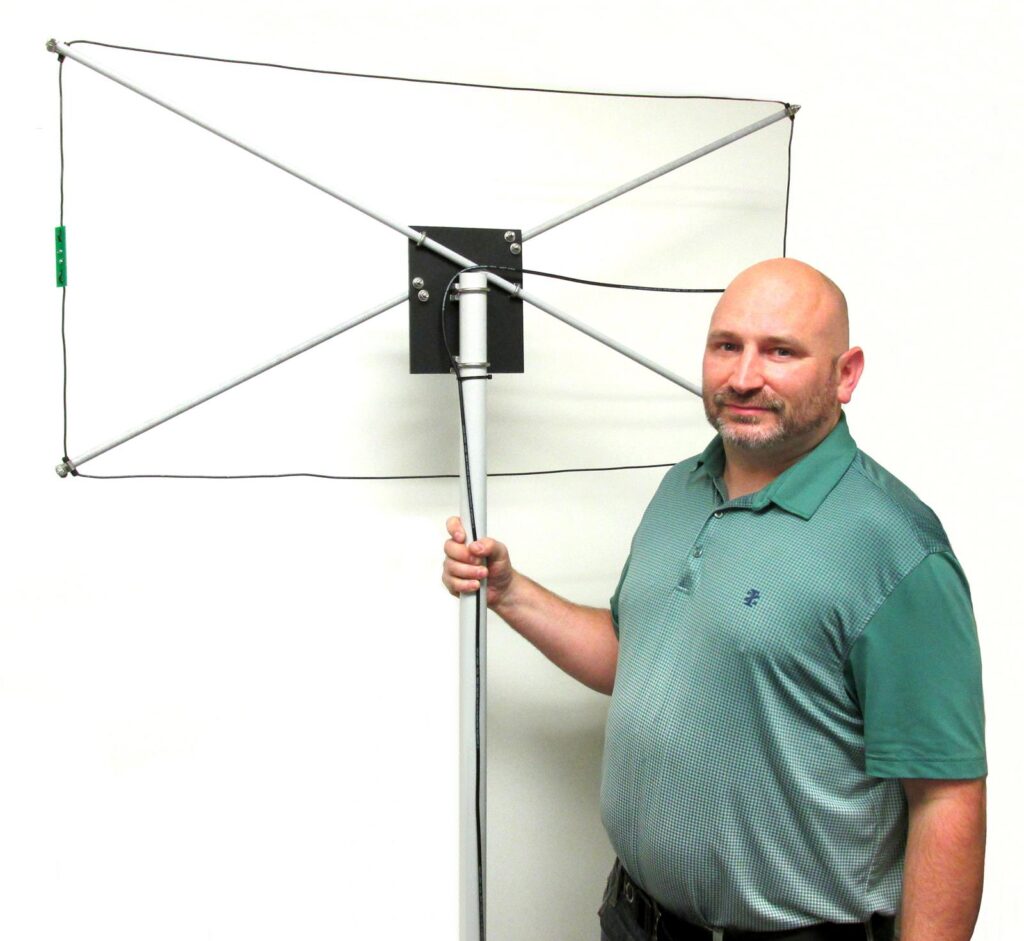
An S-meter and attenuator are very helpful to zero in on the source once I get closer. Also, AM mode is a must for tracking down power line noise. New tools are available which allow a visual wideband inspection of noise sources. One of the current experts in the field of RFI sniffing is Don Kirk, WD8DSB. Don has contributed a lot of useful information on solving RFI problems. His work is invaluable.

The DX Engineering NOISELOOP Portable Receive Flag Antenna Kit, based on a design by Don Kirk, WD8DSB, is an excellent tool for locating noise sources from 1.8 through 30 MHz. It may be used while walking or stationary with your portable HF receiver. (Image/DX Engineering) Fixing the Interference
Once we have successfully located the source of the interference, the next step is to try to cure it. In the case of power line noise, there is not much the contester can do besides enlist the help of the utility company. Do NOT try to climb the pole or use a sledgehammer on it. The best approach is to not touch the pole at all; there could be loose hardware which could pose a safety hazard. Record the pole’s identification number (most have some such marking) and its location. Contact your utility company with the information and give them as much information as you can about the pole and your efforts to locate the problem.
Experience varies greatly from region to region, but forming a helpful alliance is your goal. Courtesy and patience tend to work far better than angry threats and abusive behavior.
In the case of other types of interference, we have a few more options available. Once we have located the offending piece of gear, the most obvious option is to replace the device or just unplug it during contests. Usually this is not an option—especially if the device is part of the contest station or something that other members of the household need to use while you are in front of the radio. The number one cure used by most hams today is some form of common-mode choke, usually constructed from ferrite beads or toroidal cores. Ferrite beads and cores are now available in a large variety of physical configurations and ferrite mixes. A lot of research has been done in this area, and the consensus seems to be that the type “31” Mix is the most useful at HF frequencies.
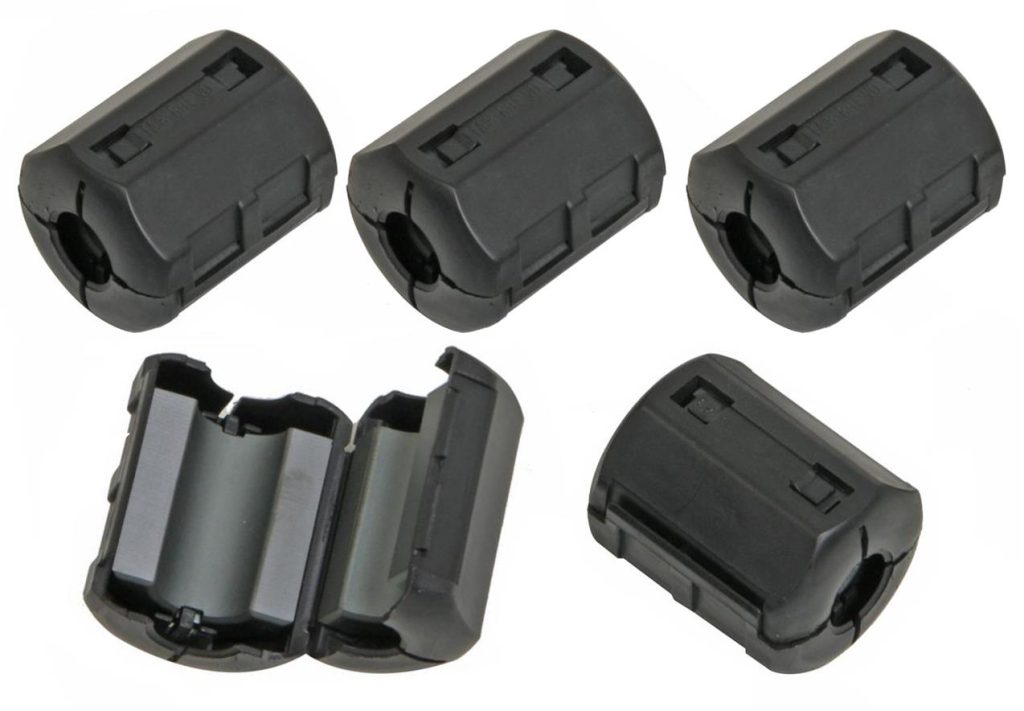
DX Engineering offers many RFI Suppression Kits. The above kit (DXE-CSB31-525-5) includes five Mix 31 snap-on ferrite beads. (Image/DX Engineering) Note that the effectiveness of common-mode chokes at specific frequencies is directly related to the number of cable turns which pass through the ferrite material. The information published by K9YC and W1HIS are required reading to gain an understanding of common-mode chokes and why they matter.
Common Sources
Here are some of the RFI sources I have found over the years:
- Telephone pole arcing insulator
- Telephone pole lightning arrestor
- Track lighting
- Battery charger
- Anything with a switching power supply
- Ethernet routers (especially above 10 MBPS)
- Computers

DX Engineering’s ISO-PLUS Ethernet RF Filters provide common-mode RF interference and EMI noise filtering of radio frequencies from well below 1 MHz to over 100 MHz with no effect on digital throughput. (Image/DX Engineering) 
(Image/DX Engineering) See you on the bands, and don’t forget to submit your log to the contest sponsor. It helps you, helps the sponsor, and helps the sport of contesting.
The post Contesting 101: Radio Frequency Interference and the Contest Station appeared first on OnAllBands.
OnAllBands
-
PJ2/K5SL – Curaçao
Randy, K5SL will be active from Curaçao (holiday-style) as PJ2/K5SL during September 18-26, 2026. QRV on 40-17m; CW only. Generally active in his mornings and late afternoons. QSL via H/c. This post appeared first on: DX-World Want to know more about it? Read More
-

APRS Connect: A Messaging-First APRS Client for Android, Free Over APRS-IS
The following is a message from APRS Connect:
APRS Connect is a new APRS client for Android, built around conversations rather than a packet console. It is free to install and use over APRS-IS. APRS Connect Pro, a subscription after a 7-day free trial, adds radio connections, offline map downloads, the radar layer, track export, extra beacon profiles and capture replay. An iOS version is in progress.
Most of what answers on APRS is a bot that expects exact wording. APRS Connect keeps a directory of 22 of them and gives each a guided screen instead of a command to memorize: WXBOT and WXNOW weather, the REPEAT repeater finder, WHO-IS lookup, the SMS, email, Winlink and WhatsApp gateways, the QRX missed-message mailbox, APSPOT and APRS2SOTA self-spotting, and ANSRVR group nets. The exact packet each button will send can be shown before it goes out, and you can always type a command by hand instead. #APRSThursday and other ANSRVR groups appear as a single net room rather than a thread per stranger, and APRS OTA ops can be hosted and chased from one screen.
Messages are kept as one thread per station, with delivery state on every message and automatic retries. All of this is in the free app.
With Pro, the app connects to KISS TNCs over Bluetooth Classic, Bluetooth LE, USB serial, or TCP, or to a radio’s speaker and mic through a built-in AFSK 1200 audio modem with VOX or wired PTT. Several links can run at once as named channels, alongside APRS-IS, and every received frame is tagged with the link that carried it.
The map is a vector basemap rendered on the phone. Every tile you view is cached and redraws with no connection; whole regions download ahead of a trip with Pro. Every frame heard is stored and decoded field by field in the packet log, which can be filtered and exported as a capture file.
More at https://aprsconnect.com, with what is free and what Pro adds at https://aprsconnect.com/docs/free-and-pro and the full feature list at https://aprsconnect.com/features. Google Play: https://aprsconnect.com/get/89x5bv.
Source: APRS Connect
Amateur Radio Daily
-
6O2M – Somalia
Pertti, OG2M announces he will be active from Garowe, Puntland, northeastern Somalia as 6O2M during October 5-25, 2026. QRV on 40-10m; CW & SSB. Spare time activity. QSL via LoTW. This post appeared first on: DX-World Want to know more about it? Read More
-
Get on the Air to Celebrate 100 Years of Route 66
Plus, check out Route 66 collectibles you can add to your garage or shack!
***
Kerchow!
This year marks the 100th anniversary of Route 66, the legendary 2,400-mile highway connecting Chicago and Santa Monica, California. To commemorate this milestone, the Citrus Belt Amateur Radio Club (W6JBT) in San Bernardino is hosting an operating event to celebrate a century of burned rubber since the road was established.
Route 66 On The Air, now in its 27th year, runs from Sept. 12-20 and will feature more than 20 amateur radio clubs situated along the historic route using 1×1 call signs. Visit the W6JBT website for more details as they become available for the 2026 event.
Last year, the event featured a unique aeronautical rover station (using the W6Y call sign). Bill Hartsell, N3WSH, flew his Cessna from Chicago to Santa Monica, allowing ground-based ham radio operators the opportunity to make contact with the plane mid-flight.
Because of high traffic on the airwaves, operators are asked to keep transmissions short and avoid prolonged rag-chewing so everyone gets a chance to make a clean sweep of all available stations.
A Look Back
The event serves as a way for ham radio operators to “relive the ride” and celebrate the 100-year journey. With such a storied past, we figured it’d be interesting to once again take a trip down memory road.
Established in 1926, Route 66 was the first major project to link the West Coast with the nation’s heartland. It was known as the “Mother Road” or “America’s Main Street.” While images of old drum up picturesque views of a paved road through the desert, it was actually a mix of dirt, gravel, and paved segments until 1938 when it was completely paved thanks to funds through Great Depression relief programs. Route 66 was the first highway in America to be fully paved.
Route 66’s development was famously documented in John Steinbeck’s “The Grapes of Wrath,” which centered on the Dust Bowl and its impacts on the people living during that time. Many people traveled Route 66 to the West Coast looking for new jobs in the growing industries in California, according to History.com.
When World War II rolled around, Route 66 turned into an industrial and military corridor, moving troops and supplies. This meant motels and merchants saw an uptick in business from servicemen and their families. Route 66 also helped facilitate one of the largest wartime mobilizations ever as the masses used it to flock to Oregon, California, and Washington to join the war effort and get jobs in defense plants, according to the National Parks Service.
Once rationing restrictions were lifted after the war, more people joined in on traveling the historic road. Car ownership grew dramatically with more than 52 million cars registered in 1955, almost 30 million more than what was registered at the end of the war. Hey, people wanted to hit the road—especially since Disneyland had opened in California in July 1955. Back then it offered five themed lands with 20 different attractions.
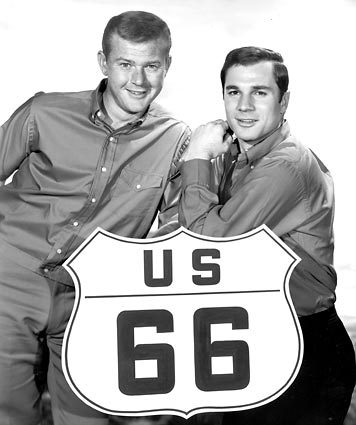
Of course, the route was immortalized in Bobby Troupe’s “Route 66” song and the TV show of the same name. The show was about two down on their luck men working odd jobs as they looked for adventure on the road. But this success and popularity would be short lived because the same powers that made it into a popular road trip destination were the same that sent it into decline. President Eisenhower signed the Federal-Aid Highway Act of 1956—a new network of five interstate highways (I-55, I-44, I-40, I-15, and I-10)—that would be built over the next three decades.

Martin Milner (left) and George Maharis (right) from the TV show “Route 66,” which ran from October 1960 to March 1964. (Image/Public Domain) By 1984, the new interstates were completed, and Route 66 was officially decommissioned. While the route led through several smaller towns, connected using backroads, the interstates were designed to let people travel far distances in a short amount of time. There was no real need for it anymore, despite its connection to several important eras in American history.
That connection is what led advocates to fight to keep it alive, and six years later, Congress passed the Route 66 Study Act of 1990. This law recognized Route 66 as a symbol of American heritage—a physical representation of those who traveled it to find better lives for themselves. A special resource study was conducted by the National Park Service and eventually led to the creation of the National Park Service Route 66 Corridor Preservation Program, which helped local individuals, agencies, nonprofits, and others preserve the route, according to the National Park Service.
Route 66 was thrust back into the spotlight in 2006 when Pixar released its mega-hit movie “Cars.” It centered around professional race car Lightning McQueen and his struggles to make the final race of the season while being stuck in a small town on Route 66. Voiced by Owen Wilson, McQueen’s most notable line is his catch phrase, “Kerchow!” The movie unexpectedly gave an adrenaline shot to the many small towns seemingly abandoned along Route 66. Many of them embraced the movie, painting murals and heavily featuring the characters in their towns. A new wave of tourism from fans of the movie came in as well, helping to keep the towns afloat.
In 2008, Route 66 was listed on the World Monuments Watchlist, which marks monuments that are endangered. And work continues to this day to preserve the magic that the road once brought to millions of people either looking for a new life in the west, working to ensure the protection of our country, or vacationing with loved ones.
Celebrate the 100th Anniversary with Summit Racing
Summit Racing, DX Engineering’s parent company, has cool Route 66 collectibles you can enjoy while you’re busy contacting stations along the route:

Historic Centennial Route 66 Aluminum License Plate. (Image/Summit Racing) 
Route 66 100th Anniversary Sign. (Image/Summit Racing) 
Route 66 Gas Pump with Tire Stack Pen Holder. (Image/Summit Racing) 
Route 66 Neon Clock. (Image/Summit Racing) 
Route 66 Steel Thermometer. (Image/Summit Racing) 
Route 66 Jigsaw Puzzle. (Image/Summit Racing) Enter “Route 66” at SummitRacing.com for more blasts from the past!
The post Get on the Air to Celebrate 100 Years of Route 66 appeared first on OnAllBands.
OnAllBands
-
DX-World Weekly Bulletin
[#678] The latest FREE NON-SUBSCRIPTION DX-World Weekly Bulletin written by Bjorn ON9CFG is available to download. Click below to get the newest edition which this week runs to 19 pages. Previous bulletins can all be found here. Please contact Bjorn with any updates or errors. DOWNLOAD THE LATEST BULLETIN ===== This post appeared first on: DX-World Want to know more about it? Read More
-

Software Fix Keeps Veritium HFClock Running
Users of the Veritium HFClock now have a fix available to keep their HamClock based device functional. N2TBN and AI4Y have teamed up to provide detailed, step-by-step directions aimed at getting Veritium HFClocks working again. The procedure requires removing the rear panel and flashing the device’s firmware.
Once the new firmware is applied, users will run through a few brief setup steps and HFClock will continue to operate.
HFClock owners can download PDF instructions that describe how to fix their device.
Source: AI4Y
Amateur Radio Daily
-
Legendary DXer Bob Locher, W9KNI, Presents Tales from a Serial Sniper Part 3: “Yemen on 40 Meters”
OnAllBands is thrilled to feature articles from noted author and amateur radio DXing legend Bob Locher, W9KNI. Bob will be sharing his favorite DXing memories along with insights on what it took to capture the rarest of the rare. OnAllBands’ readers have been equally excited to enjoy these stories and recall how Bob’s writing inspired them to become armchair travelers as well:
“The “Complete DX’er” and all his articles back in the ‘70s hooked me on CW Dxing,” wrote NG3Q. “Also expanded a love of geography and having my National Geographic atlas close by.”
Be sure to read parts 1 and 2 of this series:

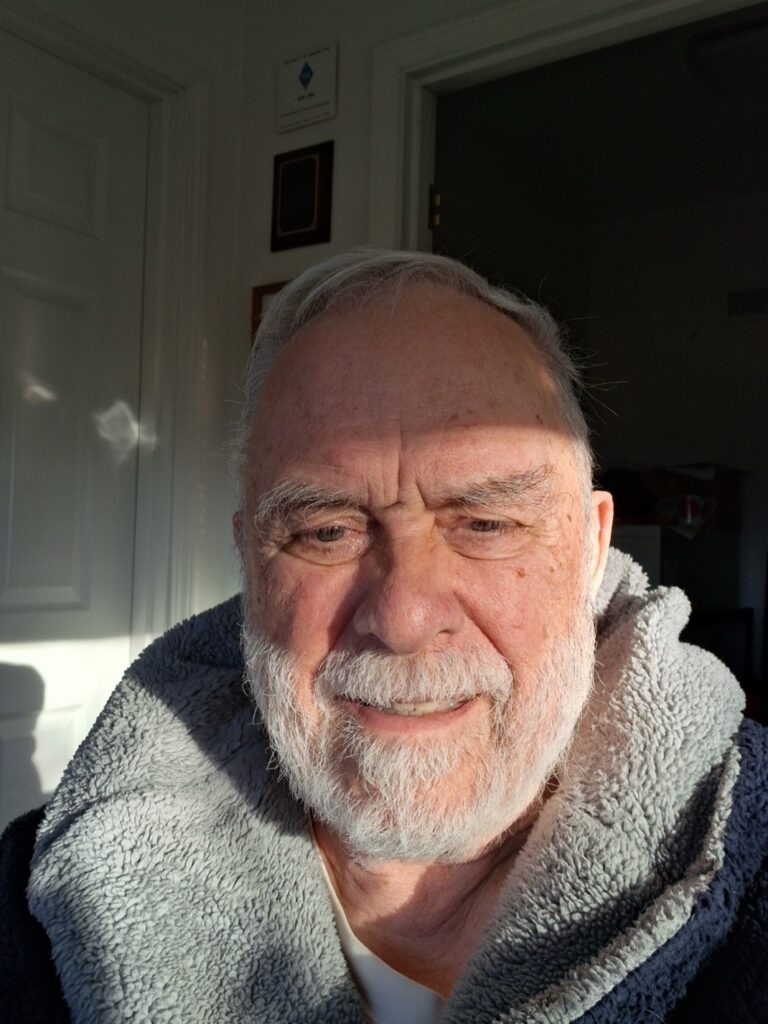
Bob Locher, W9KNI, in his Dawn Patrol uniform. (Image/W9KNI) ***
40 Meter Aficionado
The different high frequency bands (160 to 10 meters) plus the VHF band (6 meters) offer different challenges for DXing. Year round and throughout the sunspot cycle, 20 meters is the queen of the DX bands. If you want to work DX reliably, you need to have 20 meter capability. But the other bands have their attractions as well—and their own challenges—and many DXers favor one band or another.
My band of choice is 40 meters. For 40 meter afficionados, the band has its special charm. It is a band that under normal circumstances is a twilight and darkness band, and of limited DX value around the summer solar solstice. But the rest of the year the band is capable of good DX—and occasional real and very pleasant surprises—for those who know how to use it.
A well-sited Yagi offers a revelation to newcomers to the band who are used to using dipoles or verticals. Still, real DX can be worked using simple antennas. Your scribe managed to work all 40 CQ zones in one year on 40 meters, running 100 watts and a Butternut vertical. But with a Yagi, several more layers of DX become available, and the openings last significantly longer.
I love the challenge of the band. At the same time, I am an armchair traveler and a serious DXer. As far as I am concerned, the two go together hand in hand. I am a person who can look at a map and let my imagination soar, imagining the strange and wonderful places hinted at by the map. At the same time, I love competitive DXing in the institution of the DX Marathon. One of the real beauties of the DX Marathon is that it renews annually, so every year I get the thrill of working new ones for the year AND still feed my armchair travel addiction. A marriage made in heaven for me.
In Pursuit of Yemen on 40 Meters
It would be difficult to find a place more exotic than Yemen—a country lying at the bottom of the Arabian Peninsula, a home of ancient civilizations dating back 7,000 years! While the country has a huge history, in modern times it has become politically unsettled with a significant civil war. Post World War II, Yemen was occasionally on the air, mostly by European operators living in the country. None of them were terribly active, making it always a rare catch.

Yemen (Image/Public Domain) Around the year 2000, DXpeditioners tried to get permission from the country to mount a major operation, but all were denied because of the unstable political situation. But finally, in 2012, someone broke the code. The country was willing to issue a license, but only specifically for operation from Socotra Island, a Yemeni island about 200 miles from the mainland.
Socotra was— and is—totally removed from the problems of mainland Yemen. A sizeable team of experienced operators organized a DXpedition, using the call sign 7O6T. Operation was from late April into May. Equipment included amplifiers and Yagis for the higher bands. I was able to work them on 20 and 17 meters without too much difficulty, but for me the real prize would be to work them on 40 meters.

(Image/DX Engineering) 
Here’s the QSL card from 7O6T posted on OnAllBands in honor of a Socotra activation in 2024. One panel of the card shows Yemen’s flag—equal horizontal bands of red, white, and black. (Image/DX Engineering) For one thing, I was working for an entry in the DX Marathon for 40 meter monoband, and in any case, 40 meters has always had a special place in my heart. It would be an all-time new one (ATNO) for me on the band. Working into that area of the world has always been one of the two toughest areas for me from my West Coast location, the other being inland central East Africa. And this operation was quite late in the season for optimum 40 meter propagation. Had it been in February or March it would have been much easier.
They were certainly on 40 meters and making an active effort on the band. But from my QTH, there was really only one opening—very late afternoon my time. And it was not a very good one. On top of that, they were not on 40 meters CW every day at that opening. Some days yes, some days no. And when they were on, it seemed like all of Europe was calling them—stations who would obviously have far stronger signals into Yemen than I would. Still, that is part of DXing. Some are easy, some are not. And this one was emphatically not!
The operation was winding down—their departure date fixed. I had heard them three or four days on the opening, always weak. If I had had a one-on-one shot with them we could have had a QSO. That was not going to happen. Their signal was at best a 449. As their last days wound down I was getting more and more anxious. At least for the last few days of their stay they were on 40 meter CW during my minimal opening. Of course, I was waiting on them late every afternoon, hoping somehow for a chance.
I tried calling them with the few tricks I had, but to no avail. The only good news was that they finally seemed to have Europe pretty well worked out, with much smaller pileups of European stations calling them. And I was pretty sure all the big guns in Europe on 40 meters had already worked them—now I was more likely competing with the “100 watts to a dipole” crowd.
Finally, it came down to their last day of operation. Was I nervous? Let’s just say the thought passed through my mind that I really ought to consider getting a life, but then it passed and I adjusted my headphones… Ahhh. There they were. 449 maybe…honestly, probably 339, working split, up one. I could hear European stations calling them. There didn’t seem to be very many of them. Maybe I did have a chance?
I checked their sunrise and sunset times. Pretty ugly, really. Their sunrise was an hour before my sunset. 40 meters much prefers late twilight to pre-sundown, and the same for sunrise, though at sunrise the band will hang open a bit longer. But they did have advantages—a beach with a saltwater takeoff and, presumably, a dead quiet location.
Anyhow, I was hearing them with pretty good copy, except their signals were starting a slow fade as they were being bathed more and more in sunlight. I was thinking how their situation was not that different from my morning openings. Then a thought flashed through my head: morning openings sometimes include unusual long path and crooked path openings. Naaaahhhh. But wait. They were starting to fade anyhow, closing the door on any chance I had of a contact. What did I have to lose?
I turned the antenna to long path, skeptically listening to their frequency. And after nulling out as the antenna swung round to the new bearing, their signal started coming up! When the antenna reached the long path bearing, they were 569!!! My heart in my mouth, I called. He came back to a German station. I called again and he responded to a French station. I called again. And then I heard the most beautiful music ever—the music of the spheres: “W9KNI W9KNI 5NN 5NNK.” Wow! Wow! I sent him a “5NN TU” and got a very clean “R 73.” I sat back, stunned. I had just worked Yemen! It was clearly him, and five minutes later he was gone, totally faded out. The next morning, I logged into Clublog and checked the log submissions. There I was—in the log! (And it is still there to this day.) Finding my call was almost as exciting as working him. Validation!
The log online showed that the operator I had worked was WD5COV. At the time, I knew nothing about him. I found out that on DXpeditions he is considered an especially valuable operator for the low bands, thanks to his ability to copy and work weaker signals in noisy conditions.
I had the good fortune to meet him in person a few years later at a West Coast DX Convention in Visalia, CA. I told him the circumstances around the contact and how exciting it had been for me. To my considerable pleasure and surprise, he remembered that QSO as well, being as it was very much out of the ordinary and a surprise to him as well at the time.
The post Legendary DXer Bob Locher, W9KNI, Presents Tales from a Serial Sniper Part 3: “Yemen on 40 Meters” appeared first on OnAllBands.
OnAllBands