Tak, JR1LZK/6 and Mitsu, JE1HXZ/6 will be active from Iriomote Island, Yaeyama Islands, Okinawa, Japan (IOTA AS-024, Grid PL14) from 7 to 14 October 2026. Activity will be on 160–6 meters using CW, SSB, RTTY and FT8. For QSL information see each operator’s QRZ.com page. This post appeared first on: DX-World Want to know more about it? Read More
Author: Source Author
-
TF/VA3ITA – Iceland
Ed, VA3ITA lets us know that he will be active from the land of ice and fire, Iceland, as TF/VA3ITA during October 8-12, 2026. QRV on HF (40 to 10m). He will also participate in the Scandinavian Activity Contest SSB (10-11 October) from Grindavík (Grid: HP83SU), IOTA EU-021. QSL via IZ7ATN, LoTW. More info here. This post appeared first on: DX-World Want to know more about it? Read More
-

Radio Club of America 2026 Technical Symposium & 117th Awards Banquet
The following is a message from the Radio Club of America (RCA):
Join the Radio Club of America at the 2026 Banquet & Technical Symposium—where the brightest minds in wireless communications come together to share ideas, celebrate achievement, and build lasting connections.
Experience thought-provoking technical presentations, engage with industry leaders, explore emerging technologies, and conclude with RCA’s signature awards banquet honoring distinguished innovators.
The Radio Club of America Awards Program is an industry premier event. Every year, it is preceded by the day-long Technical Symposium. Both events showcase expertise and achievement in every segment of wireless.
The 2026 Technical Symposium & 117th Awards Banquet will take place Saturday, November 21st in New York City.
Source: Radio Club of America
Amateur Radio Daily
-
E51A – Cook Islands
Hrane, YT5A (ex-YT1AD) will visit Rarotonga, Cook Islands during November 14-22, 2026. QRV as E51A holiday-style; CW and FT8. The goal of this activity is to prepare for a DXpedition to North Cook Islands (Manihiki) in the period September 25 to October 10, 2027. If anyone would like to join this activity, then contact Hrane […] This post appeared first on: DX-World Want to know more about it? Read More
-
Manufacturer Spotlight: New and Tried-and-True Products from I0JXX
Since 2024, DX Engineering has been a proud distributor of high-quality amateur radio products from I0JXX, an Italian company known for its innovative antenna designs, use of high-performance materials, and world-class workmanship.
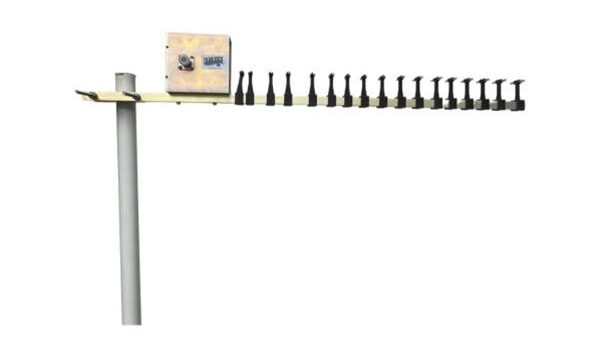
Founded by Sandro Nelli, I0JXX, the company boasts decades of experience producing high-gain directional Yagis for VHF, UHF, and 6M, as well as SHF and EHF operating. For those who work the “birds,” their satellite-friendly, 18-element 2400 MHz antenna allows you to uplink to the AMSAT QO-100 geostationary amateur radio transponder. I0JXX also offers parabolic antenna feedpoint elements required to receive the 10 GHz downlink signal.

I0JXX 2400 MHz Yagi Antenna. (Image/I0JXX) 
I0JXX Parabolic Antenna Feedpoint Element. (Image/I0JXX) You’ll find a great selection of I0JXX products at DXEngineering.com, including:

This I0JXX 36-element 23cm Yagi is capable of handling up to 250W PEP. A low-loss Type-N female connector is provided at the feedpoint. Balun is included. (Image/I0JXX) 
I0JXX offers several 2M Yagis, including this four-element 1,200 PEP horizontal polarization model built for effective SSB, CW, and digital DXing. (Image/I0JXX) Also choose from I0JXX VHF/UHF antenna power dividers, aluminum telescoping masts, and more.

I0JXX Power Dividers serve as RF combiners and splitters for 50-ohm VHF/UHF and EHF antennas and feedlines. They are hand-tuned with advanced test equipment to achieve the specified frequency range. (Image/I0JXX) What’s New from I0JXX
DX Engineering is excited to carry these new offerings from I0JXX:
This advanced switching control unit for preamplifiers, power amplifiers, transceivers, and transverters is typical of VHF, UHF and SHF amateur and commercial radio systems. When using independent low-noise mast-mounted or inline preamplifiers and inline power amplifiers, the correctly sequenced timing of PTT and disconnect signals must be sent before a transceiver or transverter is keyed. The SEQJXXBOX Sequencer provides precisely timed control relays to help protect your preamplifier, power amplifier, and receive-transmit relays from damage caused by improper switching.

(Image/I0JXX) Featuring independently configurable time delay sequencing for SSB and CW modes, the SEQJXXBOX has four separate output relays which are tied in series to ensure the proper switching sequencing of every critical component in the receive-transmit chain.
Configurations and functions are entered with a four-button control. Status info in RX and TX is displayed on a 2 x 16 alphanumeric blue-tone readout. Independent front panel switches for turning on or off the preamp, the power amp, and the sequencer, along with programmable control over CW break-in and relay timing provide intuitive and helpful operational flexibility. Two rear panel eight-screw barrier strips handle all input and outputs, so simple stripped lead wiring is required from all peripheral components. A simple foot switch for SSB PTT is provided with each unit.
These preamplifiers offer high gain amplification with very low internal noise for VHF and UHF amateur band optimized devices used worldwide by experimenters and contest enthusiasts. Excellent receive-only performance at low current is achieved by these compact 12VDC units, available in two connector configurations: SMA female input and output, or Type N male input and female output.

(Image/I0JXX) LNA (low noise amplifiers) offer preamplification using ultra-low noise components as good or better than most receiver front ends, to preserve the capabilities of a low-noise antenna system. Typically, they do not have relays in the signal path that might introduce noise or loss.
These devices can be used directly in most receive applications and may be used to build a sequencer-controlled receive-transmit relay system for two-way VHF or UHF communications. They’re built with high-quality components including low-loss FR4 copper-clad PCBs and environmentally safe tri-chrome high-conductivity passivated aluminum chassis. Choose from five models offering various frequency ranges, gains, and noise factors.
Mast-Mount Low-Noise Preamplifiers
These models offer high gain amplification with excellent noise figures in VHF and UHF amateur band optimized devices for casual operation or contest-grade directional antenna systems.

(Image/I0JXX) Built for long-term tower-top use, two high-power SPDT coaxial relays are used to protect the internal, band-specific I0JXX LNA using low-loss and high-isolation interconnections. These components are housed in a specialized weather- and UV-resistant polyamide black case with a drip edge surrounding two downward facing Type N female connectors mounted on a rugged, 12-gauge aluminum panel.
A separate female BNC is for DC power and control voltage, intended to be sent from the required sequencer via coaxial cable. Extraordinary receive-transmit-receive changeover performance is achieved by these compact 12VDC mast mounted units.
The post Manufacturer Spotlight: New and Tried-and-True Products from I0JXX appeared first on OnAllBands.
OnAllBands
-
C56XA – The Gambia
Alan, G3XAQ will be active from The Gambia as C56XA during November 17 to December 1, 2026. QRV holiday-style on CW & FT8. Participation in the CQWW CW contest (SOSB, 15m LP). QSL via LoTW. OQRS via G3SWH. This post appeared first on: DX-World Want to know more about it? Read More
-

SAQ Grimeton to Air United Nations Day Message
The following is from an email received from SAQ Grimeton Radio Station:
UN-Day 2026 transmission
On October 24th 2026, SAQ is scheduled to air a message to the World, promoting Peace, Unity, and Global Partnerships.The unique Alexanderson alternator is scheduled for one transmission over the antenna on VLF 17.2 kHz CW.
The Grimeton Radio Station welcomes all visitors to attend the transmission.
To attend one of the transmissions in the transmitter hall, a ticket will be required.
Please see grimeton.org for complete visitor’s information.SAQ transmission schedule
- 14:20 CEST (12:20 UTC) Live YouTube broadcast begins.
- 14:30 CEST (12:30 UTC) Start-up of the Alternator.
- 14:45 CEST (12:45 UTC) SAQ on the air “VVV VVV VVV de SAQ SAQ SAQ”
- 15:00 CEST (13:00 UTC) Transmission of peace message
Live Video from World Heritage Grimeton Radio Station
The transmission event can be seen live on our YouTube Channel.In 1924 the construction of Grimeton Radio Station in Sweden was completed and the two transmitters, invented by Ernst F.W. Alexanderson was put into commercial operation. The radio station call sign was SAQ.
SAQ is the only remaining pre-electronic radio transmitter that has been preserved and is still functional, event though only one of the original two transmitters remain.
Test Transmissions
There may be some test transmissions, preliminary on October 23rd between 13:00 – 16:00 CEST. During the tests, SAQ will be on air shorter periods of time, when we will be carrying out some tests and measurements.Amateur Radio Station SK6SAQ
The Amateur Radio Station with the call “SK6SAQ” will be QRV during the day on the following frequencies:
– 3.517.2 kHz CW
– 7.017.2 kHz CW
– 14 017.2 KHz CW
– 3.755 kHz SSB
– 7.140 kHz SSBSource: The Alexander association
Amateur Radio Daily
-
V5/G0RIB – Nambia
[INFO] by Allan, G0RIB. From early October to early December 2026, I shall be in Namibia supporting an exciting motoring event with my colleague Richard G8SVC. We will be located at Walvis Bay and in our spare time plan to operate an HF station running SSB and FT8. Will also have WSPR. Thanks to the […] This post appeared first on: DX-World Want to know more about it? Read More
-
The Perfect Ham Radio Day—Roving Five Ohio State Parks
Hi everyone! This week let me tell you about a recent rove that began with one plan in mind, didn’t work out, morphed into a quite different plan midstream, and still turned out to be what I like to call a “Perfect Ham Radio Day.”
A few weeks ago, I hit the road as a rover for the Ohio State Parks On The Air (OSPOTA) Contest. This would be only the second time I’ve roved for OSPOTA.
OSPOTA had its beginnings in 2008 as a new activity for the then-fledgling Portage County Amateur Radio Service (PCARS). You can read more about OSPOTA on our website at ospota.org or in this recent OnAllBands article about the 19th Annual Ohio State Parks On The Air Contest.
I joined OSPOTA around 2013 as a board member to help with the tech side of things. What began as a simple website maintenance gig has grown to include log-checking. Personally, I’ve always enjoyed portable Field Day-type operating, and OSPOTA seemed to scratch that itch for me.
This year marked my 17th season participating in OSPOTA. I’ve operated from a number of parks over the years. For most of the past eight years, my go-to park has been Mount Gilead State Park in Morrow County. But this year, my plans to drag the camper over to Mount Gilead fell apart due to recovering from some surgeries. Plan B was to instead be a rover.
In case you’re wondering, a rover is a contest participant who lights up not one but several locations over the course of a contest. In the State QSO Parties, rovers will activate multiple counties. It’s the same in OSPOTA, but instead of counties, we light up Ohio state parks.
My plan was simple enough: begin at Quail Hollow Park, head north to Wingfoot Lake State Park, then northeast to West Branch State Park. After West Branch, I’d backtrack and hit them all again. On the return trip, I planned to break out the 80 meter antenna for more contacts. Unfortunately, that didn’t quite go as planned.
Quail Hollow was my first stop, and it has an interesting past of its own. Long before anyone showed up with a radio and an antenna, the property was farmland. It later became the country estate of railroad executive Harry Bartlett Stewart. Fifty years ago the Stewart family sold more than 700 acres and the estate to the State of Ohio for about half its appraised value, creating Stark County’s first state park. In 2016, the state transferred management of the park to Stark Parks, the Stark County park system. It still counts, though, as a state park in the eyes of OSPOTA and other programs.
Quail Hollow is one of two parks that I consider my “Home Park.” When I get tired of radio, there are plenty of other things to do. I’ve hiked part of the Buckeye Trail that passes through Quail Hollow. There are also bike trails and horse trails that get quite a bit of use.

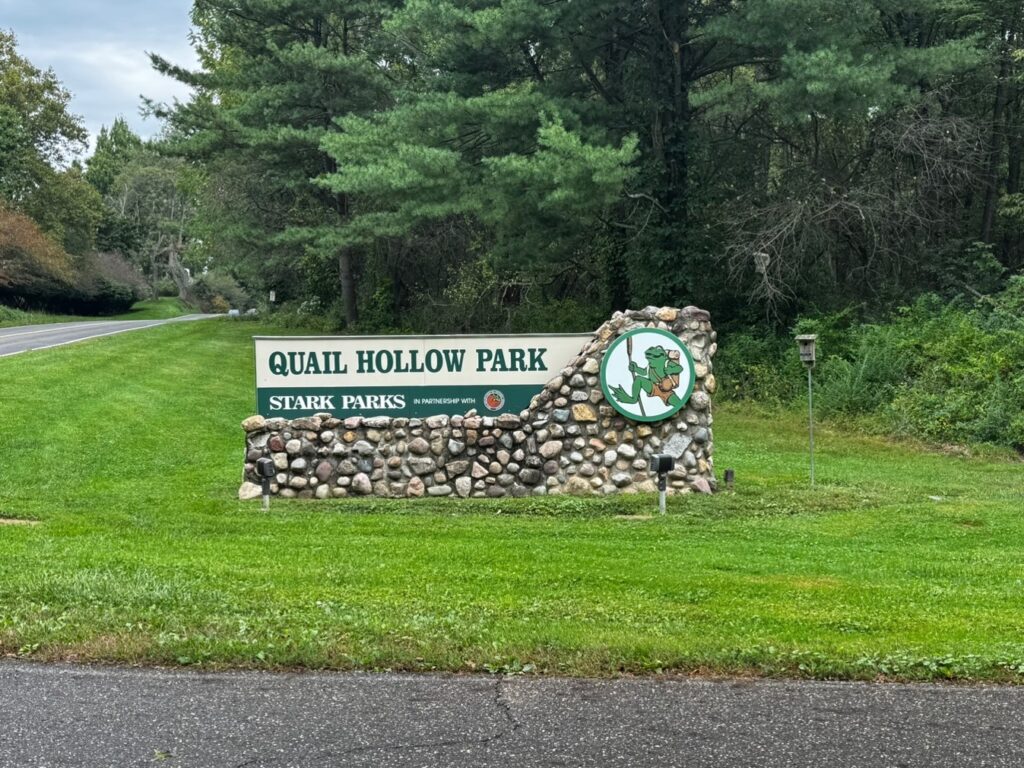
Quail Hollow Park was my first stop of the day. (Image/WG8X) 
The Buckeye Trail is one of several trails that wind through Quail Hollow Park. (Image/WG8X) The weather this year was not bad when I was there, but the radar picture told me that it wouldn’t last. After setting up the station in the cab of the truck, I was about 30 minutes late for the start of the contest, so I got to work making up for lost time.
By the time I needed to move on to the next park, I had a good start on the log. Several contacts were in other Ohio state parks. Conditions were great on 40 meters, and I was optimistic about a good score. The next park would be Wingfoot Lake State Park in Suffield.
My earliest memories of Wingfoot Lake were from the time it was a company park for the Goodyear Tire & Rubber Co. I believe my family attended some reunions there during my childhood. My most vivid memory, though, was attending the Goodyear Hamfest there in the late 1970s. It was one of the best hamfests.
Goodyear’s connection with Wingfoot Lake goes back much further. The company purchased 720 acres there in 1916 for its growing airship operations. The lake was named for Goodyear’s familiar winged-foot logo, and a hangar, workshops, hydrogen plant, and landing field were constructed along its south shore. During World War I Goodyear even built blimps there for the U.S. Navy.
The north shore was later developed as a recreation area for Goodyear employees and their families. By the 1980s, more than 100,000 people were visiting the company park each year. Goodyear closed the park in 2006, and it became part of the Ohio state park system in 2009.

From the shore of Wingfoot Lake, visitors can see the Goodyear blimp hangar on the lake’s south shore. (Image/WG8X) 
This stone was displayed for 55 years on the Goodyear headquarters building in downtown Akron. (Image/WG8X) As I arrived at Wingfoot Lake, the rain was just beginning, and it didn’t improve during my brief visit. This doesn’t bother most rovers since we can usually operate from our cars. However, I didn’t feel like heading out in the rain to swap antennas. So, 40 and 20 meters were the order of the day at Wingfoot.
Before leaving the park, 21 stations wound up in my log. Modes were mixed between SSB and CW. I also worked several other Ohio state park stations. I would have loved to work more, but I needed to grab some lunch and head to my next stop: West Branch State Park.
West Branch Reservoir was created by damming the West Branch of the Mahoning River, and the state park opened in 1966. Beneath the waters of the reservoir lies part of the landscape that once surrounded the small community of Campbellsport, along with old roads, farms, and the original course of the West Branch of the Mahoning River.

The backwaters of West Branch Lake may not be the park’s most picturesque area, but they are popular for fishing and launching small watercraft. (Image/WG8X) The rain had let up by the time I got to West Branch, but a couple of brief listens to 80 meters told me that it wasn’t going to be the money band I’d hoped for. Depending on conditions, 40 meters can either run long or short. If it runs long, then 80 meters is where all the park-to-park contacts happen, with 40 and 20 meters good for contacts farther out.
But when 40 runs short as it did that day, it’s great for working other Ohio state parks. The band was also quite active with stations participating in the New Jersey QSO Party (NJQP). The Colorado QSO Party (COQP) was also running that weekend, but those stations were mostly heard on 20 meters. Several of the NJQP and COQP stations got in the logs. Since their contest exchanges are similar to ours, they lend themselves to this style of operating.
With 80 meters apparently out of the picture, there wasn’t much reason to backtrack through the same three parks. It was time to make another plan. Instead of turning around, I pointed the truck toward Lake Milton State Park and decided to keep going.
Once arriving at Lake Milton State Park (US-3515), I chose a new operating location on Route 18, not too far from the town of Lake Milton. Route 18 was once the main road between Akron and Youngstown. Passing through the town on the way to the state park spoke to better days before the interstate came through. There are lots of small businesses and older buildings from back in the day.
There are plenty of small parking lots on the causeway approaching Lake Milton. I found a very relaxing spot where I could activate the park and enjoy the view. After setting up the rig, it was now mid-afternoon and the number of Ohio state park stations had declined a bit. So, it was time to head to 40 meters and get to work!

The view from the Lake Milton State Park exit includes the small town of Lake Milton in the background. (Image/WG8X) 
A small seating and picnic area was located near my operating position at Lake Milton State Park. (Image/WG8X) For an OSPOTA rover, the magic numbers are ten and four. That is, for an activation to be valid at any park, the activator must make at least ten contacts, including no fewer than four different Ohio state parks, not including the park the activator is operating from. That’s why my first priority at each park was to get four other parks in the log. After that, it’s time to have some fun! In my case, that fun lasted about 20 minutes—about the time it took to get 14 contacts in the log.
The next stop was to be Guilford Lake State Park in Columbiana County. Guilford Lake has an interesting history of its own. The lake was originally built in the 1830s as a feeder reservoir for the ill-fated Sandy & Beaver Canal. When the canal era ended, farmers breached the dam, drained the lake, and farmed the fertile lakebed. The dam was eventually rebuilt, the lake returned, and Guilford Lake became part of Ohio’s state park system in 1949.
Ironically, when I arrived for OSPOTA, much of the lake was gone again. The water has been drawn down for a major rehabilitation of the aging dam, including replacement of the spillway and improvements to the embankment and drainage system. Work is expected to be completed around the end of 2026, with the lake beginning to refill in the spring of 2027.

Guilford Lake and Briar Island before the lake was drained, left, and as they appeared during the dam-repair project in September 2026, right. Refilling is scheduled to begin in spring 2027. (Image/WG8X) This was the final stop in my OSPOTA journey this year. I already knew of at least one group that was going to be activating the park as well. This was my home club, the Alliance Amateur Radio Club, which was running W8LKY for the day. So I made sure to stop by for some cold pizza.
While I was there, the conversation turned to Briar Island, located just offshore from their operating location. With the lake drawn down, someone came up with the idea of walking out and activating the island for the US Islands On The Air program. One of the guys had already tried it but quickly discovered that a drained lake doesn’t necessarily mean a dry lake. The exposed lakebed was still pretty gooey, and he wisely abandoned the attempt.
Briar Island would have to wait for another day, so I headed up the shore to finish out my rove. Conditions were beginning to wind down for the afternoon. Some stations in other Ohio state parks seemed to have packed up early. Since it was almost dinnertime, I admit to wanting to head for home as well. So once my minimum contacts were made, I packed up and left. I guess the pizza didn’t do much to quiet my hunger pangs.
It had been a great day with 96 miles driven and about 2.25 hours behind the wheel. I made 113 contacts and put 25 Ohio state parks in the log.

I made contacts with stations near and far while roving for OSPOTA. (Image/WG8X) That’s it for this month. It was, as I said, a Perfect Ham Radio Day! How about you? What is your Perfect Ham Radio Day? Get out there and find out!
73 DE WG8X
The post The Perfect Ham Radio Day—Roving Five Ohio State Parks appeared first on OnAllBands.
OnAllBands
-

Amateur Radio Daily will Attend Zero Retries Digital Conference and Pacificon
Amateur Radio Daily (and Amateur Radio Weekly) will attend Zero Retries Digital Conference (ZRDC) and Pacificon October 16th through October 18th. My name is Cale (K4HCK) and I produce both publications. I’ll be speaking at ZRDC about New Tech Hams, an emerging group of hams that are highly focused on digital communication and the software that powers it. Thanks to ZRDC for the invitation! I think this talk will be a lot of fun.
Tickets are still available for ZRDC both for in-person and Zoom based attendees. ZRDC focuses on technical innovation in amateur radio. The speaker line-up includes representatives from FreeDV, DigiPi, M17, and more. Learn more about ZRDC.
I will also be attending Pacificon and will share a booth with Zero Retries. Stop by booth 33 and say hello! I look forward to meeting you and hearing your feedback. Tickets for Pacificon are also still available.
73 and thanks for reading!
Source: Amateur Radio Daily
Amateur Radio Daily