From May 21 to May 31, the “Lost Islands – Days of Activity / 25” will take place. Organized by the Russian Robinson International Club, the event is dedicated to Polar Explorer’s Day and the 25th anniversary of the “Lost Islands” High-Latitude Arctic Radio Expedition. During the Days of Activity, special anniversary call signs will […]
Author: NA4DA
-
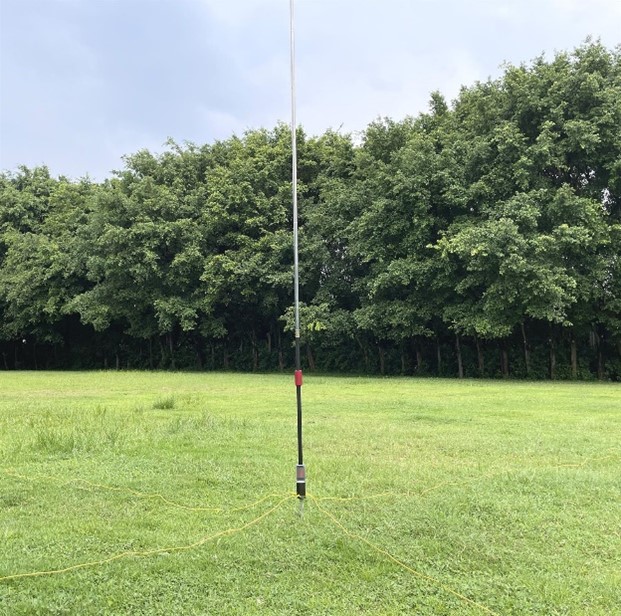
Guide to Prepping for ARRL Field Day 2026: Part 3, Antennas
In Part 3 of our series on prepping for ARRL Field Day 2026 (June-27-28), we’ll be looking at some of the Field Day antenna options available at DX Engineering, where you’ll find a long list of effective wire and vertical choices (way too many to shout out here) that make excellent options for logging more QSOs during all your outdoor activations.
Let’s begin our portable antenna search with words of wisdom from OnAllBands contributor and portable operating expert Thomas, K4SWL:
“Whether you’re a seasoned ham or buying your first antenna, choosing the right one is more about how you operate as an individual and less about the antenna’s capabilities.”
There are several considerations to make when selecting a Field Day antenna for you or your club, including portability, coverage, footprint, ease of installation and tear-down, tuning, power level, suitability for your operating site, and your budget. If you’re not sure what best suits your needs, be sure to consult with the active operators at DX Engineering, who have decades of experience employing antennas of all types on Field Day.
***
K4SWL listed questions to ask yourself about how you intend to operate and highlighted the three antenna options (below) in his article, “Choosing a Portable Vertical Antenna that Matches Your Needs.”

(Image/DX Engineering) “This antenna deploys in about five minutes and works great for portable activities such as POTA.” James, DX Engineering Customer

Chelegance MC-750 carrying case (Image/Thomas, K4SWL) Interested? Check out this stellar review of the MC-750 by DX Engineering’s Michael, KI8R.
Find other Chelegance portable antennas at DX Engineering, including:
- JPC-12 Portable HF Vertical Antenna (40-6M)
- JPC-7 Portable HF Dipole Antenna (40-6M)
- MC-599 Portable Rigid V Rotatable Dipole (40-6M)
***
The second option highlighted by K4SWL is the Chameleon CHA MPAS 160-6M Lite Modular Portable Antenna:

(Image/Thomas, K4SWL) 
(Image/Chameleon) “I was looking for a good system to take hiking for POTA and SOTA activations, and this one answered my needs: compact, highly portable, robust construction, and flexible configuration…Overall, a great system that I look forward to using extensively this year.” Jonathan, DX Engineering Customer
Here are a few other portable options from Chameleon:
- Basic Limited Edition HF Antennas
- WARC-D Dipole Antennas (30/17/12M)
- F-LOOP 3.0 Total Portable HF Loop Antenna (3.5-29.7 MHz)
- LEFS-8010 End-Fed Half-Wave Sloper (80-10M)
- LEFS-4010 End-Fed-Half-Wave Sloper (40-10M)
- OCF-40 Off-Center Fed Dipole (40/20/10/6M; with tuner 60/30/17/15/12M)
***
K4SWL also showcased the REZ 80-10M Ranger 80 Portable Antenna System, now available in an upgraded Version II model. All REZ Antenna Systems products are available exclusively through DX Engineering.

(Image/REZ) Read an excellent review of the Ranger 80 from Mark, K8MSH, here.
The Ranger 80 is just one of several options from REZ Antenna Systems. Here are a few more:
- Recon 40 Version 2 HF Portable Antenna Systems (40-10M)
- SCOUT Vertical Antenna System Combos (20-6M/40-6M)
- Portable Delta Loop Kit Combo (40-6M)
- 4-Band Linked Dipole Kit

REZ Antenna Systems founder Mike Giannaccio, W5REZ, installs a SCOUT antenna during a parks rove covering three states. Watch the video here. (Image/REZ) REZ’s SCOUT multi-configuration antenna system, featuring the SCOUT-XF Mounting Base, has an innovative anti-rotation mounting port and a range of optional accessories, allowing for flexible deployment in a variety of setups:
- 1/4 Wave Vertical
- Coil-Loaded Vertical
- Wire Dipole
- Rigid Dipole
- Delta Loop
Don’t Forget the G5RV
For some hams, no Field Day operation is complete without a G5RV wire antenna. DX Engineering carries several models from Moonraker:

This Moonraker G5RV model covering 80/40/20/15/10M has 500W power handling and comes with 101.71 feet of PVC-coated flex weave antenna wire and 30.18 feet of ladder line. Other models cover 40-10M. (Image/Moonraker) NVIS & DX Combined
For those who want both Near Vertical Incidence Skywave (NVIS) and DXing capabilities on Field Day, the Alpha Antenna Portable MIL EmComm Enhanced Antenna offers long-distance and emergency communications with horizontal and vertical polarization operation. With a deployment time of 10 minutes, it’s ideal for Field Day or rapid deployment scenarios.

(Image/Alpha Antenna) Find many more popular portable models from Alpha Antenna at DX Engineering.
The Expedition model (30.18 feet extended height) covers 40-6M and comes with sturdy fiberglass pole, alloy plates, spreader plates, stay-up kit, shock-cord, DX10 wire, hardware, and more. The antenna features efficient quarter-wave vertical performance and low SWR on every band of operation without the need for traps, coils, or antenna tuners. The antenna is rated at 1,500W SSB/CW and 400W for FT8 and other digital modes. The Expedition comes with speed slots, screw base, and quick-release elements for fast deployment and teardown.

(Image/DX Commander) Find all DX Commander HF Multiband Vertical Antennas and Accessories at DX Engineering, the exclusive North American distributor of DX Commander products.
OnAllBands blogger and POTA enthusiast John, WG8X, highlighted several antenna options in his insightful articles on getting the most fun out of portable operating: Spooltenna Parks EFHW4010 End-Fed Half-Wave Portable Wire Antenna

(Image/Spooltenna) This compact feedpoint kit is an essential component for building a QRP end-fed half-wave antenna system. Perfect for portable operations and outdoor activities, it simplifies setup while delivering reliable performance. The TWIG EFHW QRP Antenna Feedpoint Kit is rated for 25W SSB, 10W CW, and 5W digital, delivering an SWR of less than 2:1 without an antenna tuner.
The kit features a 49:1 transformer that matches the impedance of the user-supplied half-wave element wire to 50 ohms, ensuring compatibility with most QRP transceivers. The BNC female connector pairs easily with recommended coax cables. When the element wire is properly tuned, no external tuner is required, reducing the amount of gear you need to carry.

(Image/DX Engineering) DX Engineering also offers its Low-Power Portable Dipole and Winder Kits:

(Image/DX Engineering) These kits provide the parts for a fun DIY build of a lightweight resonant HF antenna designed for fast portable operations on 40 meters or higher. Here’s what you receive:
- Center insulator with a 1:1 low-power balun
- 24-gauge stranded hi-visibility yellow insulated wire; 80 feet (two 40-foot sections)
- Four link insulators
- Four alligator clips (two per link)
- Four clip hooks for user-supplied rope
- Snap hook to support the center insulator balun on a portable mast such as the DX Engineering Nomad
- Three easy-to-hold DX Engineering red winders
- BongoTies to secure wires onto winders

(Image/W3YJ) Not sure what kind of antenna you want for Field Day? Here’s an easy solution. This kit has the pieces you need to create a range of wire antennas, including single-band, multiband, multi-frequency, folded dipole, doublet and inverted-V, OFC, Windom, Zepp, long wires, rhombic, V-beam, or loop antennas. There’s no need for looping, wrapping, or soldering, so adjusting wire lengths in the field is fast and simple.

(Image/DX Engineering) Designed for building wire antennas for high-power operations, this model mounts to any DX Engineering balun for a balanced and isolated wire antenna, or this insulator kit may be used directly with DX Engineering 300-Ohm Ladder Line for a non-resonant multiband dipole. The kit includes a center-T insulator; two end insulators; two stainless steel wire connection bolts, nuts, and washers; six crimp ring terminals for antenna and ladder line wire connections; and additional stainless steel hardware for mounting a DX Engineering balun.
Find many more antenna options at DX Engineering.com from leading brands including PackTenna, Par EndFedz, Kelemen, Alpha Delta, Buckmaster, Bushcomm, TW Antenna, plus other DX Engineering branded antenna choices and accessories.

PackTenna 20/10M EFHW2010 End-Fed Half-Wave Portable Antenna. (Image/PackTenna) The post Guide to Prepping for ARRL Field Day 2026: Part 3, Antennas appeared first on OnAllBands.
-

BBC Long Wave Shutdown Special Event
The following is a message from Nick (G4FAL):
The RSGB and the BBC Amateur Radio Group will be activating four special calls to mark the closure of BBC Long Wave transmissions on 198kHz (1500m) after more than 90 years. The Long Wave transmitters at Droitwich in Worcestershire, Westerglen near Stirling and Burghead overlooking the Moray Firth, will be closed down on 27 June 2026.
GB1500M will be active for one week from 21-27 June 2026 and may be activated from G, GM, GW, GI, GJ, GD and GU, by RSGB and BBCARG members over the period.
GB198LW will be activated by Cray Valley RS (England), GB198END by Moray Firth ARS (Scotland) and GB198KHZ by Stirling and District ARS (Scotland) during the week 21-27 June 2026.Full details are on the RSGB website https://rsgb.org – search for “BBC Long Wave Shutdown.” A commemorative QSL card will be available for any QSOs or SWL reports via M0OXO OQRS.
Source: RSGB
-
HC8M – Galapagos Islands
Edgar, K2IN is currently QRV from San Cristóbal, Galápagos Islands. During May 28 to June 2, he will be joined by Martín, LU5DX and Mark, LU8EOT preparing the HC8M station for the CQ WPX CW contest (May 30-31); SO/AB/HP category. — picture by LU9ESD.
-
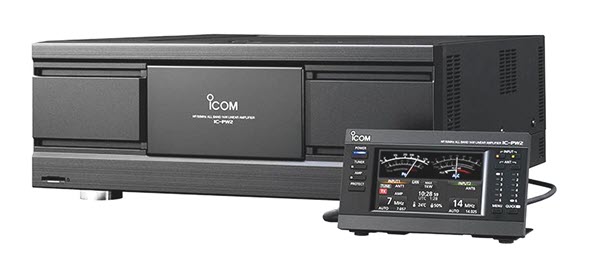
Guide to Amateur Radio Amplifiers 2026: Part III, Icom IC-PW2
In our third installment of OnAllBands’ guide to amplifiers available at DX Engineering, we’re taking a look at the Icom IC-PW2 HF/50 MHz All-Band 1kW Linear Amplifier.
This high-performance, multi-function amplifier makes an excellent choice to take your DXing and contesting to the next level. The IC-PW2 is designed to seamlessly work with these Icom transceivers: IC-718, IC-7100, IC-7300 and IC-7300MK2, IC-7610, IC-7760, and IC-7851.
Before we get into the weeds on this powerful station upgrade, here’s what a few DX Engineering customers had to say after employing the IC-PW2 at their stations:
“I really like the way this amplifier interfaces well with my IC-7610 transceiver. I especially like the fact it allows usage of the antenna tuner in the amp without having to power up the amp. When the 7610 is powered up, the antenna tuner gets powered up (amp function still off).”
David, DX Engineering Customer
“I found this amp to be very well designed. Reasonably quiet, easy to set up and operate. I got 1,100 watts out of mine. But 1kW is way plenty. SO2R works great.”
Peter, DX Engineering Customer
“Fantastic quality and works out-of-the-box as advertised.”
Jeffrey, DX Engineering Customer
Reviewed in “QST” Magazine
The May 2026 issue of “QST” magazine featured a very positive review of the IC-PW2 by Mark, K1RO. He noted that after several months of activity– including major digital, SSB, and CW events–the “amplifier never broke a sweat.” The bottom line: The amplifier “shines when paired with Icom’s current-generation radios.” Read the full review here.
About the IC-PW2

(Image/Icom) Featuring high power and full duty cycle operation, the IC-PW2 uses new 65V LDMOS power transistors (MRFX1K80HR5) and a high-efficiency power supply to achieve a full 1kW output with a 200VAC input. The IC-PW2 instantly operates at full power once turned on. Experience linearity and clean transmission with Digital Pre-Distortion (DPD) Technology with the Icom IC-7610. This technology corrects the signal distortion from the IC-PW2 by applying inverse distortion to the output signal from the IC-7610 exciter in advance.
2×6 Automatic Antenna Selection: Two radio inputs and six SO-239 female antenna jacks (below) provide fully automatic antenna-switching capabilities. Each antenna can be independently selected when changing a band on either transceiver. You can operate it as if you had two linear amplifiers. When using dual independent receivers, which the IC-7610 and IC-7851 have, you can watch two bands at once by using two antennas.

(Image/Icom) Powerful SO2R (Single Operator, Two Radio) operation is possible with one IC-PW2. While you are making a call on one radio, you can watch another band on the second radio. The transmitter lockout function prevents simultaneous transmission of two radios during SO2R operation. Conventional linear amplifiers require two multiband bandpass filters (BPF) to prevent suppression of receive sensitivity by their own transmit signal when operating SO2R. However, the IC-PW2 automatically connects the multiband BPF to the receiving transceiver when you select either transceiver to transmit. This makes SO2R operation possible with just one multiband bandpass filter.

(Image/Icom) User-supplied bandpass filters, preamps, and attenuators can be connected to the [RX-ANT] connectors. When using two radios with the IC-PW2, one multiband bandpass filter can be shared with these radios by switching the receiving radio. Additionally, the band switching of multiband bandpass filters can be controlled from the band signal output connector.
Optional PC remote-control software provides remote-control operation through a local area network connection (LAN). Remote power ON/OFF from the PC and various operation of the radio is possible.
The antenna tuner uses mechanical relays to retune the operating band in two to three seconds. The IC-PW2 also reduces unnecessary emissions during tuning. The antenna tuner works even when the power amplifier function is not used.

(Image/Icom) The included 9.8-foot remote-control cable enables the amplifier to be mounted away from the transceivers for large station installations. The 4.3- inch color touchscreen display features a graphical user interface. Connected antennas are graphically shown on the display.

(Image/Icom) Other features include:
- High-efficiency and low-noise cooling system
- Various error detection circuits protect internal components
- An SDHC card slot on the front panel for firmware updates and saving settings (Uses up to a 32GB SDHC card)
- Remote AUX jack for controlling an automatic-tuning telescopic antenna
- Antenna quick select function connects to priority antenna with simple action
- Tuning Accuracy: SWR 1:1.5 or less
- Tuning Time: Average two to three seconds, maximum 15 seconds
- Dimensions: 16.73″ W × 5.87″ H × 17.52″ D
- Weight: 48.5 lbs.
Note: No AC plug installed: Requires user-supplied NEMA 6-15P plug installed.
The IC-PW2 comes with these accessories:
- OPC-104B ACC cable, 9.8 feet
- Controller cable, 9.8 feet
- OPC-125B coaxial cable, 9.8 feet
- OPC-718 remote-control cable, 9.8 feet
- Detachable controller unit
- Controller bracket stand
- Controller dummy panel (used when Control Unit is installed remotely)
- Ground lug
DX Engineering offers the most extensive lineup of amplifiers in the industry. In addition to the IC-PW2, choose amplifiers from these manufacturers:
The post Guide to Amateur Radio Amplifiers 2026: Part III, Icom IC-PW2 appeared first on OnAllBands.
-
It’s All in the Cards—DXCC Entities on the Air in May 2026!
Dayton Hamvention® is officially over for 2026 (cue Debbie Downer sad trombone sound). The good news is that you probably brought back the kind of equipment you’ll need to capture more DXCC entities in pursuit of working the world. The team at DX Engineering and OnAllBands was thrilled to talk with many of you in Xenia, Ohio, and catch up with operators who have recently put some of the rare ones on the air.
Hope you went home with plenty of eyeball QSOs, some pileup-busting station upgrades, and the good feeling that the world’s best hobby is alive and thriving.
Now let’s talk DXpeditions! Here is a duo of activations to mark on your calendar for the remainder of May 2026:
Rodrigues Island
The 3B9G activation of Rodrigues Island by VU3OPT is scheduled to run until May 22 on 20/15/10M in CW.
Named after the Portuguese explorer Diogo Rodrigues in 1528, Rodrigues (IOTA AF-017) is part of the Mascarene Islands, located in the Indian Ocean east of Madagascar. Once a district of Mauritius, the island was granted autonomous status in December 2002. The 42-square-mile volcanic island has a population of around 41,000 and an economy based mainly on tourism, fishing, agriculture, animal rearing, and handicrafts.
Rodrigues is surrounded by coral reef and a few small uninhabited islands. This leads us to the OnAllBands Geography Question of the Day: Can you name the world’s largest coral reef system? For bonus points, what is the world’s second largest coral reef system? Answers below.
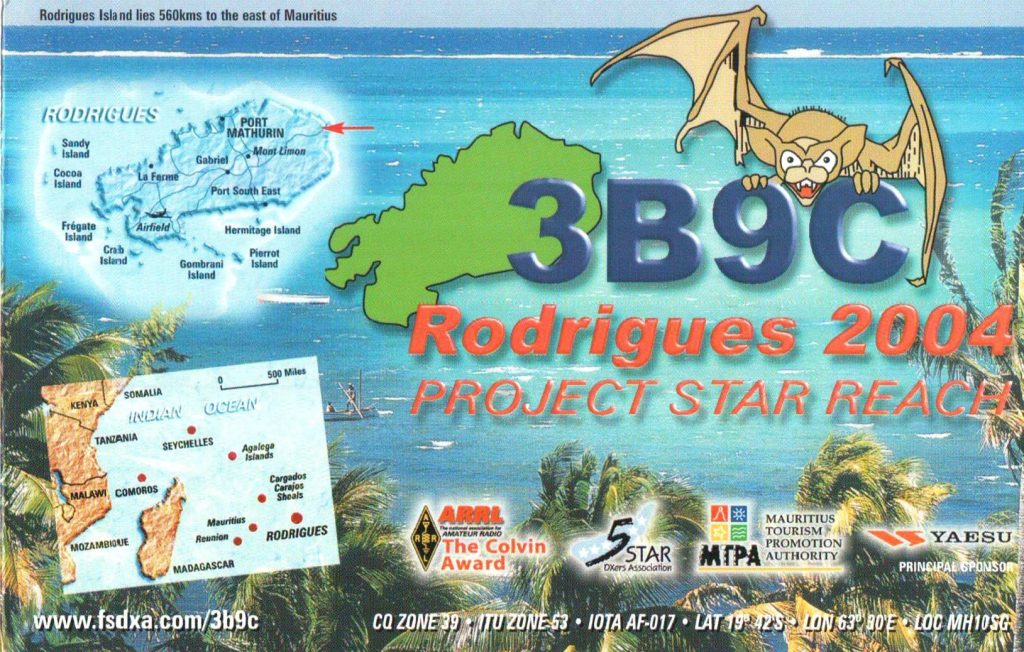
Here are a couple Rodrigues Island QSL cards earned by the active DXers at DX Engineering:
Tom, KB8UUZ, DX Engineering technical writer, received this QSL card from the hugely successful March/April 2004 Project Star Reach 3B9C DXpedition, which boasted 32 operators and more than 153,000 CW, SSB, and Digital QSOs logged.

(Image/DX Engineering) David, K8DV, DX Engineering customer/technical support specialist, received this card from the 3B9WR March 2010 DXpedition, which he contacted on 80/40M CW.

(Image/DX Engineering) Bonaire
The PJ4CB DXpedition by WA7RAR from various Bonaire locations, including POTA spots, is scheduled for May 27-June 8. You can try to reach PJ4CB on 20-10M in SSB and CW.
Bonaire (IOTA SA-006), a Dutch island in the Leeward Antilles in the Caribbean Sea, is situated 50 miles off the coast of Venezuela. It is one of three islands in the ABC Islands group—so named because of the first letters of their names. (The other two are Aruba and Curacao.)
Tom, KB8UUZ, provided us with this March 2012 card from PJ4Z. According to hopibonaire.com, Bonaire’s warm climate makes the island exceptionally suited for lizards, like the green iguana on the QSL card below. Per the website, this largest lizard of Bonaire can grow up to six feet long.
Watch the lizards of Bonaire in action in the video below:

(Image/DX Engineering) Wayne, K8FF, DX Engineering customer/technical support specialist, worked PJ4D (20M SSB) and PJ4I (30M CW) both on October 10, 2010—the day the Netherland Antilles was dissolved as a nation. Both DXpeditions highlighted the birth of Bonaire as a new DXCC entity.

(Image/DX Engineering) 
(Image/DX Engineering) “I’ll Take Massive Coral Reef Systems for $1,000, Ken.”
You didn’t have to be a geography bee champion to know that Australia’s Great Barrier Reef is the world’s largest coral reef system. It extends 1,429 miles off the coast of Queensland and is the largest living structure on Earth. Coming in a distant second place is the nearly 700-mile Mesoamerican Barrier Reef System, or Great Mayan Reef, which runs along the coasts of Mexico, Belize, Guatemala, and Honduras in the Caribbean Sea.
Want to upgrade your DXing capabilities? Find everything you need at DX Engineering, including transceivers, amplifiers, antennas, headsets, and more.
Editor’s Note: Every month, DX Engineering features QSL cards from our team members’ personal collections. To highlight upcoming DXpeditions, we’ll be displaying a few of our favorite cards along with details about what it took to make these contacts. We’re excited to share some of the special cards pulled from the thousands we’ve received over the years. We look forward to seeing your cards as well!
The post It’s All in the Cards—DXCC Entities on the Air in May 2026! appeared first on OnAllBands.
-
A31WW – Tonga
Oliver, W6NV will be active from Nuku’alofa, Tongatapu Island, Kingdom of Tonga as A31WW during the CQ WPX CW contest (May 30-31, 2026). QSOs will be confirmed via LoTW. says Oliver.
-
2026 Hamvention Wrap-Up — Weather or Not…
It’s a tradition for Hamvention® … it must rain for at least part of at least one day … and this year didn’t disappoint! Showers and even the occasional downpour popped up on and off Saturday, prompting flea market shoppers to periodically flee inside to dry out. Then a thunderstorm in the early hours of Sunday morning left the flea market a bit muddy. But spirts ran high for the closing day of…
-
OJ0MN & OJ0Z – Market Reef
Markus, OH1MN sends us info to say he should be QRV from Market Reef as OJ0MN with Juha OH1LEG signing as OJØZ during May 30 to June 6, 2025. They plan to be active on 6 & 4m plus HF bands; SSB, CW, Digi. — Last August, both OJ0Z & OJ0MN were also active.
-
The 2027 French Polar Team Expedition
By Mehdi, F5PFP – TICKETS FOR SALE: For a 4 weeks antarctic cruise in early 2027 aboard a durable and accredited sailing boat, with a very experienced skipper and mate; my girlfriend who’s a doctor and myself, that means in total 4 to 5 passengers and 2 crew members. This is not a DXpedition, it […]