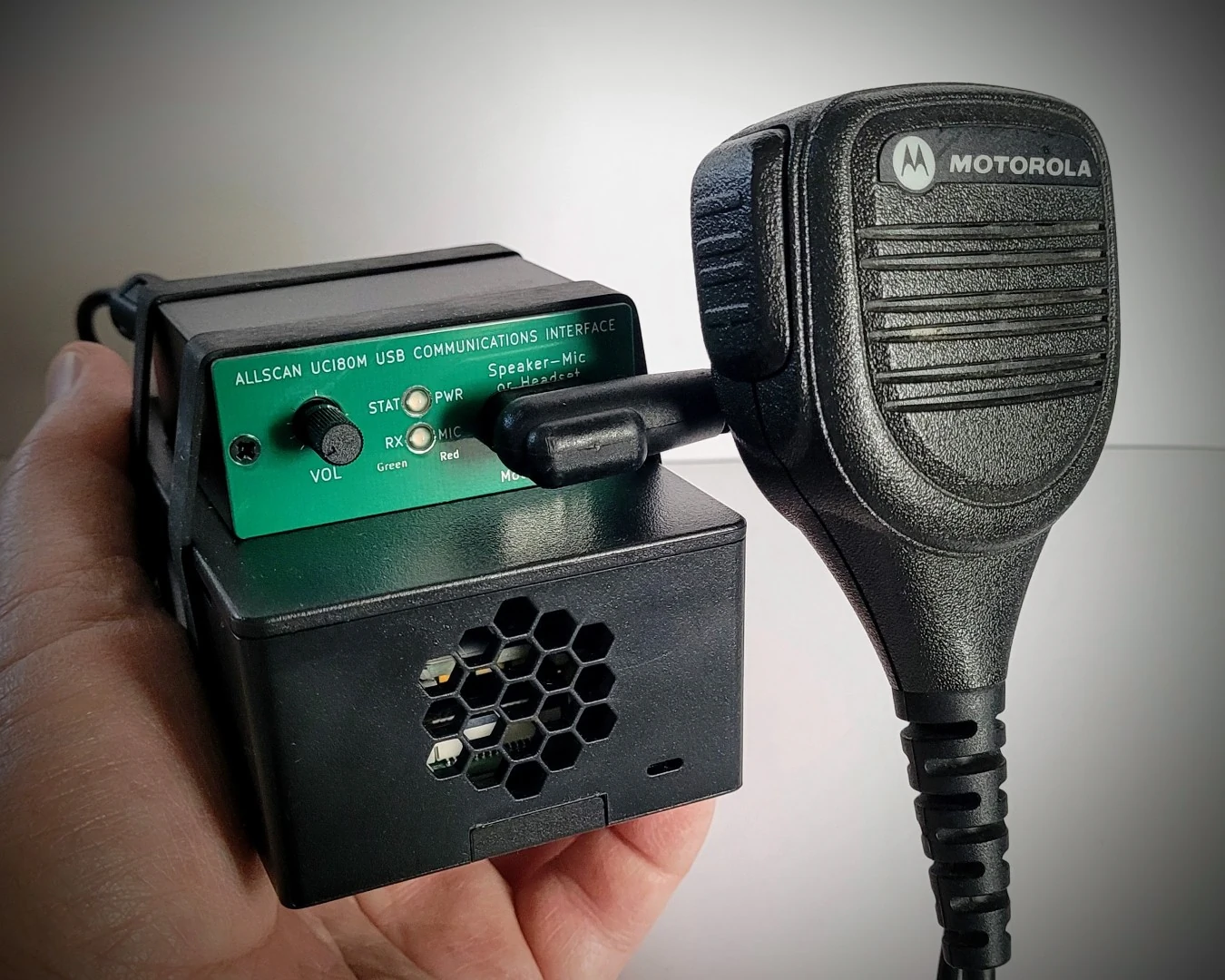
00 QRV: Are You Ready?
Welcome to Random Wire 184.
It’s great to see the sun again — we don’t get all that many warm, clear days during winter in the Pacific Northwest. And while I am really enjoying baking the winter cold out of my bones, I’m concerned that we’re in for another historic wildfire season. We had a warm-ish winter and the snowpack is generally well below average. Predictions are for a hot, dry summer that may set new records. We joke about Californians moving to Washington and Oregon, but it’s not quite as funny that California weather is also creeping northward. I have my fingers and toes crossed, hoping that we don’t have a perfect storm of wildland fire conditions this year. In short: please be careful out there!

01 Thank You…to Field Day Operators
ARRL Field Day 2026 is just around the corner and savvy radio operators are busy organizing their gear and making plans. For some, this is a contest. For others, it’s an annual social event. And for others, it’s a chance to give the general public a glimpse into our very wide and deep hobby. Whatever camp you’re in, I want to express gratitude for participating in one of the biggest annual amateur radio events in the world. Have fun, make lots of contacts, and share your challenges and successes with others. That’s how we learn how to do it better next time and to be prepared!
02 New on EtherHam.com
It was a busy week in all aspects of my life, but I still found some time to dive into a few topics…mainly Raspberry Pi-focused, but interesting, nevertheless:
-
Monitoring and Managing a Raspberry Pi 4: Three Tools, Three Jobs
-
Your Raspberry Pi 4 Makes a Surprisingly Good Home NAS — With Music Streaming
For next week, I’ll also be working up an article on using a mini PC powered by an N150 CPU as the basis for a network-attached storage (NAS) device. As I tie a ribbon around this issue, I have that NAS box running on my LAN and streaming Steely Dan music to my laptop. It is working much better than the Raspberry Pi 4 NAS, running the same software stack. This is a win and I’m looking forward to sharing my write-up with you. Here’s a teaser photo of the interesting hardware platform I built this on.
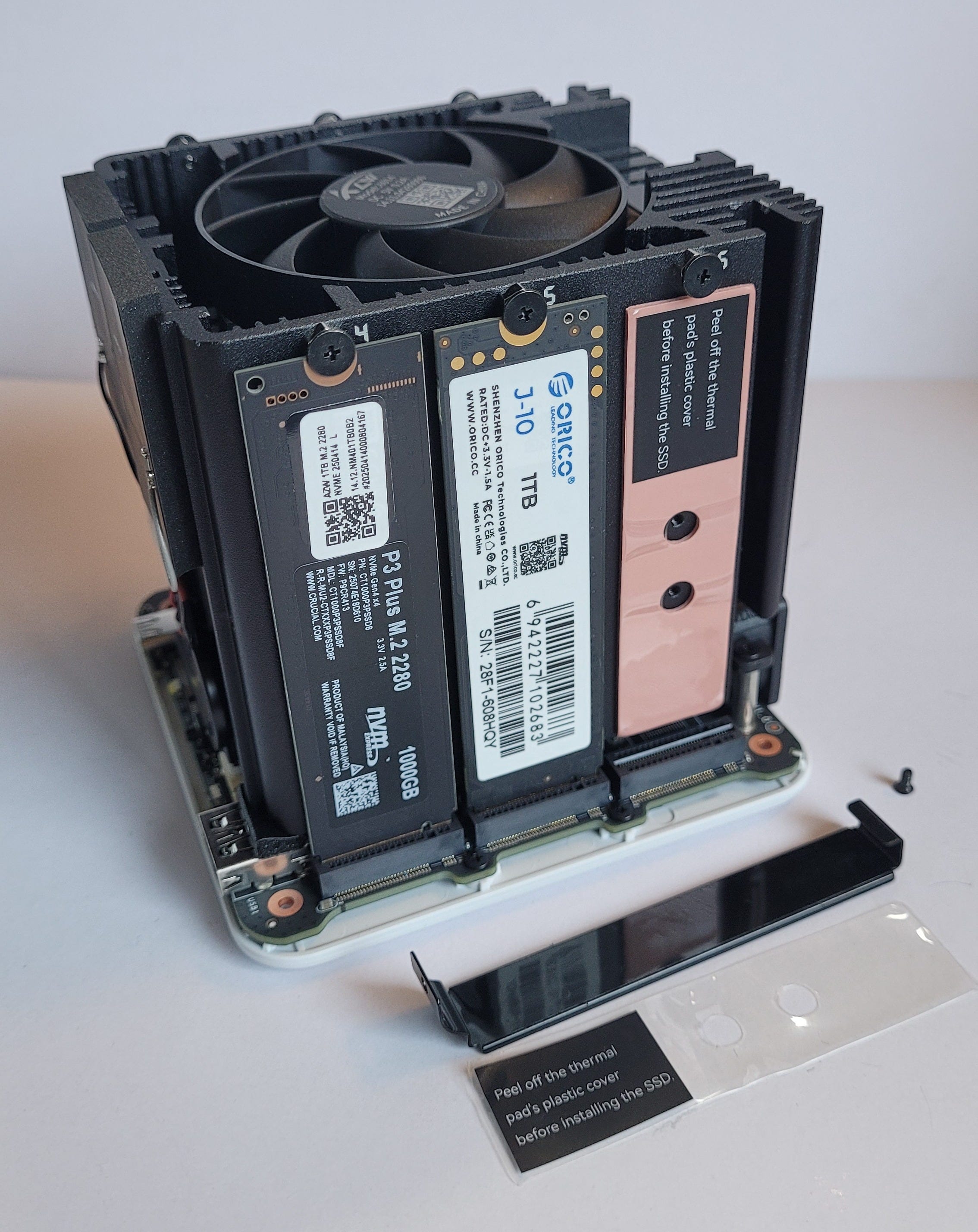
Vertically cooled, six NVMe spaces, two 2.5GB Ethernet ports, and powered straight off the mains (no power brick or wall wart). It is much more responsive than the Raspberry Pi 4-based NAS build, and just as important to me, it runs much cooler.
04 TIDRADIO TD-H9: Still Working On It
I spent more time — lots of time! — trying to get APRS to beacon automatically on the TD-H9. I’ve not been able to figure out cause-and-effect with this radio. I change a setting and the behavior doesn’t change. Then I don’t change a setting and the behavior does change. It beacons when I move the radio, then it doesn’t. Or it doesn’t beacon at all, even though it is set to do so. I’ve driven to town with the radio set to beacon and it beacons when I leave, but not again. I’ve driven to another city, and once it beaconed and the other time it didn’t.
Confusing doesn’t begin to cover it.
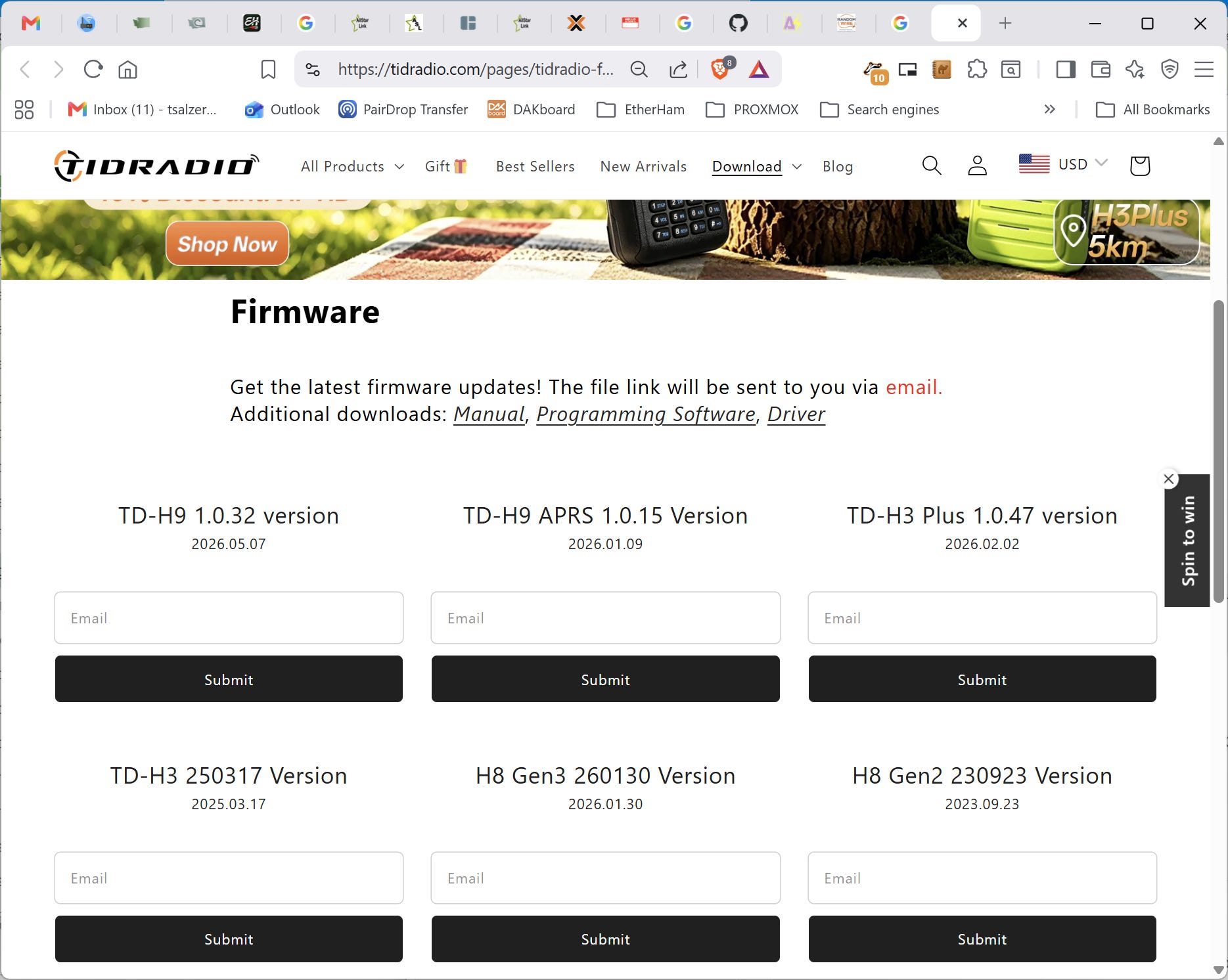
I find no explanation of the differences between two firmwares: a TD-H9 1.0.32 version dated May 7, 2026, and a TD-H9 APRS 1.0.15 version dated January 9, 2026. Maybe I need to try the APRS firmware version…but first, I’ll update to the latest and greatest firmware and try that.
I did not find a USB-C cable that worked, nor do I have the proper K-1 programming cable. I will before Friday, though, so hopefully I’ll get this done in time for this issue of the Random Wire.
I have a second radio coming so I can make sure this isn’t baked into the radio. It’s orange and you’ll want to see pictures, so I should have more to report and show you next week.
Bottom line: still working on it, stay tuned.
05 Repackaged AllStar Node and Restored Configs
I bought a case with room for a Raspberry Pi hat, and added an uninterruptible power supply hat to the Pi. The AllStar node is built on a Raspberry Pi 4 and uses the AllScan UCI80M USB Communications Interface for high-quality audio. That seems to be working well, although there are two modifications I want to make: add a momentary on/off button to trigger a safe shutdown if the system locks up, and add a cooling fan. Find the article on the EtherHam site: AllStar Node with Raspberry Pi 4: New Case and UPS Hat
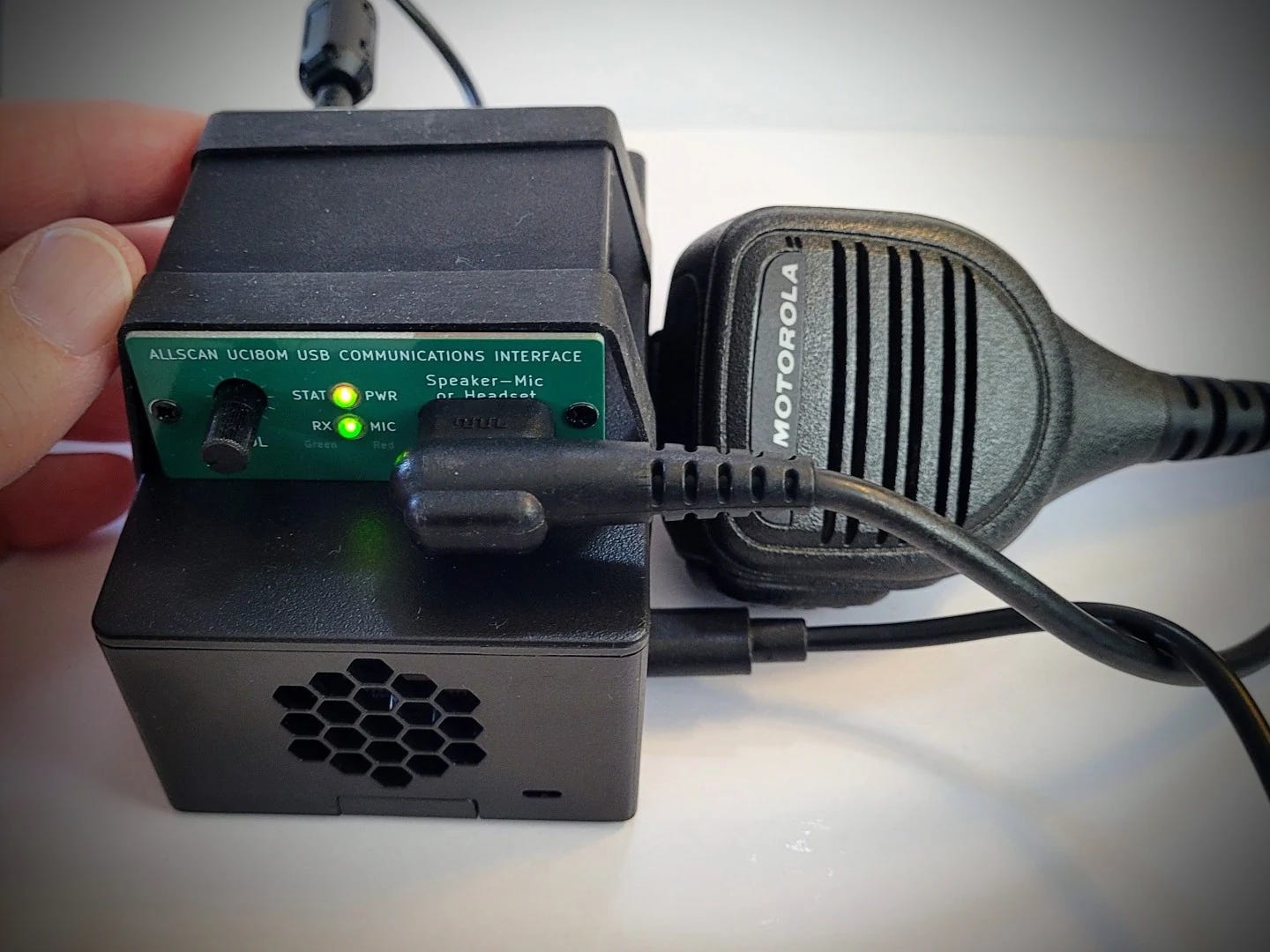
Once I got the Pi moved into the new case, did some scripting, and tested, I noticed that the system was unstable. Suspecting a microSD card that was beginning to fail, I chose to install a fresh AllStarLink 3 Appliance package to a new microSD card.
Normally, I would then walk through the configuration menus and manually enter all the necessary settings. This time, I didn’t do that. This time, while running on the failing microSD card, I copied a host of configuration files to a network drive. Then I shut down, installed the ASL3 Appliance package to a new microSD, booted from the new card, and copied those configuration files to the new card.
There were a couple of permission issues that interrupted things. The Allmon3 package had no password set, so I took care of that manually. And the Cockpit interface kept failing, but that was because it was reading old cookies from my browser. Once I flushed those cookies, the system stabilized and all was well.
I don’t think I saved any time doing it this way, but I did prevent most of the inevitable fumble-fingered mistakes that always come with manually configuring settings. I wanted to test how easy it was to mount a network drive, move files from the node, then move files back to the node. That worked nicely.
The performance of this particular platform proved to be poorer than I expected, so I changed some settings to push the chip a little harder. That increased the operating temperature, with the CPU reaching 70°C — still below the point where throttling begins at 80°C, but warmer than I’m comfortable with. To resolve this, I’ve ordered a fan to add to the system and should be able to report on this next week.
06 The Short Stack
EmComm
-
Ham Radio EmComm Insights: A Look at the Narrow Band Emergency Messaging System — “…the Narrow Band Emergency Messaging System…is an open-source software package that allows licensed amateurs to send data via RF.”
-
The Best Two-Way Radios for Bug-Out Bags and Off-Grid Emergency Communications — “…not all radios are equal, and there’s an enormous amount of bad information online right now. If you’re building a bug-out bag or emergency communications kit, here’s what actually matters — and what doesn’t.”
Shortwave
-
The internet’s creepiest radio mystery is live on shortwave, and you can hear it for yourself — “I found some genuinely strange signals. Some of them were ordinary military, utility, or timing signals, but some of what I found have a genuinely creepy and interesting history behind them.”
Raspberry Pi
-
Why Are Raspberry Pis So Expensive? (+Tips to Get One Cheap) — “I dug into the reasons why, and there are a few tricks that can really help.”
-
RAKwireless WisMesh Pi HAT RAK6421 turns your Raspberry Pi 4/5 into a modular Meshtastic gateway — “RAKwireless WisMesh Pi HAT RAK6421 is a modular Meshtastic gateway expansion board for Raspberry Pi 4/5 that adds support for the company’s WisBlock ecosystem. Designed for users running meshtasticd (the Linux-native Meshtastic service), it enables scalable, always-on Meshtastic base stations, MQTT gateways, and backbone relay nodes.”
Logging
-
Best Amateur Radio Logging Apps for Android and iOS in 2026 — “Here are the best amateur radio logging apps for Android and iOS right now, based on features, LoTW/QRZ support, contest use, and offline capability.”
07 Digital Radio News Digest
Perhaps the most interesting item to me is the update on the LinHT project. I’m looking forward to eventually getting one of these open source transceivers in my hands and on the air.
Summary
Recent developments in amateur radio digital voice and VoIP linking modes include updates to M17 hardware testing, AllStarLink forum discussions on Asterisk core dumps and Debian 12 server issues, and GitHub commits for various VoIP linking systems. The M17 Project has reported on the hardware testing status of LinHT Rev B, while the AllStarLink community has been discussing issues with Asterisk core dumps and server setup. VoIP linking systems have seen updates to app_rpt, ASL3, and amp-server.
Per-Mode Breakdown
DMR
There is limited information available for DMR, with only one GitHub commit mentioning a cleanup involved with renaming in MMDVMHost.
YSF/C4FM/WiRES-X
Random Wire has published an article on upgrading MMDVM hats, but there are no other notable updates for YSF/C4FM/WiRES-X.
M17
The M17 Project has reported on the hardware testing status of LinHT Rev B, and there have been GitHub commits for OpenRTX firmware, including a fix for the miosix GCC toolchain path.
Wojciech Kaczmarski was kind enough to alert me to an update published on the M17 Project page. Find that at: LinHT Rev B – hardware testing status.
VoIP Linking
The AllStarLink community has been discussing various issues on their forum, including Asterisk core dumps, Debian 12 server setup, and Echolink loopback. There have also been several GitHub commits for VoIP linking systems, including updates to app_rpt, ASL3, amp-server, and asl-parrot.
Notable Firmware or Software Updates
-
app_rpt version 3.9.3
-
app_rpt version 3.9.2
-
ASL3 commit to improve Broadcastify Experience
-
OpenRTX firmware commit to fix miosix GCC toolchain path
-
amp-server commit to overhaul call state management
-
asl-parrot commits to overhaul call state management and update to latest amp-core
Last run: 2026-05-28 22:07 UTC — 23 items collected.
Download the collected items here.
08 Band Conditions This Week
Conditions: a decent setup heading into the weekend, but not without caveats. An SFI of 108 and a quiet K-index of 2 put us in good shape for reliable HF propagation, with 20, 17, and 15 meters likely performing well for both regional ragchews and longer DX paths.
That said, the past week wasn’t entirely smooth sailing; a 7-day max Kp of 3.7 hints that we saw some unsettled stretches that may have rattled the higher bands, and with the predicted A-index sitting at 11, it’s worth keeping an eye on conditions rather than assuming the calm will hold. With 15 active solar regions and a healthy sunspot count, the sun is staying busy, so there’s plenty of potential energy in the pipeline — for better or worse.
-
Solar Flux Index (SFI): 108.0 — Moderate — reliable HF propagation
-
K-Index (current): 2.0 — Quiet — good conditions
-
K-Index (7-day max): 3.7 — Active — some HF degradation
-
A-Index: 11 — Unsettled (predicted)
-
Sunspot Number (NOAA/USAF daily): 103
-
Sunspot Number (SIDC daily EISN): 155
-
Active Solar Regions: 15
Source: NOAA Space Weather Prediction Center (swpc.noaa.gov) + SIDC (sidc.be)
Generated: 2026-05-28 22:05 UTC
09 Radio History
A few milestones cluster around this time of year that are worth a moment of reflection — especially if you’re the kind of operator who thinks about where we came from…and maybe wonder where we’re going!
May 1919: QST comes back to life
When QST returned in May 1919, it came back as an eight-page bulletin with no cover, barely resembling the magazine it had been before the wartime shutdown. Amateur radio had been banned since April 1917, and hams still weren’t back on the air — that wouldn’t happen until that October, when a supplement to the fall issue famously proclaimed “BAN OFF.” But the magazine’s return was the signal that the community intended to survive the hiatus.
June 1933: The first Field Day
The first ARRL Field Day was held June 10–11, 1933, under the name International Field Day. Ed Handy, W1BDI, then ARRL Communications Manager, is credited with the idea. About 50 portable stations participated, and the point was straightforward: could amateurs pack up their gear, get out of their shacks, and keep communicating under field conditions? Ninety-three years later, that question still drives the last full weekend of June every year. POTA, portable ops, and EmComm culture are all downstream of that original experiment.
May 1952: The 15-meter band opens — but just for CW
On May 1, 1952, the FCC opened the 15-meter band to U.S. amateurs — CW only. Phone privileges on 15 meters didn’t arrive until March 1953, and the same 1952 rulemaking also extended phone operation to 40 meters, which had previously been CW-only. Taken together, these changes reshaped HF operating and helped accelerate the slow migration from AM toward SSB that would play out across the rest of the decade. It’s one of those regulatory moments that didn’t look like a turning point at the time, but really was.
A personal aside: I missed the real Kon-Tiki anniversary
I wanted to work the topic of the Kon-Tiki into this column, but I missed the anchor: the raft departed Peru on April 28, 1947. That’s a late April anniversary, not late May, and I didn’t catch it until after the fact.
Still worth saying: the Kon-Tiki expedition carried an amateur radio station — callsign LI2B — operated by Knut Haugland and Torstein Raaby, both former Norwegian resistance radio operators from World War II. Over a 101-day voyage across the Pacific, they maintained regular contact with American, Canadian, and South American ham stations, relaying position and meteorological data to the Norwegian Embassy in Washington. The December 1947 issue of QST called it “the most unusual expedition ever to place reliance on amateur radio for communication.”
I read Heyerdahl’s book over and over as a kid, long before I knew anything about ham radio. His writing instilled in me a taste for adventure, and a realization that sometimes, one had to think outside the box to achieve something wondrous.
It turns out the radio operators on that raft were doing something I’d later spend a lot of time thinking about: proving that if you have the right gear, the right skills, and a schedule to keep, you can communicate from anywhere.
That’s not a bad way to describe Field Day, either.
10 QRT: End Transmission
Busy Week
I was surprised by how busy I was this past week. The biggest event was a medical incident requiring taking my wife by ambulance to the emergency room. We got home 11 hours later. The good news: we got home. The bad news: we’re going to have to make that trip to the hospital again to fully resolve the situation.
Domain renewals
If you followed Random Wire issues 182 and 183, you know I’ve been talking a bit about the rising cost of domain renewals. Hours after issue 183 was published, I receive a notice that my EtherHam domains were up for renewal. I’m glad they remind me and I immediately paid to renew them…and yes, costs are rising.
Embarrassing Shack Moment
There I was, concentrating on my laptop screen, when I heard audio on my AllStar node beside me. That’s odd, I thought — that node isn’t supposed to be connected to anyone right now. I turned up the volume but it didn’t respond. I looked at Allmon3 and AllScan to try to figure this out but wasn’t getting anywhere. Then I asked Claude what might be causing connected nodes not to show up, and boy, that was a rabbit hole.
Several minutes later, I reached for the node and that’s when I noticed what I had done: I had put my M1KE device right behind the speaker-mic stand. I wasn’t hearing my node. I was hearing our local YSF/WiRES-X repeater through the M1KE. This is where that SMH abbreviation — shaking my head — really hits home.
The good news? The M1KE audio sounded almost as good as my AllStar node!
73, and remember to touch a radio every day!