Maxim, OH7O announces he plans to be active from Kavieng, New Ireland Province, Papua New Guinea (OC-008) as P29YY during August 29 to September 8, 2026. Grid: QI57jk. However, he posts the following status update on QRZ.com: There is still very high uncertainty with the equipment importing/exporting. Thus, the DXpedition may end up not starting, […] This post appeared first on: DX-World Want to know more about it? Read More
Author: Source Author
-
Ham Radio Portable Operating Insights—POTA Activation Essentials & Gear You Can Keep at Home
Hi everybody! Let’s talk about what to bring and what to leave behind on a POTA activation. If you’ve been activating for any length of time, you’ll probably agree that some items earn a permanent place in your activation while others are better off staying home.
Your plans for the day will dictate what gear you should take along. Let’s say I’m planning an all-day rove to activate multiple parks. I love this kind of trip; just me, the GPS, and the open road, looking for an out-of-the-way spot to set up and operate.
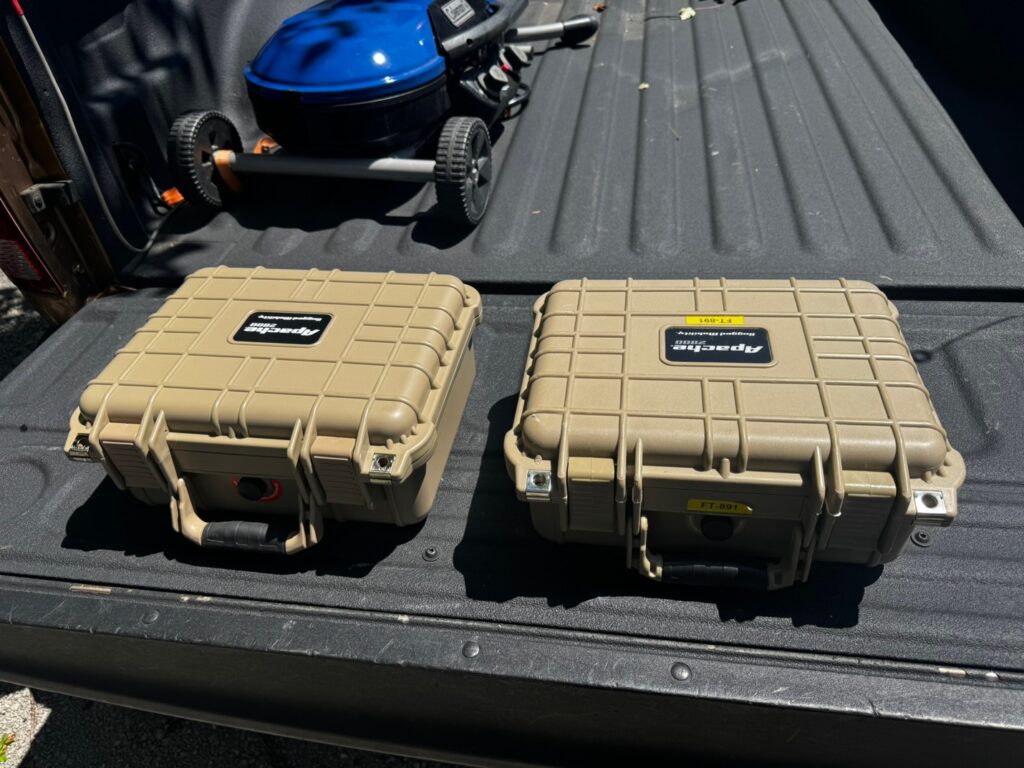
For trips like this, I grab multiple batteries, my mobile antenna, and two equipment cases. One case holds the rig, headphones, power cables, and other essentials. The second carries my Heil boomset and my N3ZN iambic paddles. Those two cases, along with my computer bag holding my laptop and iPad, make up the bare minimum for my activations.

A pair of equipment cases is much better than having your equipment lying around in your vehicle. (Image/WG8X) If I’m planning a multi-day trip, I may even bring the primary rig from the home shack as a backup. Most of the time, though, the QRP rigs that ride in the back seat are adequate as backups. I also carry a box containing wire antennas, rope, and extra feedline. If I’m camping, I’ll throw in my Wolf River Coil as well. It’s an excellent option when I want to get on 80 meters from the campsite.
For an all-day trip, a small cooler is a must. It contains a few cold drinks and plenty of ice. Sometimes I’ll grab a sandwich along the way and toss it in there, too. By late afternoon, I’ll finish the rove by finding a local restaurant before heading home or to my stop for the night.

When setting up for POTA, organization is everything. Here, Tim, AA4SS, deploys a dipole from his homebrew winder. (Image/WG8X) Now let’s look at a completely different scenario.
The lawn is mowed, the chores are finished, and I have a couple of hours to spare before dinner. That’s a perfect opportunity to visit one of the nearby parks in my area for a little walking and a quick activation. Fortunately, there are several parks within a short drive from my home QTH.
For this type of outing, I’ll take a single battery, my mobile antenna, the computer bag, and the rig. I leave the cooler at home, opting to grab my water bottle as I’m heading out the door.
Portable operating is all about finding the balance between being prepared and carrying unnecessary weight. Experience will quickly teach you which category each piece of gear belongs in.
One item that should always make the trip, however, is a basic first aid kit. Customize it to fit your own needs, and don’t forget mosquito and tick repellent. You’ll probably appreciate both long before you need the spare coax.
Gear That’s Earned Its Keep
Over the years, I’ve accumulated plenty of accessories. Some go with me on nearly every activation while others spend most of their time taking up space in the garage.
My favorite accessory is probably my folding wagon. It has proven invaluable for activations that require a bit of a hike from the parking area. It carries a surprising amount of equipment and folds up small when not in use. I chose one with oversized wheels, which handle sand and loose dirt quite well.

A folding wagon, like this one from Summit Racing, is a great item to have as part of your POTA arsenal, especially if you will be operating some distance from your vehicle. (Image/Summit Racing) Another favorite is my Cliq chair. It’s compact and lightweight. Since it folds down very small, I can store it neatly beneath the rear seat of my truck. It even doubles as a makeshift operating table when necessary.
Editor’s Note: You’ll find several types of foldable chairs for portable operating available at DX Engineering.
I also own two telescoping masts: a Nomad 23 from DX Engineering and a Spiderbeam mast. Along with those, I have a couple of hitch receiver mast mounts for my truck. They’re a great solution whenever there aren’t any convenient trees or other supports nearby.

A good example of a telescopic mast is the Nomad 23 from DX Engineering. (Image/WG8X) 
When suitable trees aren’t available, a telescoping mast mounted in a hitch receiver provides a quick, reliable way to get an antenna in the air. (Image/WG8X) 
My Carlson Heavy-Duty Portable Antenna Mast Trailer Hitch Mount available from DX Engineering. (Image/WG8X) I also have a potato gun for launching antenna lines into trees. It usually only comes along on camping trips when I expect to leave an antenna in place for several days. Pumped up to around 35 PSI, it’ll easily launch a plastic projectile 75 feet into a tree. I built mine from plans in the March 2009 issue of “QST.” If you do a search on the author’s callsign, W4SSY, you should be able to find the article.
DX Launcher compressed air cannons and slingshots for stringing wire antennas in trees are available at DX Engineering.

(Image/DX Launcher) For most activations, though, I use a simple arborist throw weight. This is a small, shot-filled bag (they come in various weights). I bought mine online for around $20. With a little practice, you can toss it over branches 25 to 30 feet high, which is more than enough for the vast majority of portable antennas.
Logging
Let’s talk about logging.
If you’d like a more in-depth look at the various logging options available for POTA, check out my earlier article, “Ham Radio Portable Insights: Logging Options for POTA.” Whether you prefer a simple notebook that you transcribe later or a device running your favorite logging software, there really isn’t a right or wrong answer. Use whatever works best for you.

Using a laptop and your choice of logging software is a good solution for logging in the field. (Image/WG8X) Last year, I started using Ham2K PoLo, and it has since become my primary logging program in the field. I also wrote an article introducing PoLo a few months ago, and since then I’ve learned quite a bit more about it. So, keep an eye out for a follow-up article in the near future.

The advantages of using a tablet for logging is apparent in this picture. The author operates largely from his vehicle, so space can be at a premium. The iPad placed on the steering wheel is running PoLo. (Image/WG8X) If you are logging electronically, here’s a trick that I use. I’m very deliberate about backing up my log to the cloud before leaving each activation site. It only takes a moment and protects me against losing the log if the device fails or disappears. I still wait until I’m back home before uploading everything to POTA.
As you’ve probably gathered by now, I’m a firm believer in redundancy, especially when I’m traveling any significant distance from home. I like having backups for just about everything. Every now and then, I’ll even pull one of the QRP rigs out of the back seat just to give it some exercise. Honestly, I notice very little difference in the number of contacts I make with a QRP rig compared to my FT-891 running 30 watts.
And that wraps it up for this time. Thanks for following along. Now get out there and activate something!
73 de WG8X
The post Ham Radio Portable Operating Insights—POTA Activation Essentials & Gear You Can Keep at Home appeared first on OnAllBands.
OnAllBands
-
VY0ZOO – Southampton Island, NA-007
Mike, VE2XB is expected to arrive Coral Harbour, Southampton island, NA-007 on August 23 staying for a month. QRV as VY0ZOO on 80-10m; CW & SSB. QSL via VE2XB. This post appeared first on: DX-World Want to know more about it? Read More
-
CT9/LX1MDA – Madeira
Miguel, LX1MDA will be active holiday-style as CT9/LX1MDA from Madeira Island during August 31 to September 6, 2026. Activity on 40–10m, mainly 20m; SSB and FT8. QSL via LoTW and bureau (LX bureau). This post appeared first on: DX-World Want to know more about it? Read More
-
RI1FJZ – Franz Josef Land
[UPDATE] by Vasily, RA1ZZ. We continue to actively prepare for the trip. Some of the team has already purchased train and plane tickets for arrival in Murmansk on August 31st. We expect the yacht to arrive at the port of Murmansk on the same day. Some equipment has also been sent to the port by […] This post appeared first on: DX-World Want to know more about it? Read More
-
DX-World Weekly Bulletin
[#676] The latest FREE NON-SUBSCRIPTION DX-World Weekly Bulletin written by Bjorn ON9CFG is available to download. Click below to get the newest edition which this week runs to 17 pages. Previous bulletins can all be found here. Please contact Bjorn with any updates or errors. DOWNLOAD THE LATEST BULLETIN ===== This post appeared first on: DX-World Want to know more about it? Read More
-
A Few Words with Max Freedman, N4ML, the Youngest Ham to Ever Set Foot on Bouvet Island
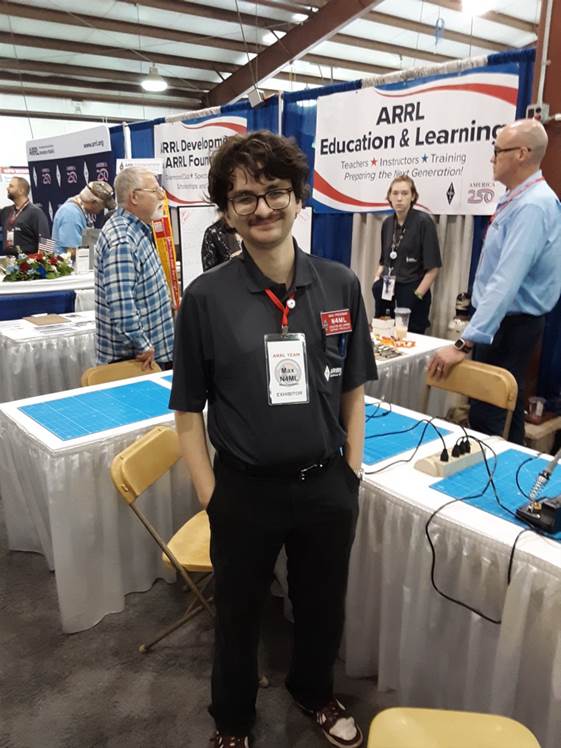
Spend a few minutes with Max Freedman, N4ML, and you’ll walk away with the good feeling that the future of amateur radio is in very capable hands. OnAllBands met up with Max, ARRL Education and Learning Support Specialist, at Dayton Hamvention® 2026 for a chat about his time as the youngest operator on the Bouvet Island 3Y0K team, which recorded more than 100,000 QSOs in February/March 2026; his fondest memories from the adventure; and what each of us can do to bring the excitement of amateur radio to new generations of hams.

(Image/DX Engineering) Could you talk a little bit about what it meant being on Bouvet Island, and also what it meant to represent the youth of ham radio?
“It was really the adventure of a lifetime. It was my first DXpedition, which isn’t a thing a lot of people get to say about a place like Bouvet, and yes, it broke a lot of barriers. I was the youngest person to ever step foot on Bouvet Island, youngest ham to go to Bouvet as well, and the youngest ham to go on a top-ten DXpedition.
“A lot of people will say, ‘Well, how do you actually go on a DXpedition? How do you do this thing?’ If you want to do it, it’s something that’s more than possible, and I hope I showed that to everybody.”

(Image/DX Engineering) Tim Duffy, K3LR, DX Engineering CEO, interviewed Max and the 3Y0K team live from Bouvet Island. “I’ve done a little bit of everything,” Max said from the island. “Putting up antennas, putting up radios…I’ve been totally integrated into the team, and that’s something I’ve been really gracious for.”
You can watch the video below:
If you had to pick your best memory from the Bouvet DXpedition, what would that be?
“I’m lucky in so many ways, and one of them is to be able to contribute to the future of amateur radio working at the ARRL. We’re full of active hams. So, I get a text from my boss Steve Goodgame (K5ATA), and he says, ‘Well, I know you guys are on the air. Where are you so we can make something happen from Newington HQ?’ I hear his call sign and he gets in the log. It was nice to be able to get back home and talk to those guys at work. Then it was also nice to work my dad, who was a big reason I stayed in the hobby, stuck around, and made things happen. So to work my dad from Bouvet—and with him back at home in Chicago—was really neat.”

3Y0K operators at Dayton Hamvention. (Image/DX Engineering) Can you talk a little bit about the future of amateur radio? What can people do as regular ham operators to foster the future of this hobby?
“The future is very bright in my view, and the best thing you can do is to just be active, be open, and do what you can to help people that come to you. The only way things get done is by showing people that you can go do something.
So, answer that e-mail from that random address you get sent. Support programs like ARRL Teachers Institute, the NCDXF Youth Grant Fund, and INDEXA’s Youth Fund.
“If you’re on a contest station, bring some youth in for your contest. You’ll be surprised at what they’re able to achieve at their age, and you’ll hopefully spark something that sticks with them for the rest of their life.”
You’re also now on the board of the Northern California DX Foundation. Can you tell us about that?
“I was shocked and amazed when I got that phone call saying I was potentially going to be on the board and then even more shocked and amazed that they decided to vote me on. It’s a true honor to be amongst board members like Don (N1DG), Kevin (K6TD), Gregg (W6IZT), and Craig (K9CT), and all these amazing, storied, legendary DXpedition figures. To just sit on that board and provide my input where I can and even be able to talk back and forth with these guys about the inside baseball of DXpeditioning is a privilege. I’m gracious for the opportunity.”

Max, operating to the right, was part of the youth-focused PJ2T team participating in the CQ WW SSB Contest in 2025. (Image/PJ2T) Is there anything else you’d like to add about amateur radio in general and its future?
“Amateur radio is the best hobby in the world. It has a lot of things that no other hobby has today. The more we can get people on the air of all ages, youth and otherwise, it’s the best thing we can do to make sure it’s alive for our kids, grandkids, and everybody else.”
Read Max’s OnAllBands article on DXpedition funding here.
The post A Few Words with Max Freedman, N4ML, the Youngest Ham to Ever Set Foot on Bouvet Island appeared first on OnAllBands.
OnAllBands
-
FR/ZS6AJG – Reunion Island
Andre, ZS6AJG plans activity from Saint-Gilles, Reunion Island as FR/ZS6AJG during August 25-27, 2026. QRV on HF bands using a vertical antenna and Xiegu G90 transceiver. QSL via H/c, eQSL. This post appeared first on: DX-World Want to know more about it? Read More
-
Contesting 101: Building a Workbench & Basic Ham Radio Troubleshooting Techniques
Editor’s Note: OnAllBands is pleased to post a series of articles written by accomplished amateur radio contester and DX Engineering customer/technical support specialist Kirk Pickering, K4RO. The articles, originally published in the National Contest Journal from 2008-11 and updated with current information, offer valuable insights for both contesters new and old.
***
I’ve been off the air again lately, this time due to a lightning strike. The last few months have been all about troubleshooting and rebuilding the station for the next wave of contests. Some of the work got me to thinking about the importance of basic technical skills to the successful contester.
Who You Gonna Call?
The technical skill set of amateurs has certainly changed over time, and the contesting sub-hobby is no different. Today’s contester probably spends more time solving computer-related problems than he or she does repairing radios, amplifiers, and antennas.
Computer care and maintenance for the contest station is probably a large enough topic for a separate article. However, the need for some basic fundamental technical skills has not gone away. This is particularly true for the traveling contester, who may not have any option but to perform field repairs himself when something goes wrong. We’re not talking about designing your own transceiver now, but about basic troubleshooting and technical skills which are valuable to contesters at every level of the game.
Learning “which end of the soldering iron to grab” is time well spent. Not only will you be able to make your own repairs when necessary, it can also save you a lot of money. Even if you prefer to use “plug and play” components in your station, you can save a bundle (pun intended) by making your own cables.
Most importantly, you will have a better chance of recovering if something breaks down during a contest.
The Bench
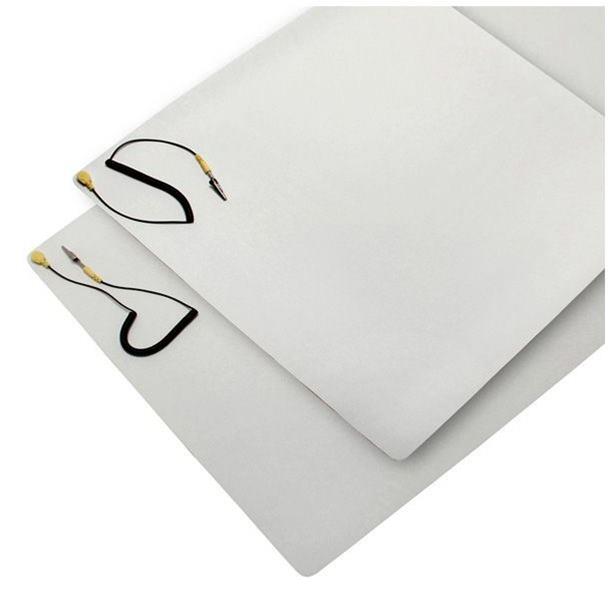
Start off right by building a workbench where you can store and manage tools, parts, and test equipment. Don’t make the mistake that I did for years—working on the floor. I used to just grab whatever was broken, place it on the floor, and start tearing into the project. Before long, I had parts and tools scattered all over the place, and it was also very painful on the lower back. Buy or build a table dedicated to electronics work. It doesn’t have to be anything fancy. I use a standard 6′ x 3′ office table. I’ve covered a section of it with an anti-static mat. Some kind of anti-static mat is a requirement these days, as many components have devices which are sensitive to static discharge.

Eclipse Tools makes 24″ x 24″ and 48″ x 24″ anti-static mats (above) and electrostatic discharge wrist straps available at DX Engineering. (Image/Eclipse Tools) Convenient access to electrical power is also a must for powering test equipment and other devices. Don’t forget a good bright light overhead. A magnifying lamp is also very helpful. I need a bright light and magnifier more every year, as my eyesight continues to deteriorate with age.

This 5 Diopter LED Magnifying Inspection Lamp is one of several Eclipse Tools lamps available at DX Engineering. (Image/Eclipse Tools) Another item to consider is storage for parts and cables. The small multi-drawer parts bins are handy for small components, and I like hooks on the wall for cable management.
Some space for test equipment documentation and other manuals is also necessary. Consider an L-shaped arrangement, with one space for test equipment and gear, and the other for schematic diagrams and other documentation. All areas must be well lit. Many test benches today include a computer and monitor arrangement for looking up parts and zooming in on schematic diagrams.

DX Engineering Partsbox Storage Cabinet. (Image/DX Engineering) 
Homak Parts Organizers with Drawers. (Image/Homak) The Soldering Station
Those of us who started ham radio during the Heathkit era have a leg up on today’s amateur when it comes to soldering skills. My first radios were an HW-7, then an HW-101, both of which I built as a young teenager. I made hundreds of poor solder connections using a brass wood burner as a soldering iron. It was amazing that the equipment worked at all.
Years later, I met people who were technicians by trade, and they showed me the right way to solder and work with electronics equipment. Try to find someone who can show you the basics of soldering, and who can help you learn the right way to solder. There are some soldering tutorial videos on the internet which can also be helpful. I recommend investing in a decent temperature-controlled soldering station, as opposed to a Weller “gun” type or simple pencil iron. The right size tip and proper amount of heat make a lot of difference in successful soldering outcomes.

The Eclipse Tools LCD Smart Soldering Station offers high-precision performance and temperature control. Powered by a smart microprocessor control system, it provides highly accurate temperature regulation across a wide range—from 86° to 932°F. Find more soldering stations at DX Engineering. (Image/Eclipse Tools) Get a few different sizes of solder and spend some practice time soldering different sizes of wire and components. Soldering is not rocket science, but it does require some practice to do properly. Soldering is a fundamental skill which is used in many parts of station construction. Once you have the basics down, I recommend trying to build a simple kit.
While Heathkit is no longer with us, there are still many useful ham shack accessories available in kit form. While there are many new alternatives to soldering available now to the ham, the astute contester will learn how to make his own high-quality soldered connections. I understand that there are top contesters who have hand-soldered every connector in their stations. That’s a LOT of connectors, and a lot of work. They must understand the importance of soldering hundreds of PL-259s correctly, every time. The old adage, “if you want something done right, do it yourself” also applies here.

The DX Engineering Single-Band Low Power Dipole Kit makes an excellent choice for individual or club activities. The easy-to-build and useful project requires six solder points. (Image/DX Engineering) Test Equipment
If you have testing equipment such as a multimeter, it’s worth spending some time to read the manual that came with it and learn how to use every available function properly. Learn the difference between how to connect a voltmeter versus an ammeter. Study and develop a basic understanding of the differences in AC and DC behavior.
Other test equipment useful to the contester includes an RF signal generator, a function generator, and an oscilloscope. Armed with these tools, it is possible to perform a lot of basic troubleshooting on a large variety of equipment.

The Elecraft XG3 Programmable Signal Generator is a versatile signal source with four calibrated output levels that cover the 160 through 2-meter bands. (Image/Elecraft) Be cautious when buying used test equipment. While there are some good deals to be had, you want to be sure that the unit is operating within its published specifications and includes all necessary probes.
No ham shack bench would be complete without some type of antenna analyzer such as those available from RigExpert and Comet.

The RigExpert MATCH Upgradeable Antenna and Cable Analyzer offers the flexibility to upgrade as your needs evolve. (Image/RigExpert) 
Comet CAA-500 Mark II 1.8-500 MHz Antenna Analyzer. (Image/Comet) Vector network analyzers (VNAs) are available to the serious antenna enthusiast in a range of frequency range capabilities.

Chelegance 3 GHz Mini Vector Network Analyzer. (Image/Chelegance) Troubleshooting Techniques
The simplest (and most common) of any test done while troubleshooting is the continuity check. Knowing how to test continuity can solve myriad problems and is often the only test needed to make a complete diagnosis. Signal tracing is probably the second most important. A continuity check is actually a type of signal tracing, in its most elemental form (apply current at one point and see if it reaches the other side). Signal tracing is where we inject a known value of AF or RF energy into a circuit and check various points along the circuit to see if the various stages are behaving the way they are supposed to. An AF or RF signal generator or function generator is used as the source, and an oscilloscope is generally used to trace the signal through the circuit.
I would be remiss not to mention a troubleshooting technique that has worked more than once for me. I have “repaired” broken radios using the following procedure. After removing the covers and inspecting the chassis carefully, I gently loosen and then re-tighten every screw which holds a circuit board to the chassis. There can be several dozen or even hundreds of screws in a modern transceiver. After checking and tightening every chassis screw, the next step is to remove and re-seat every inter-connecting cable inside the radio.
Again, there can be dozens of these in a modern transceiver, and some of the connectors are small and rather fragile. Use good lighting and proceed slowly and carefully. The idea behind this “fix” is to break through any oxidation barriers that have developed between connector pins and/or circuit board paths to the chassis ground. You might be surprised how often this fixes a problem.
The Little Things
Over the years, I have found several little items which make life at the workbench easier. I remember the day that a technician friend first showed me how to use shrink wrap tubing. I have since become a big fan of this material. Now my cables have a professional finished look, and I no longer have sticky globs of electrical tape at every junction. Be sure to get a couple of sets of clip leads—they are very handy, and no workbench is complete without them. A prototyping board is very useful for spinning up a quick test project. (My biggest problem is getting a finished project off of the prototyping board and into a decent chassis and enclosure.)
A label maker is very handy for labeling cables, parts drawers, and homebrew equipment panels. Take the time to learn how to properly solder PL-259 cables. It takes some practice, but with the right tools it can be done right. There are also crimp-style PL-259 connectors and DX Engineering’s crimp/solder variety.

The DX Engineering Ultra-Grip 2 Crimp Connector Tool Kit has what you need for making professional-quality crimped coaxial cable assemblies. (Image/DX Engineering) 
DX Engineering’s patented Next Generation 8U PL-259 Connectors offer a hybrid crimping/soldering solution and proven results. (Image/DX Engineering) Another thing every workbench needs is a collection of various types of connectors and adapters. Just when I think I have every possible combination that I could need, I wind up needing some other type of adapter. A good collection of phone, “RCA,” and RF connectors of both genders is a nice place to start.
Documentation
I could probably write an entire article on station documentation, but that will have to wait for another time. I do want to mention the importance of documenting your troubleshooting adventures. It is best to write things down shortly after they happen, before that “secret technique” discovered in the heat of the moment gets lost to the memory bit bucket. I like to keep a log of all repair projects. It helps me a lot when a problem recurs but also helps me to share my discoveries with other hams who may have encountered the same problem. I have received LOTS of help from other hams in keeping my station running. So please document your work—you never know when you might be able to help out a fellow contester. I repaired an Alpha 87A amplifier by replacing the transmit PIN diodes. Every step was documented and shared publicly. The resulting document has helped several others repair their amplifiers.
Learning Resources
The ARRL bookshelf is full of articles regarding technical troubleshooting. The “Hints and Kinks” series of articles from “QST” are very useful. For a deeper look into the theory and practical application of electronics, I recommend the “Hands On Radio” series by Ward, N0AX. Ward does an excellent job of taking us through a variety of circuit types.

(Image/ARRL) 
(Image/ARRL) Probably the best resource that I can recommend is to find a technician in your area who is willing to help show you the ropes. There is no substitute for learning from a skilled technician. YouTube videos are a good alternative for those with no one locally available.
That’s all for this installment. See you on the bands, and don’t forget to submit your log to the sponsor, no matter how many QSOs you made. It helps you, helps the sponsor, and helps the sport of contesting
The post Contesting 101: Building a Workbench & Basic Ham Radio Troubleshooting Techniques appeared first on OnAllBands.
OnAllBands
-
5W0AF – Samoa
[UPDATE] by Jacek, SP5EAQ. I would like to confirm that I will be active from Apia as 5W0AF starting on 21 September for 3 weeks, SSB only; 10-40m (80m possible in the last week). QSL via SP7DQR (OQRS) – bureau cards and LoTW for free. Logs online available at least once a day. [POSTPONED, MARCH […] This post appeared first on: DX-World Want to know more about it? Read More