[UPDATE] by Jacek, SP5EAQ. I would like to confirm that I will be active from Apia as 5W0AF starting on 21 September for 3 weeks, SSB only; 10-40m (80m possible in the last week). QSL via SP7DQR (OQRS) – bureau cards and LoTW for free. Logs online available at least once a day. [POSTPONED, MARCH […] This post appeared first on: DX-World Want to know more about it? Read More
Author: Source Author
-

Helioclock to Debut at Huntsville Hamfest
The following is a press release from Helioclock:
Helioclock to Debut at Huntsville Hamfest: A New All-in-One Next Generation Situational Awareness Display with live SDR
Reno, NV. August 17, 2026.
Helioclock, a new dedicated live dashboard appliance built for amateur radio operators, EOC’s
NOC’s Civil Defense and others will make its public debut at the ARRL National
convention/Huntsville Hamfest, August 22–23, 2026.The product brings live HF band conditions, space weather, contest information, and a wide range of
real-time situational data feeds together on a single always-on screen: no juggling browser tabs, no
subscription required. Fully automated operation 24/7/365 designed explicitly to have no single point
of failure risk.Further, Helioclock now features a real-time integrated SDR (Software Defined Radio) interface that
serves as a standalone all-band receiver, plus offers NCDXF beacon monitoring for real-time band
conditions.New: Live RTL-SDR Integration
Helioclock’s newest release adds full support for the popular RTL-SDR USB dongle, turning any
Helioclock display into a live, all-band software-defined radio receiver right alongside its propagation
and space weather data. Operators get an on-screen waterfall, frequency tuning, and demodulation
controls (AM, FM, SSB, and more) with no separate SDR software, no second screen, and nothing
extra to buy.See It in Huntsville
Helioclock will be shown live at the Huntsville Hamfest, August 22–23, 2026, at booth #V55.
Attendees can see Best Band Now running against live band conditions in real time and talk with the
developer that built it. Ready-to-run systems, bootable SD cards for Raspberry Pi 4/5 platforms, and
Live USB devices will be available for purchase at the show.A Stunning Shack Display Built Around Real Time Data, Not Guesswork
The centerpiece is Helioclock’s signature “Best Band Now” feature. Rather than reducing complex
propagation data down to a single “best guess,” Helioclock now presents every open or marginal HF
band on a live, continuously ranked leaderboard, similar to a golf leaderboard, so operators can see
exactly how each band stacks up and why.Each band’s score is intelligently analyzed from real DX cluster and Reverse Beacon Network spot
activity, and if equipped with an SDR USB RTL-SDR dongle, real time beacon DX measurements. All
are weighted by frequency and available headroom below the Maximum Usable Frequency, so a
band with genuinely strong evidence can never be quietly outranked by a band with only a handful of
spots. A band must hold the #1 ranking continuously for 20 minutes before it’s marked CONFIRMED;
until then it displays LEADING with a live countdown, so operators can watch a band call developing
in real time rather than reacting to a single flip.Plus, a per-band “Band Scope” graph shows the last 60 minutes of activity for every band at a glance,
and every column on the leaderboard with plain-language explaining exactly what it means and how
it’s calculated. Full transparency, nothing hidden behind a black-box verdict.More Than DX and Propagation
Beyond Best Band Now, Helioclock’s next generation screen brings together:
- Stunning photorealistic maps of the world and CONUS that change with seasons.
- Live contest calendar and DX information. Grey line, solar flux, and imagery.
- Wildfire, earthquakes, volcanic eruptions, air quality, live camera site feeds, news and weather bulletin feeds. Configurable with local alerts too.
- Live NEXRAD Radar, Satellite imagery, forecasts, data tracks, and more.
- Financial markets (major indices, favorite stocks, plus gold and silver).
- Tides for coastal stations, sea surface temperature, and hurricane/tropical storm tracking.
- Over 40 active live features can be arranged on-screen and displayed on a multiple screen slideshow so you never miss a beat. See the features at helioclock.com.
- PTT/ON-AIR banner, code practice, electronic references, even TV test patterns for SSTV!
- Supports optional Software Defined Radio (SDR) using the popular RTL-SDR USB devices for automated band testing or use as your own listening receiver with on-screen control.
- All of it updates continuously in the background, giving operators one glanceable display for “what’s happening right now” on the bands and around them. Helioclock can drive multiple big screen TV’s at 4K or 2K directly while at the same time supporting remote browser connections.
Flexible, Low-Cost Hardware
Helioclock is designed to run on whatever hardware a ham shack already has or wants to add cheaply:
- A dedicated small-form-factor x86 mini PC (Intel N100 at 4GB class hardware or better)
- Raspberry Pi model 4 and 5 (2GB minimum, 4GB recommended.)
- A bootable Live USB stick that turns most existing spare PC’s/laptops built in the last decade into a Helioclock display without touching its installed OS.
- Ready to run appliances are also available.
Helioclock was built because every operator I know has five browser tabs open just to answer one question: what band should I be on right now? This puts the real evidence in front of you instead of a black-box guess.” “Plus, I wanted a modern, polished, real-time display that gives a solid next generation modern look and feel that runs completely unattended. — Anthony Watts, KA9NWM, creator, Helioclock
Availability
More information, screenshots, features, and a live interactive demo are available at helioclock.com.
Media Contact:
Anthony Watts, KA9NWM contact@helioclock.com 530-570-8434Source: Helioclock
Amateur Radio Daily
-
A Few Words from Momobeam about the Mechanical Design of Its HF Directional Antennas
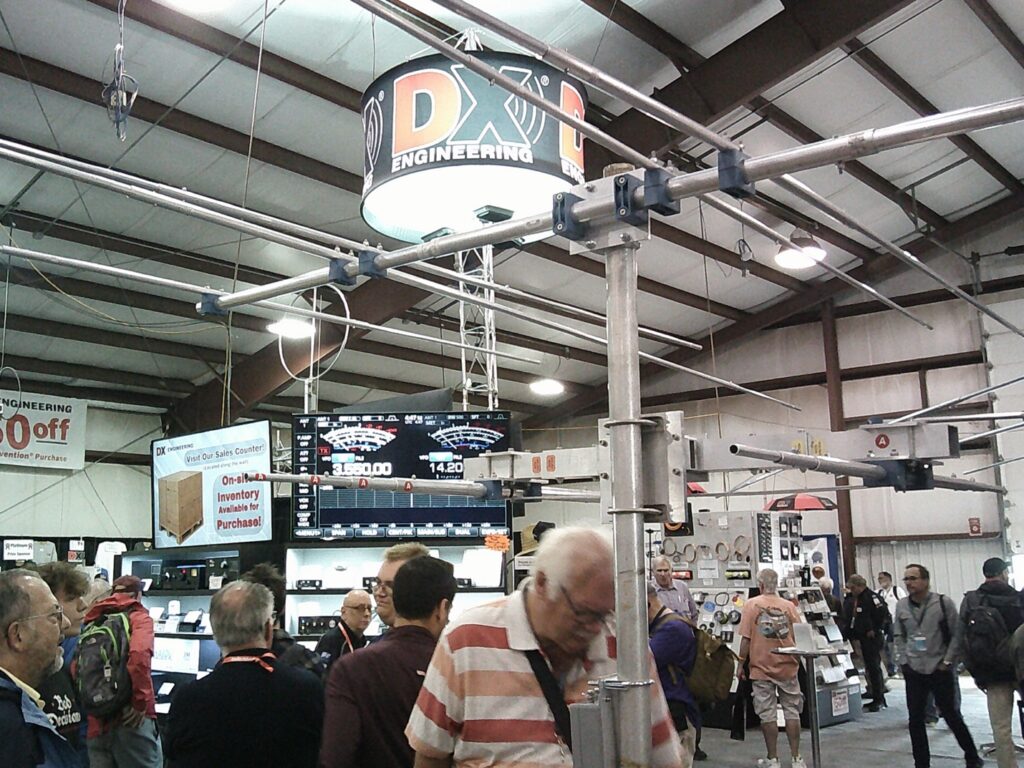
If you stopped by to see the latest from DX Engineering at Dayton Hamvention® 2026, it wasn’t hard to spot the Momobeam booth at the end of one of DX Engineering’s rows in Building One at the Greene County Fairgrounds and Expo Center in Xenia, Ohio—especially if you were in the market for a high-performance HF directional antenna.

(Image/DX Engineering) Why was this premier amateur radio provider from Sicily, Italy, positioned so close to DX Engineering? Well, it wasn’t by accident. DX Engineering began selling Momobeam’s world-renowned Yagis; end-fed wire antennas; and choke baluns, RF chokes, and RF choke line insulators through an agreement with the company in 2025.
“Momobeam antennas are trusted by amateur operators everywhere for improved contesting, optimized DXing, and an exceptional on-air experience,” said Tim Duffy, K3LR, DX Engineering CEO. “DX Engineering is excited to bring these finely engineered and well-built antennas to our customers. Our team looks forward to a long and successful relationship with the professionals at Momobeam.”

(Image/DX Engineering) 
(Image/DX Engineering) Here’s a summary of the three Momobeam HF directional Yagis that drew attendees to their Hamvention booth:
- PENTA10 Five-Band HF Yagi: This popular antenna offers a compact footprint while delivering full-size performance across 20, 17, 15, 12, and 10 meters—all through a single feedline. Optimized element spacing ensures exceptional gain, directivity, and on-air results. Plus, enjoy long-term durability and a clean, professional appearance.
Quick Specs: 10 elements, 12.8-foot boom length, 19.35-foot turning radius, 10kW power handling, 3kW RF choke balun included.
- DUO7 6/10M Dual-Band HF Yagi: This Yagi for 6 and 10 meters has an antenna boom length of 6.88 feet and weighs only 17.6 lbs., making it ideal for portable operations and installations where space is limited. Enjoy hassle-free setup with no calibration and excellent performance, with SWR below 1.5:1 across both bands. Its no-compromise design has seven elements fed through a single feedpoint.
Quick Specs: 9.84-foot turning radius, 10kW power handling, no balun included.
- Mono3-6P 6 Meter Yagi: This antenna for operation on the Magic Band weighs only 4.2 lbs. and has a boom length of 3.6 feet. Its field-ready design makes it perfect for POTA and SOTA activations. It offers impressive gain, excellent front-to-back performance, and a flat SWR curve of less than 1.5:1 across the 6M band. Designed for rapid deployment, it uses wing nuts to enable fast, tool-free assembly and disassembly.
Quick Specs: 3 elements, 5.6-foot turning radius, 3kW power handling, no balun included.
Mark Pride, K1RX, Momobeam North American representative,
graciously took a few minutes with OnAllBands to discuss the world-class mechanical design elements that separate Momobeam’s directional antennas from the competition.
“One of the major elements in the mechanical design is we use a square boom,” said K1RX. “With a square boom, depending on the type of antenna, if it’s a large multi-element Yagi it might be a four-inch size or less, like a two-inch for the Penta. The square boom in combination with stainless steel hardware and the precision-machined components really does differentiate us from all the other people out there.”

(Image/DX Engineering) 
(Image/DX Engineering) “Something also to note is the plates that hold the elements to the boom. The bolt holes are set up such that when you put a bolt right next to the wall of the square boom, there’s no gap, so it eliminates any kind azimuth type of rotation off the boom. And if you put the plate on wrong, you’ll end up with a situation where the bolt holes don’t line up and you’ll know immediately that, okay, that’s not done properly. But the instructions are such that it’s very clear that you won’t make that mistake.”

(Image/DX Engineering) “There’s high-quality UV-rated materials on the insulators for all the elements. Elements are suspended below the boom, which is probably the best mechanical method for mounting elements.”

(Image/DX Engineering) “There’s properly telescoped tubing. The mounting of the elements, the way they’re connected through the telescopic plate, is we use a single bolt—stainless steel—and the outer tubing has a larger diameter than the inside tube. The objective there is you want to be able to pull one wall of that tubing against the other, as opposed to trying to put a bolt through the entire element. What happens is you end up with a loose element. It doesn’t quite compress, but by having a larger hole where the head of the bolt will actually sit, it causes the two walls to compress with no issue at all.
“So, you have an excellent electrical connection. And, of course, that in combination with Penetrox or a conductor grease, which DX Engineering sells, it’s again another perfect marriage. That’s a good recipe for success.”

(Image/DX Engineering) 
(Image/DX Engineering) 
(Image/DX Engineering) 
(Image/DX Engineering) 
(Image/DX Engineering) 
(Image/DX Engineering) Also, take a moment to watch this video of Mark, K1RX, being interviewed by Tim, K3LR:
The post A Few Words from Momobeam about the Mechanical Design of Its HF Directional Antennas appeared first on OnAllBands.
OnAllBands
-
8Q7JH – Maldives
Juergen, DL3JH will again be active from Thulhagiri island, North Male Atoll, Maldives as 8Q7JH during September 20 to October 10, 2026. QRV on 20-15-10m; FT8, CW & SSB. QSL via H/c, buro / direct. This post appeared first on: DX-World Want to know more about it? Read More
-
Looking Back at Ham Radio Friedrichshafen 2026
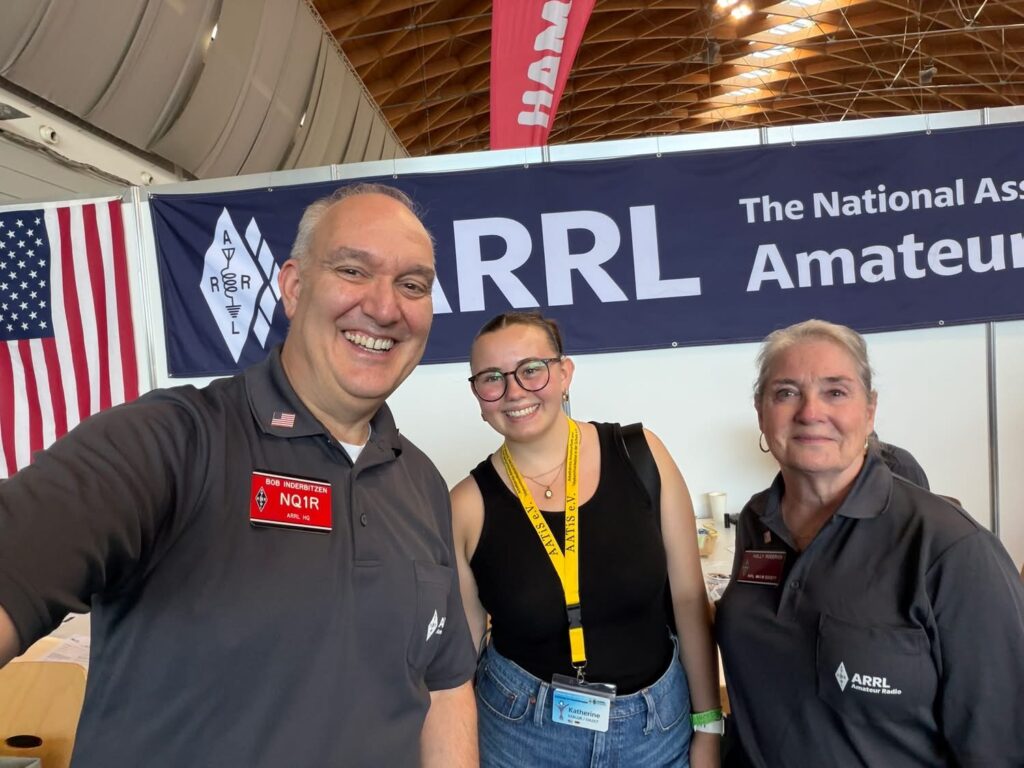
After finishing my exchange year in Germany in the second week of June, I spent a few days at home and then boarded a flight to attend the biggest amateur radio convention in Europe—Ham Radio Friedrichshafen, June 26-28, 2026.

(Image/KE8LQR) I had the opportunity to attend the fair for the first time in 2024 with my father. I enjoyed it so much that I decided to come back this year after spending the year in Germany. This allowed me to compare the experiences before and after having learned to speak German.
For anyone wondering how the fair compares to Dayton Hamvention® or HamCation, it’s very similar, although completely indoors. It’s slightly smaller (especially on the swap end of things) than these two, but a little larger than the Huntsville Hamfest.
One of the biggest differences is how culturally diverse it is in comparison to the hamfests and events that take place in the US. While major gatherings like Hamvention and HamCation have at least a little bit of international attendance, this is exponentially higher in Friedrichshafen due to the simplicity of travel between countries in Europe. It’s completely normal to stroll through the event and hear conversations in four or five different languages as you walk past, which is, for me, one of the coolest parts of the conference.

DX Engineering CEO Tim Duffy, K3LR, and me at the conference. (Image/KE8LQR) The youth hostel is also a big difference from the structure of hamfests in the US, but for good reasons. Like in 2024, I stayed in the youth hostel (“HamCamp”) that is offered at the fair. The event is held at a retired Zeppelin hangar, which makes the facility perfect in the sense that it has multiple halls for various parts of the event (e.g., forum halls, vendor halls, swap meet halls, and one dedicated specifically to hosting young attendees).
While the accommodations aren’t the most luxurious, they do make the trip much more affordable for young people who would like to attend. Even more importantly, this arrangement helps you meet lots of other young attendees and get to know them. I met numerous young hams who I’ve been friends with on Instagram for years or have talked to on the air but never met in person. This is always one of my favorite parts of the weekend.
To make the most out of the weekend, I arrived on the Thursday before the conference started. After “moving in” to the hostel, I went out and grabbed dinner with some of the others who were staying in the HamCamp. After dinner, we went for a walk by Lake Constance and enjoyed ice cream as we caught up with old friends and made new ones.

Sailboats moored on Lake Constance. (Image/KE8LQR) Friday morning came with an early wakeup call so we could get ready for the day and be there before the halls opened to the public. We made it right on time and finished setting up the YOTA (Youngsters on the Air) booth before the fair opened. I made sure to say hello to all my acquaintances before fitting in the YOTA contest and camp announcement ceremonies. After the fair closed, we finished off the day with the YOTA dinner at a nearby restaurant and headed back to the hostel to chat with each other a bit more.
Saturday was just as exciting, with the official YOTA meeting taking place. Many new youngsters joined the hostel since they were done with school for the week. After a full day of enjoying the conference, most of us headed to the Bavarian Contest Club (BCC) dinner and then went out for a bit of sightseeing by the lake. On Sunday, we all got up early to enjoy the last few hours of the conference before heading our separate ways—at least until WRTC (World Radiosport Team Championship) the next week…or the YOTA camp in Austria!
While Ham Radio Friedrichshafen is very different from the conferences that I’ve attended in the US, there are always a few constants. The most important one (to me, at least) is the atmosphere of finally being together with friends from all over the world who share your interests and hobbies. After attending an event like Friedrichshafen, I always find myself looking forward to the next radio event and wanting to get on the air more, which I know is the case for many other young operators.
While it was definitely not necessary for me to enjoy the conference, my German language skills made this year especially fun. I’m already looking forward to attending (hopefully) in 2027!
The post Looking Back at Ham Radio Friedrichshafen 2026 appeared first on OnAllBands.
OnAllBands
-

9/11 ‘We Do Remember’ Special Event Returns for 6th Year
The following is a message from the Alabama Contest Group:
K4A will once again keep K4 America the 9/11 We do Remember on air special event. The Alabama Contest Group is doing this for the 6th year.
I know most of us remember it like it was yesterday… but it has been 25 years since the towers fell, the Pentagon was damaged, and heroes brought the plane down in PA to prevent further attacks.
From September 9th through 13th, volunteer operators will take shifts to contact amateurs on the air. We want to hear your memories of that tragic day. And if you want to remember someone lost on that day, we’d be honored to help with that tribute naming them and having a pause on the air. 9/11 and the victims will not be forgotten.
A special QSL will be issued. Stories, memories, and victims mentioned on the radio will be collected and included in the Alabama Contest Group and the Smoke Signals newsletter.
For information about the special event, contact Bob (WA1FCN) wa1fcn@charter.net.
Would YOU like to be one of “The K4A 9/11 Crew” as an operator? A simple e-mail to wa1fcn@charter.net will get you going.
Source: Alabama Contest Group
Amateur Radio Daily
-
N4N – Sapelo Island, NA-058
The Sapelo Island Expedition Group is pleased to announce that operators Ricky (K4JTT), Ian (NV4C), and Tim (WK4U) will activate special event station N4N from beautiful Sapelo Island, Georgia (IOTA NA-058) during October 8–11, 2026. This operation commemorates the 16th anniversary of the group’s first Sapelo Island activation during International Lighthouse and Lightship Weekend in […] This post appeared first on: DX-World Want to know more about it? Read More
-
JD1BON, JD1BOI, JE1NVD/JD1 & JI1CRM/JD1
From September 24 to October 6, 2026 look for Take JA1UII (as JD1BON), Koji JI1LET (as JD1BOI), Take JE1NVD/JD1 and Koji JI1CRM/JD1 will be active from Chichijima, Ogasawara Islands during September 24 to October 6, 2026. QRV on various bands & modes using a combination of antennas, including Spiderbeam, dipoles and TA33jr yagi. QSL via […] This post appeared first on: DX-World Want to know more about it? Read More
-

AMSAT Canada Begins Offering Membership Options
AMSAT Canada (AMSAT-CA) has begun offering membership options to further its mission to support amateur radio in space. Those interested in supporting AMSAT-CA through membership can learn more about membership benefits (PDF).
AMSAT-CA promotes, develops, and supports Amateur Radio in space, including via human-made and natural satellites (e.g., the Moon), space stations and planets, and related experiments, as well as new developments in technology, methods and techniques.
AMSAT-CA is expected to play a significant role in the futureGEO geostationary satellite project potentially covering portions of North America.
Source: AMSAT-CA
Amateur Radio Daily
-
J48S – Samos Island, EU-049
Dirk, ON5CT will be active from Samos, EU-049 as J48S during September 11 to October 10, 2026. QRV on 80-10m; FT8, FT4, SSB, RTTY and some CW. Participation in the WW RTTY contest. Logs uploaded to Club Log, QSL via eQSL and LoTW. This post appeared first on: DX-World Want to know more about it? Read More