It’s been such a busy week my writing time got short. It’s Thursday night and I’m making a late push to get this out the door on time. In the background, I’ve got Solomon Hayes singing in my ears on Spotify. His style reminds me of Joe Bonamassa (who I also enjoy), just a little less electrified.
1. QRV: Are You Ready?
Last week I hit DMR topics pretty hard. Then the weekend brought us a medical issue with my spouse, and Monday I made a day-long trip to Portland and back. Add in the work I did this week on the Retevis C62 build (more on this below) and I lost about four days of potential writing time.
Fortunately, life settled back into place by mid-week, giving me some time to play with the Retevis RT3S/OpenGD77 radio on DMR. Last week, I configured my Yaesu System Fusion hotspot running WPSD software on a Raspberry Pi 4 machine to DMR. That left me without a YSF machine unless I switched the RPi4 back and forth between DMR and YSF. Instead of doing that, I plugged in my spare RPi5 hotspot and configured it for YSF. Works great.
I used the RT3S to monitor the PNWDigital Not-a-Net” gathering on Wednesday evening…with some self-created hiccups along the way. When I got set up a few hours before the gathering, I could not get reliable reception with the RT3S. I went down several rabbit holes before the light went on in my head: my DMR hotspot was using the same frequencies as my YSF hotspot. Whenever the YSF hotspot was active, my DMR reception was terrible. The fix was simple: move the DMR frequencies for TX and RX to a different pair that no longer collided with the YSF frequencies. Problem solved.
I also switched my LightAPRS Gateway antenna from a small mag-mount on a cookie sheet to an actual vertical dipole. Surprisingly, it didn’t do much. My direct connections decreased slightly while my total connections increased. Maybe in my hilly location, the more spherical pattern of the mag-mount works better than the flatter pattern of the vertical dipole. But that is purely a guess. Bottom line: both antennas work, so I’ll leave the dipole up for a while and see how it goes.
And are you ready for fall and winter? Now is the time to check your outside coax and connectors — before you notice your SWR is sky high and you have to brave that cold fall rain dripping down the back of your neck.
And speaking of antennas, my Yaesu FTM-300DR in the pickup truck started shutting itself off yesterday. My first thought was the wiring harness had gone bad…because that had happened before. But as I kept turning it on and watching as it powered down, I realized it was shutting down every time it transmitted an APRS beacon. Uh oh. I probably have a shorted antenna cable somewhere! This happened late yesterday so I’ve not had time to dig into it.
This week, I checked into #APRSThursday over LoRa APRS:

I also did some scoping of a potential project for my daughter. She likes to identify birds, so I looked at software that would allow me to identify birds by their songs. Looks like one of the most reasonable approaches is to use an old cell phone as the outdoor microphone, and have it connected wirelessly to a Raspberry Pi computer inside. More on this if/when it develops!

2. New on EtherHam
-
Status of 21 AllStarLink Nodes at a Glance with a Custom TRMNL Plugin — I wrote a script to poll my AllStar nodes and give me an at-a-glance view of which nodes were up and running.
-
Weekly Report: August 27, 2026 — Band Conditions This Week / Digital Radio News / Groups.io Digest. Digital Radio News is awfully light this week, with the exception of AllStarLink topics.
3. AllStarLink? Listen to Ham Radio Workbench #269
If you are into, or are interested in, AllStarLink, this is for you. Without further ado, here’s the link: HRWB 269 – AllStarLink with Jason McCormick N8EI.
N8EI is an active technical contributor on the AllStarLink Community Forum, frequently discussing system troubleshooting, software transitions, and node configuration.
4. QSO One Continues to Improve
You’ll want to take a look at QSO One, even if you don’t plan on using the software. Why? Because of the convenient Net Finder directory available on the QSO One website:
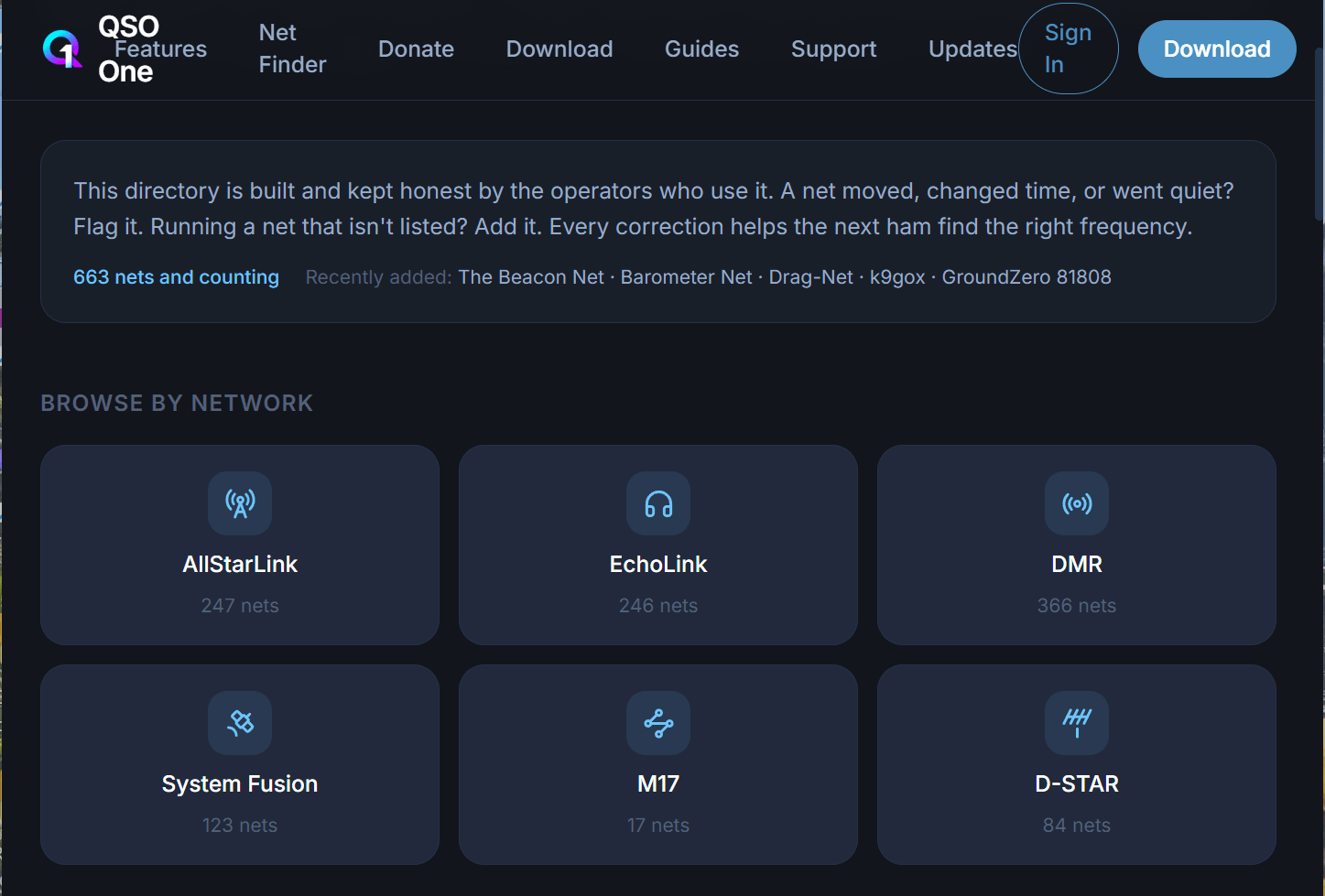
Why would you want to use QSO One? If you are looking for an all-in-one, integrated platform for all your nodes and modes, this could be what you’ve been waiting for.
For me, it looks like a great solution for my Uniwa F400. Note this excerpt from a post in the QSO One group on Facebook:
Using QSO One on a new Uniwa F400 has brought a ton of fun into my life since first installing the app. The features have helped me to gain access and experience some new-to-me digital networks (Allstar, Echolink, and YSF), and I appreciate that very much.
I wrote this early in the week and saw a few more announcements after I captured this piece. QSO One is rapidly evolving.
5. DroidStar 9M2PJU Replaced My DroidStar App
A strong alternative to QSO One is the DroidStar implementation by 9M2PJU. I’ve been testing it and finally deleted my old DroidStar app from my phone this week. The DroidStar 9M2PJU app won that battle and now reigns supreme, at least on my smartphone.
But I think I’m going to also install it on my Uniwa F400 device. Fingers crossed it works well there, too.
Learn more at https://droidstar.hamradio.my/ (but be prepared for multiple nag screens when you first open this link).
6. M17 Net
Last Saturday’s weekly M17 digital voice net on the Kansas City Wide system, led by net control Jeff AE5ME, focused on the technical evolution of the M17 protocol, upcoming firmware releases, and the protocol’s advantages over proprietary digital modes.
M17 Project & Technical Updates
M17 is a public domain digital voice and data protocol designed to eliminate the need for proprietary hardware or licensed codecs. It has received two $250,000 grants from Amateur Radio Digital Communications (ARDC) to fund its development.
-
OpenRTX Firmware: Currently at version 0.4.3. The upcoming v0.5 release will be a major milestone, introducing SMS messaging and packet radio capabilities directly to radios like the MD380, MD390, and the CS7000.
-
LinHT Project: A Linux-based handy talkie (HT) with a software-defined radio (SDR) core. This project enables multiple modes (M17, Tetra, DMR) and paging protocols like POCSAG to run on a single device.
-
Hardware Compatibility:
-
Retevis C62: Development is ongoing for M17 support via the OpenRTX PR branch (Pull #15). Currently, it supports FM only. There was a brief discussion regarding the complexity of building the OpenRTX firmware from source for the Retevis C62. While the PR branch exists, it is not yet an “official” binary, requiring users to use a Linux command-line environment.
-
CC1200 Boards: New hats for the Pi Zero W 2 are available for M17-only hotspots.
-
Module 17: A project that allows converting existing mobile rigs into M17-capable radios.
-
Technical Q&A & Signal Routing
A significant portion of the net focused on how M17 signals move through different layers of infrastructure.
-
SMS in QSO1: It was confirmed that the QSO1 software supports SMS text messaging via the M17 chat feature.
-
Emergency Communications: The net highlighted the risks of relying on PTT over Cellular (POC) radios during disasters due to network congestion. M17 and the National Traffic System (NTS) were emphasized as more robust alternatives for handling health and welfare traffic when infrastructure fails.
7. Coming Soon: Cracking Open the Retevis C62 for M17
A $50-ish dual-band handheld built around a chip most hams have never heard of, running an open-source firmware port that’s still wet cement — that’s the Retevis C62, and it’s the next radio through my test bench. OpenRTX, the same open firmware project behind those RT3S M17 mods you’ve read about here, is now being ported to the C62’s ListenAI CSK6011B chipset, and I’ve spent the last few evenings getting a Windows toolchain to actually produce working firmware for it. Spoiler: it compiled clean, memory headroom to spare, on the first successful run — which sounds simple until you hear what it took to get there.
To be clear, what I’m trying to do is still experimental. Translation: it’s not ready for production. But I’m curious, and I know I’m not alone in trying to do this.
Well, it didn’t go smoothly. The official build instructions pointed at a Git branch that doesn’t exist where the docs say it does — turns out it only lives on a contributor’s personal fork. Then the container-based build tool quietly configured itself against the wrong internal workspace entirely, silently failing every dependency-fetch command with errors that looked like typos but weren’t — the kind of bug that eats a whole evening before you find the one diagnostic command that exposes it. I ended up manually placing four separate module repos by hand once I figured out what the build system actually wanted, and only then did the whole thing link successfully.
And that was just the build. Getting the finished firmware onto the actual radio turned into its own saga — burn mode entered fine, but the PC flatly refused to see the radio over USB, no matter what cable or computer I threw at it. Two “should’ve worked” programming cables later, and a lot of Device Manager archaeology across two completely different machines, I finally landed on the real culprit: not a driver problem, not a Windows problem, but the cable itself missing the one active chip this radio’s flashing mode actually requires. The right cable is in hand now.
I haven’t had a chance to actually flash the radio yet — that’s the next step, and I didn’t want to rush it just to hit a publishing deadline. So consider this the trailer: full build procedure, the module-workaround nobody’s documented anywhere else, the cable gotcha that cost the most time, and — assuming the C62 boots up on the other side — first impressions of OpenRTX running on genuinely new hardware. Next issue, once I’ve had the chance to actually pull the trigger.
8. PNWDigital Not-a-Net Gathering
I listened to much of the Wednesday evening “Not-a-Net” gathering held by the PNWDigital folks. I noted check-ins were made via Zumspot, Pi-Star, OpenSpot, BlueDV, and DV Mega devices, along with RF via DMR repeaters. That was a bit more texture than I expected —> many ways to get your message out on DMR.
-
PNWDigital nets: https://pnwdigital.net/nets/
-
PNWDigital welcome: https://pnwdigital.net/welcome-new-user/
9. Gadgets
Cardputer
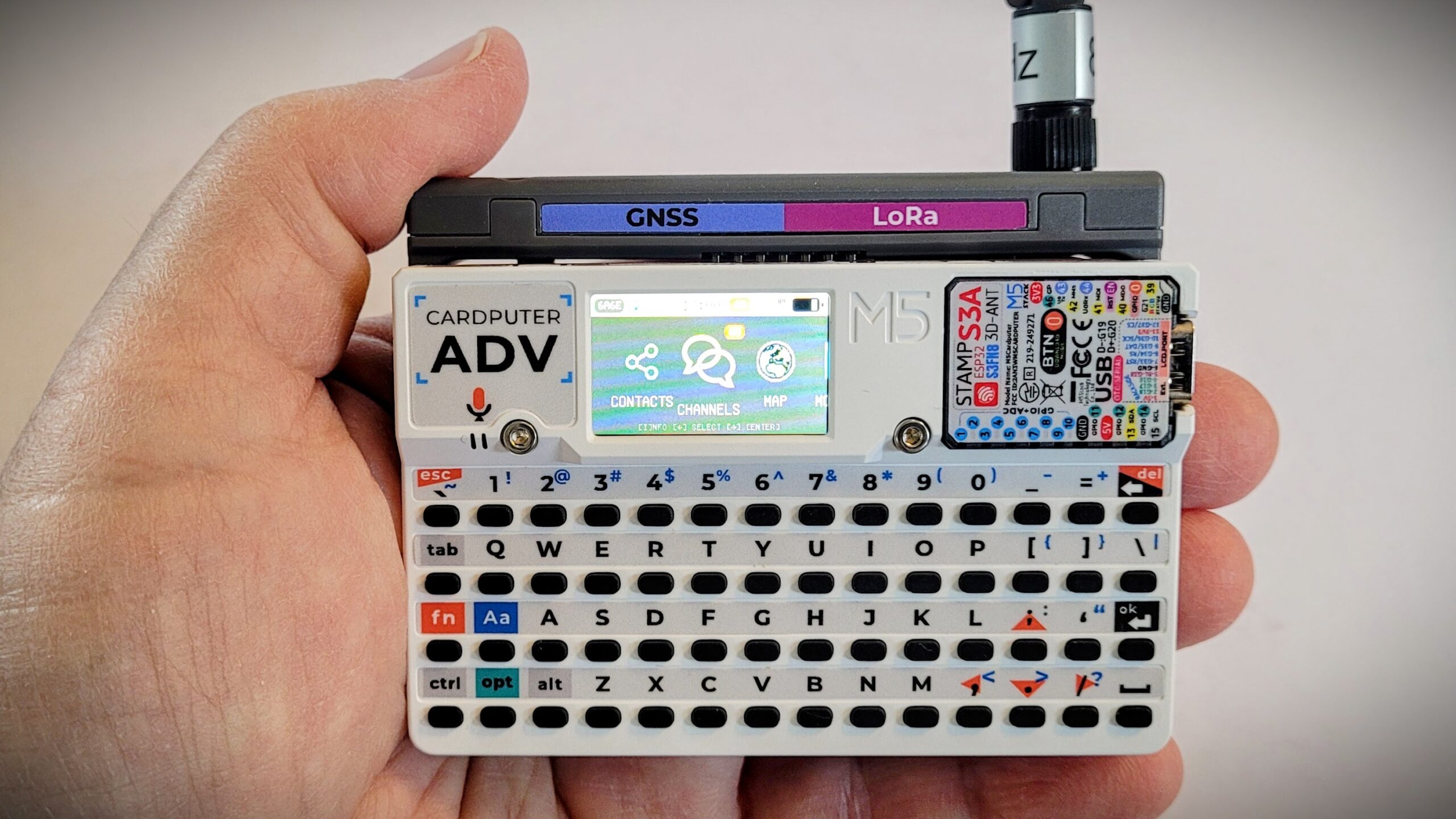
I traveled a bit off the beaten path with this: the Cardputer ADV. It was about $42 from Amazon (affiliate link). As I flashed different firmwares to it and explored this tiny platform, I decided to give it a try with MeshCore. That required a special hat for the Cardputer: SX1262 LoRa Module w/GPS GNSS for Meshtastic (affiliate link).
Was this a useful purchase? Absolutely not. It was just for fun. The firmwares are interesting and I look forward to discovering what else I can do with the Cardputer.
Some people use these for hacking, but that’s not me. This is just a fun little device that slips into a shirt pocket. A word to the wise: if you use reading glasses, you might need a second pair to read the tiny screen!
I expected a fun weekend dev-platform toy. What I got instead was a proper hands-on review project, complete with a firmware bug, a Bluetooth mystery, and eventually a working MeshCore node. If you’re eyeing one of these for your own bench, here’s what actually happened, warts and all.
The keyboard takes some getting used to. There’s no touchscreen, so everything — including menus that look like they want a tap — is driven through the Fn key and a cramped arrow cluster hiding under the semicolon, comma, period, and slash keys. The keys themselves have a habit of double-registering if you’re not deliberate about your typing, which cost me a garbled WiFi password more than once.
The bigger surprise was the stock “factory” firmware — the demo suite M5Stack preloads, with its little hardware-test apps for the keyboard, IMU, SD card, and so on. The Clock app turned out to have a hardcoded UTC+8 offset that I could not override.
From there I went firmware-hopping, which turned out to be very interesting. You load firmware with the M5Burner app on your computer and a data-capable USB-C cable. M5Apps (a community launcher) fixed the keyboard quirks but couldn’t get WiFi to stick. Bruce (yes, that’s the name of the software) nailed the clock and timezone handling on the first try, confirming that the clock problem was not the hardware but the M5Stack demo firmware.
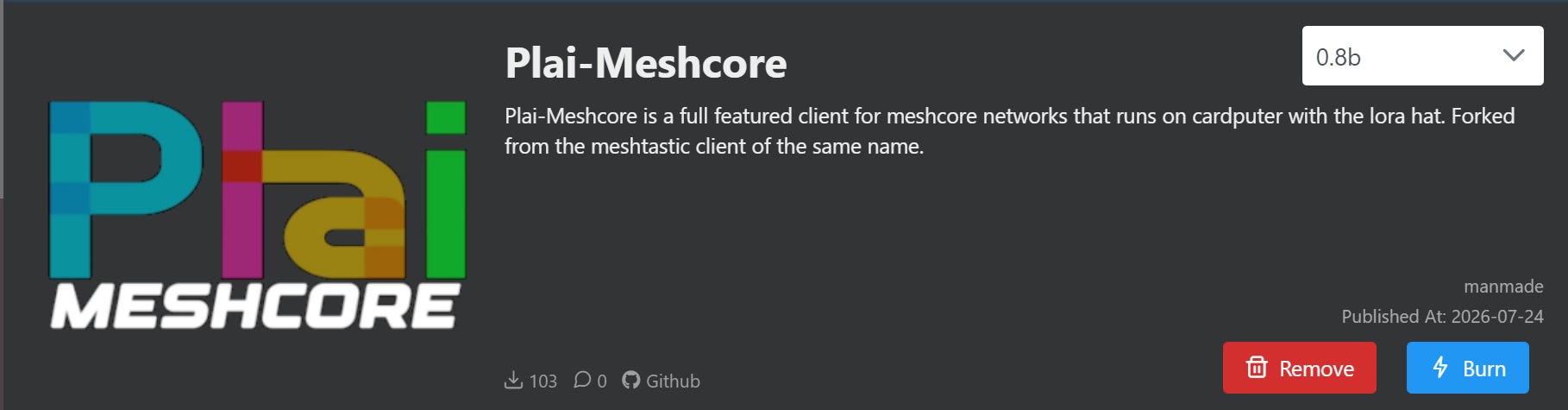
None of that was really the point, though. With a LoRa+GPS cap clipped onto the top, the real goal was turning this thing into a MeshCore node that could talk to the repeater already running on my roof and to my phone app.
That last stretch was the real adventure. Getting a MeshCore build flashed and receiving traffic on the Public channel was straightforward once the LoRa cap was installed. But getting it to join my own private #etherham channel was not easy. Bluetooth pairing failed repeatedly, even with the correct PIN. USB serial access turned out to be flash-mode-only on that particular build (a nice meshcore-cli detour taught me that the hard way). Even manually copying the channel’s secret key over didn’t get channel messages flowing.
What did work was sidestepping channels entirely. MeshCore nodes discover each other via broadcast “adverts,” and once the Cardputer and my T-Echo Plus heard each other’s adverts, direct messages worked immediately. No shared key was needed, since DMs use per-contact key exchange instead of a channel secret.
This is a genuinely capable (albeit quirky) little radio node, provided you’re willing to treat the software side as part of the hobby rather than as an inconvenience. If you’re comfortable flashing firmware, poking around GitHub issues, and treating a stuck menu as a puzzle instead of a dealbreaker, you may find the Cardputer ADV to be a fun diversion. However, if you just want a mesh terminal that works out of the box, this likely isn’t it.
Interesting: Mecha Comet
Shipping October 2026:
Mecha Comet, handheld Linux computer that’s truly yours to own, build and mod.
What is it? HowToGeek has a write-up. I do like a small-but-powerful device!
New battery for Yaesu VX-6R
I mentioned last week that I bought a charger and a new battery for my Yaesu VX-6R. The original battery would not charge and was not recognized by the radio. I was hoping that putting it on a higher amperage charger might wake it up and allow it to accept a charge, but alas, that is not what happened. In fact, nothing happened. So that battery will go to hazardous waste. The new one charged swiftly and works fine. And the wall charger also works with my Yaesu FT-70D, so this is a “two-fer” for me.
TRMNL
Many moons ago, I supported a Kickstarter for a programmable display called TRMNL. I plucked it off the wall during a recent trip to the Portland QTH and brought it up to the Lake House.
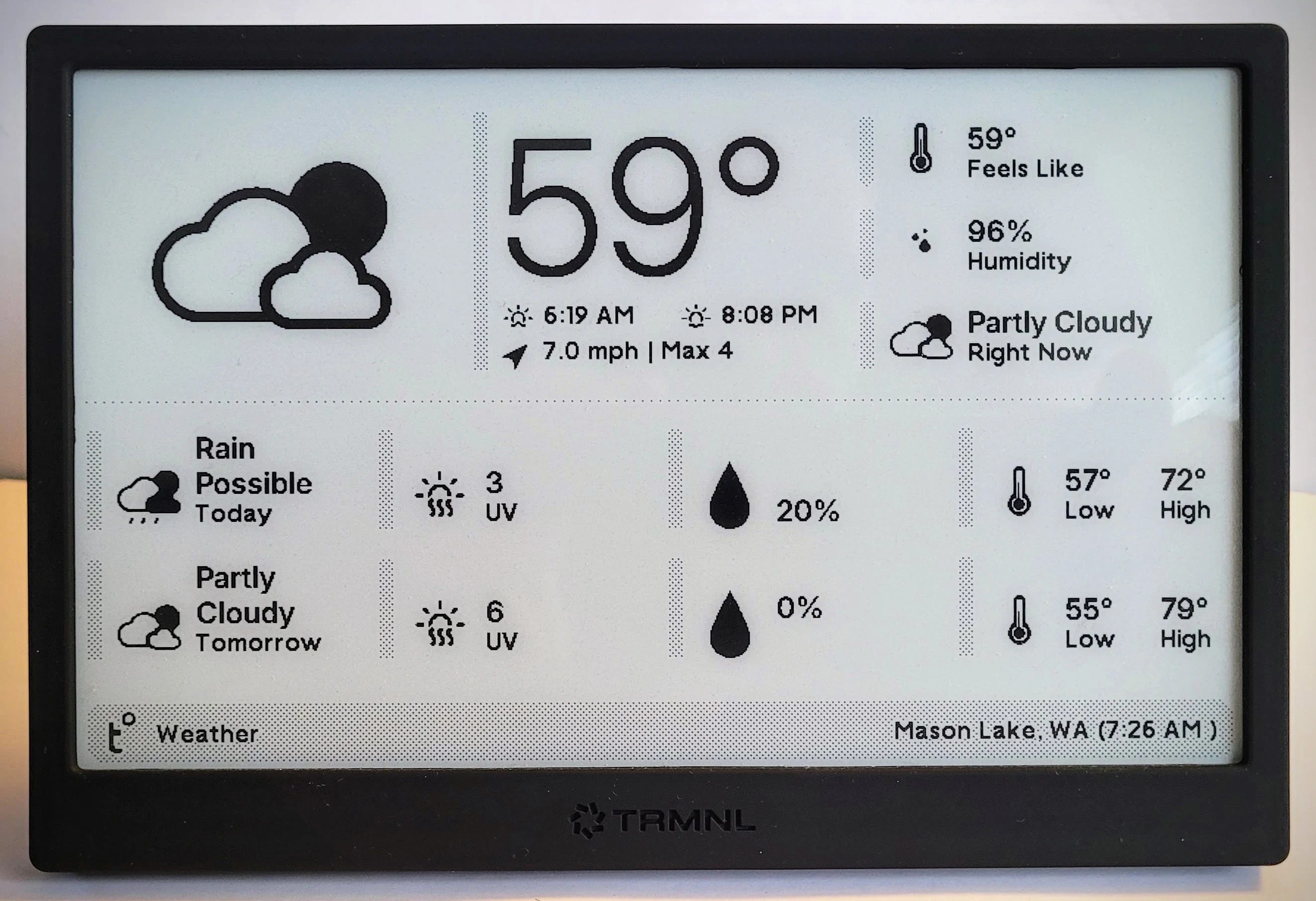
It’s not doing anything fancy, like showing news or quoting famous people. I just want to see the weather at a glance, and for that, it works just fine.
The e-ink display draws very little power from the internal battery. I usually only have to charge this thing once every several months.
But I got to thinking about other ways I could use this nice screen. One thing I am always interested in is the status of my AllStar nodes. I have many because I experiment with them, but I usually only keep a handful “up” at any one time. So I wrote a custom Python script to poll the status messages at AllStarLink about my nodes. Then, with a little HTML magic, I was able to display the statuses of my nodes on the TRMNL.
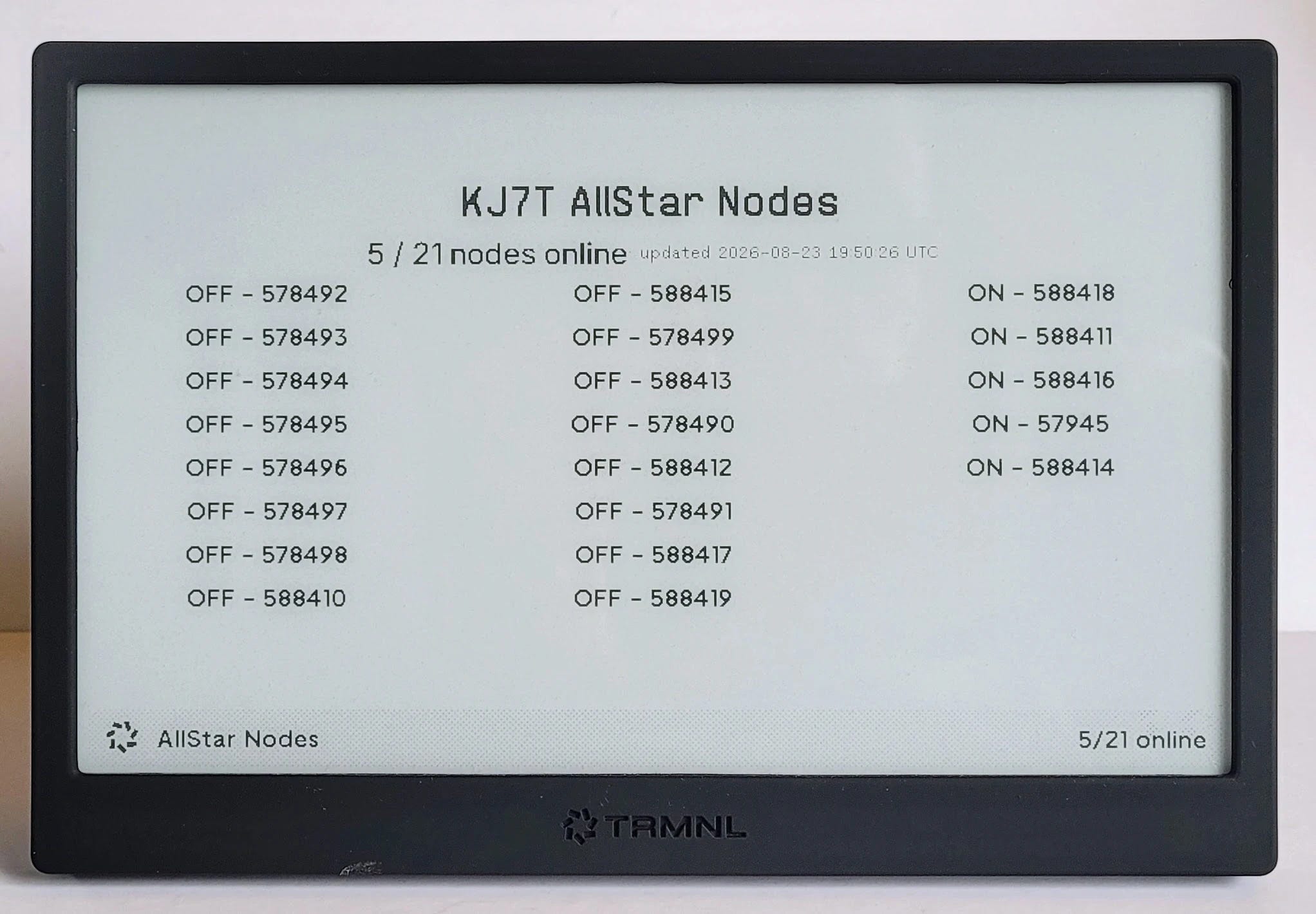
Of course, it was really more complicated than that, so I’ve covered the ins and outs at EtherHam.com. That article also has the actual Python script I built to accomplish the polling of my node numbers.
10. QRT: End Transmission
Whew. Not the quality I like to share, but there is probably a little of something for everyone in this casserole-like issue of the Random Wire!
This week marked our 49th wedding anniversary. Those who have subscribed for a while know my wife has severe medical issues. She can no longer stand, sit, or walk. She can’t swallow or talk. Her disease has substantially impaired her cognition. And yet when I brought a bouquet of flowers to her today, she beamed out a great smile and her eyes told me all I needed to know. Over the past year, I’ve wondered if we’d see this milestone, but here it is: we made it to 49. Seizing these brief moments in the midst of this difficult journey is important and I’m grateful we still have time left together.
73, and remember to touch a radio every day!