The DX India Foundation is proud to announce the multi-phase roadmap for their upcoming VU4R Andaman Islands activation. This historic mission combines technical excellence, international collaboration, and a commitment to nurturing the next generation of amateur radio operators. Phase 1: July 2026 Preparatory Trip & IOTA Contest: A preparatory activation is scheduled from 22nd to […]
Author: NA4DA
-
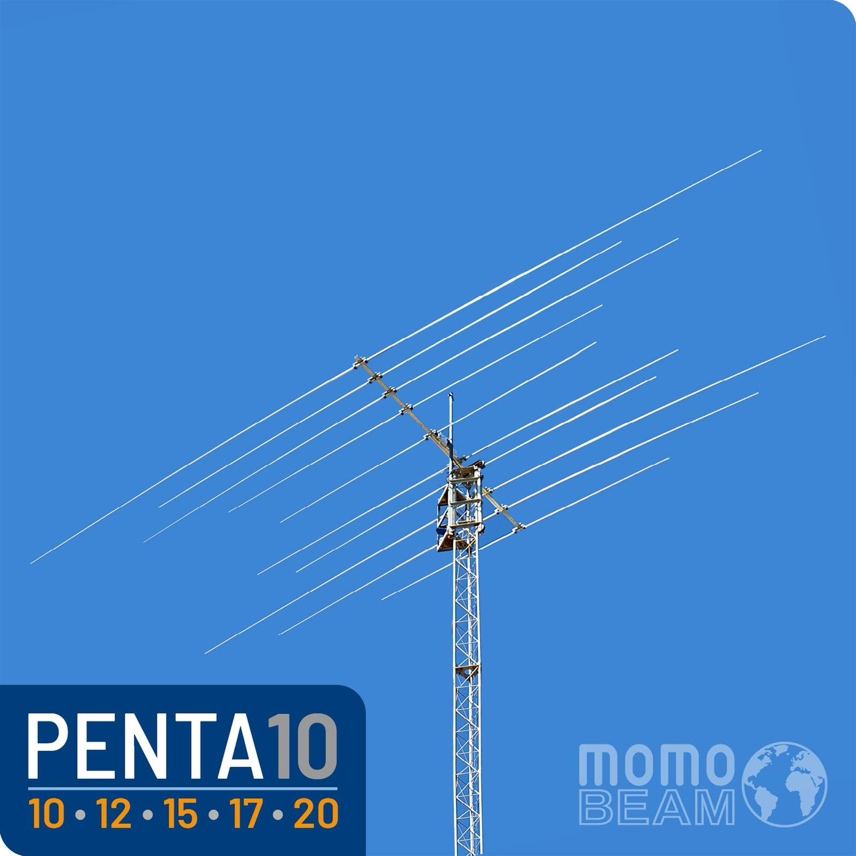
Momobeam Antennas to be Featured by DX Engineering at 2026 Dayton Hamvention®
DX Engineering is a proud distributor of high-performance Italian-made Momobeam HF/6M Yagis, end-fed wire antennas and choke baluns, all of which will be available for sale at 2026 Dayton Hamvention (May 15-17). Momobeam products have been helping hams “work the world” since the company’s founding in 2011.
Yagis on Display
DX Engineering sells a comprehensive selection of Momobeam monoband, dual-band, tri-band, four-band, and five-band HF Yagi antennas in a range of configurations and coverages. These antennas are widely recognized for their solid construction, durability, unique and compact designs, precision element spacing, simple assembly, and proven results, whether contesting or breaking through DX pileups. Many models include a choke balun.
Find more than 40 Momobeam HF directional antennas at DXEngineering.com.
DX Engineering will be displaying three Momobeam Yagis in Building One at the Greene County Fairgrounds and Expo Center in Xenia, Ohio. A Momobeam representative will be there to answer your questions. Get an up-close look at these models:
- PENTA10 Five-Band HF Yagi: This popular antenna offers a compact footprint while delivering full-size performance across 20, 17, 15, 12, and 10 meters—all through a single feedline. Optimized element spacing ensures exceptional gain, directivity, and on-air results. Plus, enjoy long-term durability and a clean, professional appearance.
Quick Specs: 10 elements, 12.8-foot boom length, 19.35-foot turning radius, 10kW power handling, 3kW RF choke balun included

(Image/Momobeam) DUO7 6/10M Dual-Band HF Yagi: This Yagi for 6 and 10 meters has an antenna boom length of 6.88 feet and weighs only 17.6 lbs., making it ideal for portable operations and installations where space is limited. Enjoy hassle-free setup with no calibration and excellent performance, with SWR below 1.5:1 across both bands. Its no-compromise design has seven elements fed through a single feedpoint.
Quick Specs: 9.84-foot turning radius, 10kW power handling, no balun included

(Image/Momobeam) Mono3-6P 6 Meter Yagi: This antenna for operation on the Magic Band weighs only 4.2 lbs. and has a boom length of 3.6 feet. Its field-ready design makes it perfect for POTA and SOTA activations. It offers impressive gain, excellent front-to-back performance, and a flat SWR curve of less than 1.5:1 across the 6M band. Designed for rapid deployment, it uses wing nuts to enable fast, tool-free assembly and disassembly.
Quick Specs: 3 elements, 5.6-foot turning radius, 3kW power handling, no balun included

(Image/Momobeam) Momobeam End-Fed Wire Antennas
These make a great solution for operators seeking versatility and performance. Featuring stainless steel hardware and UV-resistant materials, they can be deployed for fixed or portable operations in horizontal, inverted-L, or sloper configurations. At their core is a coated copper wire radiator paired with a 49:1 impedance transformer, ensuring efficient 50-ohm operation.
Choose from 100W, 300W, or 1,000W PEP models covering either:
- 40/20/15/10M, 65.6 Feet
- 80/40/20/15/10M, 76 Feet

Momobeam End-Fed Wire Antenna (MOO-EF1040-1000W): 1,000W SSB/CW, 250W Digital, 40/20/15/10M. (Image/Momobeam) 
Momobeam End-Fed Wire Antenna (EF1080C-300W): 300W SSB/CW, 100W Digital, 80/40/20/15/10M. (Image/Momobeam) Also look for Momobeam’s range of efficient 50-ohm choke baluns, RF chokes, and RF choke line insulators in the DX Engineering booth at Hamvention.

Momobeam Current Choke (RFC-DU-10KW), 7-50 MHz, 10kW PEP, 2,500W Digital, Surrounded by Ferrite Bead Array. (Image/Momobeam) The post Momobeam Antennas to be Featured by DX Engineering at 2026 Dayton Hamvention® appeared first on OnAllBands.
-
7F8RNC – Sulawesi Island, OC-146
Operators from the North Sulawesi Region and Radio of North Celebes (RNC) DXpedition Team will be active from Pakewa Beach, Sawangan, Kombi, Minahasa, Sulawesi Island, OC-146 during the weekend of May 23-24, 2026. Callsign: 7F8RNC. QRV on 40-20-15-10m; CW, SSB & SAT.
-
E25VCR/P – Chang Island, AS-125
Champ, E21EIC let’s us know that Ake, E25VCR will be QRV from Chang Island IOTA AS-125 (POTA TH-0073) as E25VCR/P on 14 May 2026 between 1100-1600z on CW and Digital modes. Bands: 40m 20m 15m. QSL via E25VCR and LoTW.
-

MacOS App Transceive 1.4 for AllStarLink Released
The following is an update from Georges (WH6AZ) announcing the release of Transceive version 1.4, a MacOS app that brings AllStarLink to Mac users.
This release includes several meaningful improvements, with a focus on long-term stability and hardware support.
Here’s what’s changed:
- New: Universal binary (native support for Apple Silicon and Intel). This is a significant milestone. Native Apple Silicon support improves efficiency while ensuring the app remains stable and maintainable on future macOS versions.
- New: Reorder nodes with simple drag and drop
- New: Add a memo to a node entry
- Fix: DNS lookup issues when nodes use non-standard ports
- Update: Authentication updated for AllStar public access
- Improvement: More reliable node reachability indicators (green/red status updates more consistently, with less need to refresh)
Editor’s Note:
Keep an eye out for WH6AZ’s upcoming app, Radio Messenger, which aims to bring a modern messaging feel to amateur Radio.
The approach here is pragmatic. RF delivery is always the priority, but internet delivery can serve as a fallback. If a message doesn’t get through, it can be held briefly and delivered later via push notifications.
The goal isn’t to replace radio with the internet, just to make the experience less brittle.
Source: Island Magic Co.
-
JW/KB0ATY & JW/W8UM – Svalbard / Arctic Sea
Christian, KB0ATY informs DX-World that he plans activity from the Svalbard region during May 15-29, 2026 aboard a sailing vessel. Operation will be from maritime mobile with shore landings as conditions and itinerary permit. Activity expected on HF using FT8 and SSB. POTA and SOTA are possible. Callsigns to be used: JW/KB0ATY, JW/KB0ATY/MM, JW/W8UM, JW/W8UM/MM. […]
-
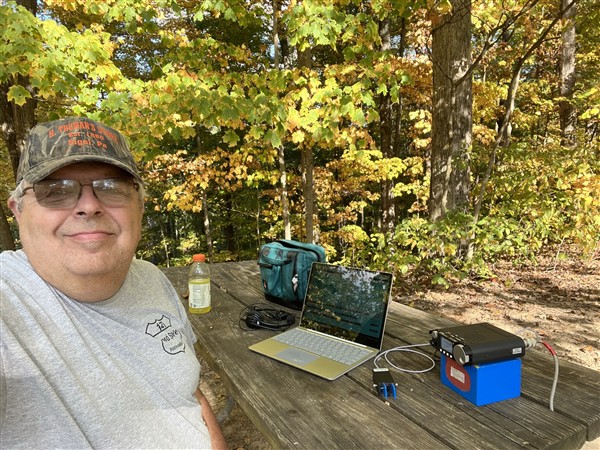
Picnic Table Portable: POTA While Camping
And we’re back! In hopes that summer will finally decide to show up, let’s talk about “Picnic Table Portable”—otherwise known as “Operating POTA While Camping.”
Camping means different things to different people. For some, it’s not real camping unless you’re in a tent with nothing but a sleeping bag. For others, it’s pulling into the campsite with a camper or RV and setting up a station that closely resembles their home QTH. There’s no right or wrong way to do it—what matters is getting outside and enjoying the experience.
That same mindset carries over into portable operating. Some folks love the minimalist challenge: “How little can I bring and still make contacts?” Others aim for comfort and familiarity: “How closely can I replicate my home station?”
Most of us fall somewhere in between.
A simple rig paired with a practical antenna is often all you need. Whether it’s a compact HF radio feeding an end-fed, dipole, or even a mobile whip, the goal is the same—get on the air and make contacts. If you’ve got a go-box in your vehicle with everything ready to deploy, you’re already ahead of the game. Just don’t forget to keep those batteries charged.
Slowing Down & Enjoying the Experience
One of the best parts of picnic table portable is the pace. Unlike the “run and gun” style—where you race into a park, make ten contacts, and move on—camping activations let you slow down and enjoy the moment.
There’s something special about sitting at a picnic table early in the morning, coffee in hand, making your first contact as the sun rises over a quiet lake. It’s a completely different experience from chasing numbers—it’s relaxed, immersive, and honestly, a big part of why many of us do this.

The author runs QRP from a convenient picnic table in Zaleski State Forest, US-5455. (Image/WG8X) 
Sometimes the local wildlife will show up to inspect your antenna lines. (Image/WG8X) As I write this, I’m on a camping trip with a couple of friends. We’ve all brought campers to the same park, and we’ve been taking turns getting on the air. It’s a great way to share the experience and learn from each other.

There’s nothing more relaxing than an evening operating session at a convenient picnic table. (Image/WG8X) Making It a Group Activity
Another great variation of picnic table portable is turning it into a club outing. With 2026 being the ARRL Year of the Club, there’s no better time to get others involved.
At your next club meeting, ask around. You’ll probably find someone who’s been curious about POTA but doesn’t know where to start. That’s your opportunity to be an Elmer. Sometimes all it takes is a little encouragement and a chance to see it done in person.

Enjoying POTA is a great group activity! (Image/WG8X) And let’s not forget where many of us got our start—Field Day. There are plenty of similarities between Field Day and a POTA activation: portable setups, operating in less-than-ideal conditions, and making as many contacts as possible. The big difference is that picnic table portable lets you do it at your own pace, without the pressure.
When Things Go Sideways
Of course, no portable operation is complete without a few hiccups. And trust me—things will go wrong.
Maybe it’s a rainstorm that won’t quit. Maybe it’s bugs that seem to think you’re the main course. Maybe it’s equipment failure at the worst possible time. It happens to all of us.
That’s where a little “Murphy repellent” comes in handy. Bug spray, a rain jacket, a dry operating spot (even your vehicle), and a few spare essentials—like an extra coax—can save the day. (Ask me how I know this.)
And honestly, dealing with these little challenges is part of the fun. It’s all part of the picnic table portable experience.

Sometimes the weather dictates moving the station inside the camper. (Image/WG8X) Keeping It Simple
One of the biggest appeals of this style of operating is its simplicity. There’s something satisfying about setting up a straightforward station on a picnic table and just making it work.
The KISS principle—Keep It Simple, Stupid—applies perfectly here. You don’t need a complicated setup to have a great activation.

Sometimes a simple station setup is all you need. (Image/WG8X) Dealing with the Unexpected
Occasionally, “things going wrong” can involve people rather than equipment.
While rare, you might be approached by a park ranger or other official. If that happens, the best approach is simple: be polite, be honest, and address any concerns they have. If you’re asked to pack up, do so respectfully.
You may also encounter curious members of the public. After all, someone stringing wires into trees and talking into a microphone can raise a few eyebrows. Again, be friendly and take it as an opportunity to represent the hobby well. A quick explanation often turns curiosity into interest.
In my experience over the past ten years, nearly every interaction with the public or park personnel has been positive. Still, it’s worth being prepared and keeping a good attitude.
Final Thoughts
Picnic table portable is one of the most enjoyable ways to experience POTA. It combines the simplicity of portable operating with the comfort and pace of a camping trip.
Whether you’re chasing contacts, experimenting with your setup, or just enjoying a quiet morning on the air, it’s hard to beat.
So, pack up your gear, find a good spot, and give it a try. You might find that slowing down is exactly what you need.
Now let’s get out there and activate something!
73 DE WG8X
The post Picnic Table Portable: POTA While Camping appeared first on OnAllBands.
-
C21TS – Nauru
[REFRESH] – by Phill, FK1TS / C21TS. C21TS is back on the island as of 2 days ago. Set-up of antennas continued today while it was cloudy. Ready to start up again as soon as I get KP5 in the log. Probably begin activity tomorrow, Saturday, 31st. Will update QRZ shortly, I enjoyed a short […]
-

Radio Club of America Announces 2026 Young Professionals
Radio Club of America (RCA) has Announced their 2026 Young Professionals, honoring 5 industry innovators under the age of 40. The 5 recipients are Precious Fodor, Andy Huyhn (KA6NDY), Max Johnson, Sean Martin, and Chris Vargas. Their experiences range from Land Mobile Radio to broadcast engineering.
Learn more about the 2026 Young Professionals on the RCA’s website.
Source: Radio Club of America
-
6O6X – Somalia
PRESS RELEASE by DX-Adventure Team A few weeks ago, we announced that we were hard at work on a new challenge: “Destination X”. From the feedback we received, it was clear that many radio amateurs immediately showed interest in our next DXpedition. We still had a few things to finalize, but we can finally share […]