Tom K7TLM and Leslie KD7YZE will again be QRV as E51TLM from Rarotonga during May 4-9, 2026. Working conditions: IC-705 running 5 Watts to a horizontal 10 Meter end-fed half-wave wire antenna at 16 feet high just above sea level. SSB at 28.385 MHz, QRSS CW at 28.060 MHz. Look for them approx 1900 to […]
Author: NA4DA
-
ZL7IO – Chatham Islands
[UPDATE] by ZL3IO / ZL7IO – I will return to Waitangi, Chatham Islands during May 25 to June 4, 2026. Participation in the CQWW WPX CW contest (May 30 & 31) in the SOAB category. Antenna maintenance will also be undertaken during the stay. [NOVEMBER 28] – We tried finding the noise source on 160m […]
-
Youth Insights: Tips on Setting & Achieving Ham Radio Goals
Setting goals is a great way to track your progress in anything. From practicing an instrument to becoming a better cook or learning a new language, it helps you see how far you’ve come from where you started.
I’ve found that goal setting in amateur radio can be challenging due to the rather “unmeasurable” nature of some parts of the hobby, but through creativity, goals can be set for anything that you would like to accomplish.
Some areas of ham radio are easier to set goals for by nature. Contesting and DXing top this list, along with anything that can be measured numerically. Even then, it can be challenging to know where to start and what is a reasonable goal, especially if you’ve never contested before. Here are a few goals you can start with:
- Making a specific number of QSOs
- Working a specific number or proportion of multipliers
- Keeping your error rate below a certain percentage
- Doing better than you did last time
DXing is similar in that it can be numerically measured. You can set a goal to work a certain number of countries or give yourself a due date to achieve your DXCC. Setting goals for CW is also relatively simple. Examples include achieving a desired WPM speed, operating in a particular event, having a ragchew, or learning to send with a different apparatus (e.g., going from a straight key to a set of paddles or from a set of paddles to a bug).
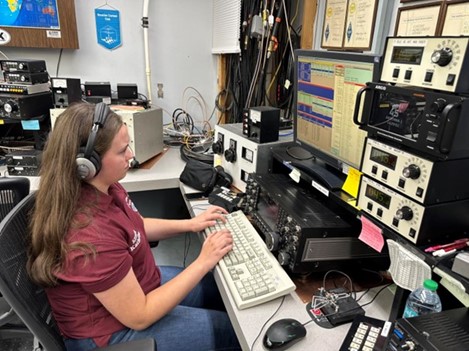
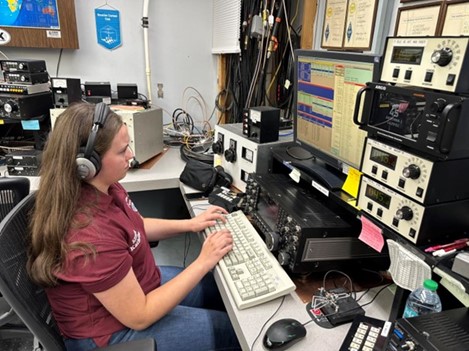
KE8LQR making CW QSOs at K3LR. (Image/DX Engineering) If you’re still looking for your favorite part of the hobby, you could set goals to attend more club meetings, take part in EmComm volunteer opportunities, meet more amateur radio operators in person or on the air, or try out modes you haven’t used.
These goal seem like they should be straightforward to achieve. But it’s important to remember to take your specific circumstances into account—like what equipment you have access to and what you’re naturally skilled at—when setting goals and looking at your progress. As with any goal, consider what is realistic given your abilities and the time frame you’ve set. Also know that since amateur radio is a hobby, it’s likely you may get busy and not be able to dedicate your full attention to achieving whatever goal is at hand. As a result, it may be a good idea to give yourself less rigid deadlines with the understanding that other activities may take priority.
Perhaps the most important part of setting and working toward your goals is not comparing yourself to other operators. This can be quite hard to avoid, especially for a young person who feels like almost everything in life (school, relationships with friends and family, general success) has you balancing on a tightrope while trying to manage it all. Comparing yourself to others just makes it harder for you to achieve what you want—and it has the tendency to take all the joy and fun out of the process.
Pursuing your goals in amateur radio should be enjoyable rather than stressful because, after all, it is a hobby. I can say with confidence that if you learn to focus on enjoying the journey of working toward your goals, you’ll notice much more progress than if you wait impatiently for the results.
The post Youth Insights: Tips on Setting & Achieving Ham Radio Goals appeared first on OnAllBands.
-
3Y0L – Peter 1 Island DXpedition (2027)
3Y0L DXpedition to Peter 1 Island is scheduled for February 2027. Currently, the 3Y0K container, carrying the expedition equipment, is being shipped to Texas for repacking before continuing on to Peter I Island. The team (of 19 ops) plans to spend approximately 20 days in the vicinity of the island, with about 14 days allocated […]
-
Rare Activations of Bouvet Island & Desecheo Island Both Reach 100,000 QSOs!
Gear provided by DX Engineering plays important role in both highly successful DXpeditions. Experienced operators from the DX Engineering team join in the pileups.
***
For avid DXers, DXpeditions from infrequently activated DXCC entities are monumental events on the ham radio calendar. But for those who are razor-close to “working the world,” the pursuit of checking off a handful of final locations can become an Ahab-like obsession. Already in 2026, two “white whales” surfaced long enough for thousands of operators to log ATNOs and fill bands—Bouvet Island and Desecheo Island.
Desecheo Island, KP5/NP3VI
The KP5/NP3VI DXpedition took advantage of two self-sustained, fully solar-powered Remote Deployable Units (RDUs) set up on uninhabited Desecheo to make this 14th ranked DXCC entity (as of the start of the activation) available to the DX world for the first time since February 2009. The DXpedition was accomplished in collaboration with the Vieques Island Amateur Radio Club (NP3VI) and the Manyana DX Foundation.

(Image/KP5/NP3VI) The RDUs, provided by the Manyana DX Foundation and Remote Ham Radio, allowed for uninterrupted activity from the island starting on January 12 and ending March 3. This resulted in more than 100,000 QSOs (20,000 unique call signs) and a number of achievements, per Steve, N2AJ, media officer and pilot for KP5/NP3VI:
- The first fully solar-powered major DXpedition to achieve 100,000 QSOs
- The first major DXpedition to reach 100,000 QSOs operating exclusively low power
- Continuous operation of an RDU powered entirely by solar power and battery storage
- A focused operating strategy emphasizing All-Time New Ones
Further, the DXpedition demonstrated the kind of environmental stewardship necessary to activate wildlife protected refuges. To receive permission, this activation required strict adherence to environmental constraints including limited antenna size and configuration, no permanent installations, and no use of fuel-powered generators.
As an equipment sponsor, DX Engineering provided a range of equipment to put KP5/NP3VI on the air, including:
- DX Engineering RG-213U PL-259 Low-Loss 50-Ohm Coax Cable Assemblies
- DX Engineering Premium Antenna Wire
- DX Engineering Coaxial RF Connector Adapters
- DX Engineering Ferrite

The KP5/NP3VI team on Desecheo Island during deployment of the Remote Deployable Units. (Image KP5/NP3VI) Dr. Jose “Otis” Vicens, NP4G (far right in photo above), one of the operation’s main planners and president of INDEXA, is the recipient of the Dayton Hamvention® 2026 Amateur of the Year Award. Watch this Q5 Worldwide Ham Radio video featuring NP4G:
Bouvet Island 3Y0K

(Image/3Y0K) It took a Herculean effort from the highly skilled 3Y0K team, who battled the island’s wind-swept climate to install stations and keep this rare entity available to DX chasers hoping to log an ATNO. Three years of planning and preparation, along with support from the worldwide ham radio community, helped to make this possible.

(Image/3Y0K) “The whole 3YØK team is safely back on the vessel after a successful expedition to Bouvetøya,” the team wrote. “We made more than 100,000 contacts and achieved our goals. It was an extraordinary undertaking, involving years of planning, complex logistics and determination needed to succeed. The team worked well together under harsh conditions, cold, snow and windy. Bouvetøya is known for its remoteness and unpredictable weather, and while it is a beautiful island, any attempt going onshore involves a risk. Despite all the challenges we encountered the team has stayed focused on our goals, determined, and the result is due to real teamwork!
“We have been working with professional expedition guides, pilots, crew and vessel who all contributed to the success.
“We wish to thank everyone who believed in us, supported us and made this a great expedition. Thanks to all our individual sponsors, clubs, organizations and corporate sponsors for their contribution!”

(Image/3Y0K) Hams from around the world responded with their thanks to the 3Y0K team. Here’s a sampling from the DX Engineering Facebook page:
- “Really great job guys. One of the best DXpeditions ever.”
- “Thank you very much for the ATNO. Godspeed and safe travels home.”
- “Thanks to the team and thanks to you, Tim (K3LR), for your dedication to the hobby.”
For a taste of what it was like on the island, watch DX Engineering CEO Tim Duffy, K3LR, interview members of 3Y0K, including Adrian Ciuperca, KO8SCA, and Max Freedman, N4ML, 21, the youngest operator on the team and the youngest ham ever to set foot on Bouvet Island. The historic interview was streamed live from Bouvet Island on DX Engineering’s Facebook page and YouTube Channel.
Here is some of the equipment DX Engineering contributed to 3Y0K:
- DX Engineering Phased Array Quarter Wave Tuned Cables
- DX Engineering Radial Plates (DXE-RADP-3)
- DX Engineering TFS4 Series B Transmit Four Square Systems
- DX Engineering Audio and Keying Cables
- DX Engineering RF-PRO-1B® Active Magnetic Loop Antennas
- DX Engineering 400MAX PL-259 Low-Loss 50-ohm Coaxial Cable Assemblies
- DX Engineering Ultra-Grip 2 Large Ratcheting Crimpers with Dies
On the heels of this successful DXpedition, core members of the 3Y0K team will be participating in the February 2027 activation of Peter I Island—also sponsored by DX Engineering. Stay tuned for much more about efforts to put this Top Ten DXCC Entity on the air. Peter I, an even rarer location than Bouvet Island, was last active in February 2006.
DX Chasers from DX Engineering Join the Pileups
Several members of the DX Engineering team were part of the thousands of QSOs logged during KP5/NP3VI and 3Y0K.
- For Mark, W8BBQ, DX Engineering customer/technical support specialist, Desecheo Island and Bouvet were ATNOs. He also filled band slots, logging Bouvet in SSB and Digital and Desecheo in SSB, CW, and Digital. He said of 3Y0K, “It was lots of fun chasing them down across the bands!”
- Scott, N3RA, DX Engineering sales manager, worked Bouvet Island for the first time in Digital mode (30 and 40 meters FT8). In 1990, he had logged CW and SSB contacts on 40 and 20 meters with 3Y5X.
“They (3Y0K) were tough to work as the pileups were large, but they did a good job of working as many people as they could. It is a long way away and they were dealing with very inhospitable conditions. Appreciate them going,” N3RA said.
N3RA had scored an ATNO with Desecheo Island in June 1981, reaching the KP2A/D DXpedition on CW and SSB. For KP5/NP3VI, he filled a number of bands and also added digital contacts to his Desecheo conquests.
“This was an excellent DXpedition and hats off to that team for an innovative approach,” noted N3RA. “I hope the lessons learned here can be used on other similar locations in the future.”
- For Dave, N8NB, DX Engineering customer/technical support specialist and member of the DXCC Honor Roll, both Desecheo and Bouvet were not ATNOs, but he filled bands with both and worked Bouvet on CW, SSB, and Digital. Likewise, Desecheo and Bouvet weren’t ATNOs for George, K3GP, DX Engineering customer/technical support specialist, but he reached both activations in multiple bands and modes.
On behalf of all of us at DX Engineering and OnAllBands, our heartfelt congratulations to the KP5/NP3VI and 3Y0K teams for promoting amateur radio and putting the hard-to-get-ones within reach for operators around the world. 73!
The post Rare Activations of Bouvet Island & Desecheo Island Both Reach 100,000 QSOs! appeared first on OnAllBands.
-
AMSAT Announces Hamvention 2026 Activities and Events
AMSAT has announced their lineup of events and activities for Hamvention 2026:
-
Dinner at Tickets
Thursday May 14 from 6:00 PM to 8:00 PM EDT at Tickets Pub & Eatery
Informal social event -
TAPR/AMSAT Banquet
Friday May 15 $75
Speaker to be announced -
AMSAT Forum
Saturday May 16 from 1:50 PM to 3:10 PM EDT in Forum Room 2
More information is available on the AMSAT website.
Source: AMSAT
-
-
It’s All in the Cards. Wrap-Up of the CY0S March 2026 Sable Island DXpedition (Video)
DX Engineering gear, from baluns to single-band dipoles, played a major role in helping hams make contact with the CY0S team.
***
What a year it has been for DXing enthusiasts! We’ve already seen two rare DXpeditions (Bouvet Island and Desecheo Island) log more than 100,000 QSOs each.
Plus, March went out like a lion with the roaring success of the Sable Island CY0S activation, which went QRT on March 31 after putting more than 103,000 QSOs in the log, representing contacts with 169 DXCC entities.
“The band conditions have been very challenging, but the team did the best they could under the circumstances. Eight band DXCC was achieved with 95 countries on 60 meters,” wrote CY0S operator Murray, WA4DAN, as the activation neared its conclusion.
Bouvet 3Y0K, Desecheo KP5/NP3VI, and CY0S were all supported by DX Engineering, which provided a range of equipment to make these opportunities available for the amateur radio community.
Watch the video below of DX Engineering CEO Tim Duffy, K3LR, interviewing Glenn Johnson, W0GJ, of the CY0S team from Sable Island, with operators busy at work in the background. The interview was streamed live on the DX Engineering Facebook page and YouTube channel.
“We couldn’t have done this without DX Engineering just because of the support and the logistics, coax, connectors and everything that you provided,” W0GJ said.
Other topics discussed include CY0S’s use of the new FlexRadio Aurora Transceivers with Maestro Control Console—a huge benefit due to the weight restrictions of what could be transported onto the island.
The Aurora includes everything needed inside its rugged chassis: power supply, automatic antenna tuner (500W), and transmitter. OnAllBands will let readers know when the Aurora Series Transceivers are available at DX Engineering.
DX Engineering provided a wide range of equipment for CY0S, including:

(Image/DX Engineering) 
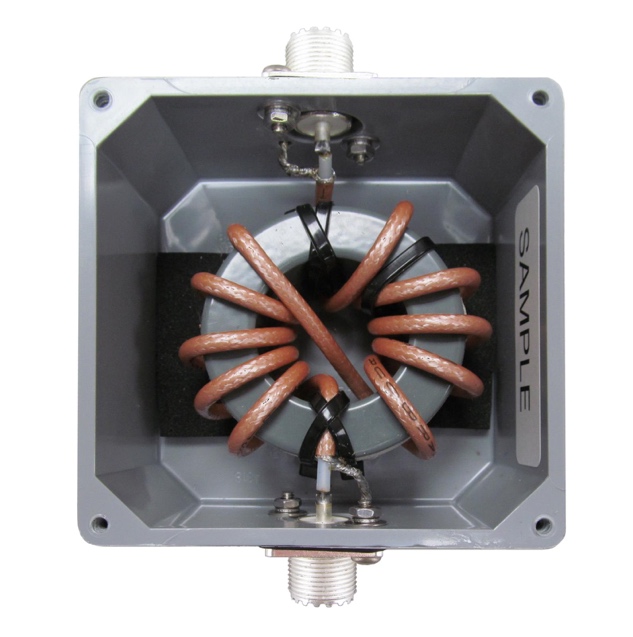
(Image/DX Engineering) - DX Engineering Dual Impedance Antenna Transformer
- DX Engineering Vertical Antenna Feedpoint Cables
- DX Engineering RG-8X PL-259 Low-Loss 50-Ohm Coax Cable Assemblies
- DX Engineering Ferrite
- DX Engineering Single-Band Dipole Antenna Kits

(Image/DX Engineering) 
(Image/DX Engineering) DX Engineering also provided:
- Icom IC-905 VHF/UHF/SHF All Mode Transceiver
- Icom CX-10G 10 GHz Transverter
- Mastrant Antenna Support and Guy Line Rope
Sable Island QSL Cards
DX Engineering was also a supporter of the March 2023 CY0S Sable Island DXpedition, which logged more than 84,000 QSOs during operation on this sparsely populated, smile-shaped Canadian island about 190 miles east of Halifax, Nova Scotia.

(Image/Public Domain) 
QSL card from the DX Engineering-sponsored Sable Island 2023 DXpedition. (Image/CY0S) Here is some of the gear the DX Engineering team provided in 2023:
- Patented DX Engineering Radial Plates
- DX Engineering Rope Guying Earth Anchors
- DX Engineering Rope Hardware Kits
- DX Engineering Vertical Antenna Guying Kits
- DX Engineering Premium Radial Wire
- DX Engineering Saddle Clamps
Mark, W8BBQ, DX Engineering customer/technical support specialist, made contact with the CY0 DXpedition in March 2011 (40/20/17/15M SSB). The card provides an excellent look at Sable’s unusual shape as well as a photo of the island’s feral horses walking in procession.
The Sable Island National Park Reserve places the island’s population of these wild horses—known for their thick, shaggy coats—at about 420.

(Image/DX Engineering) 
(Image/DX Engineering) Tom, KB8UUZ, DX Engineering technical writer, reached AA4VK/CY0 on 12M SSB in October 2012. In November 2002, he received the QSL card below from CY0MM after contacting them on 15M SSB.

(Image/DX Engineering) 
(Image/DX Engineering) Visit DXEngineering.com for everything you need to upgrade your station to make sure you’re ready when entities like Sable Island are on the air.
You’ll find transceivers, antennas, amplifiers, CW keys and paddles, headsets and speakers, reference books like “Ham Radio DX: A Complete Guide,” and much more.
Editor’s Note: Every month, DX Engineering features QSL cards from our team members’ personal collections. To highlight upcoming DXpeditions, we’ll be displaying a few of our favorite cards along with details about what it took to make these contacts. We’re excited to share some of the special cards pulled from the thousands we’ve received over the years. We look forward to seeing your cards as well!
The post It’s All in the Cards. Wrap-Up of the CY0S March 2026 Sable Island DXpedition (Video) appeared first on OnAllBands.
-
D60DX – Comoros
[QRV / AUDIO] – For approximately the next 30 days, Ivan UR9IDX will be active from Comoros as D60DX. QTH: Mitsamiouli, northwest coast. He operates CW and SSB on the HF bands; no FT8. QSL via his CT9 address in Maderia. No LotW or eQSL.
-
Arctic Legends IOTA DXpedition
The Arctic Legends DXpedition team (RT9K) plan on activating the follow IOTA: — Chaichiy Island, EU-168 (as RI1PC) during July 4-7. — Vize Island, AS-055 (as RI0BW) during July 12-16. — Ugedineniya Island, AS-057 (as RI0BU) during July 18-21. — Isachenko Island, AS-050 (as RI0BI) during July 23-26. The journey will last 31 days, travelling […]
-
Open HamClock Backend now Independent of Clear Sky Proxy Data
The following is a message from Open HamClock Backend contributor Chris Smith (G1FEF), with light editing by K4HCK:
Open Hamclock Backend is now fully independent of the original source and does not proxy any data from the Clear Sky Institute server. When the original backend server goes offline in June, anyone using OHB will find their HamClock will continue to work. We’ve also made some improvements over the original, especially in terms of CPU and memory use. It is now more efficient, so anyone hosting it on their own hardware will see instant improvements.
We have two more items of exciting news to share:
We now have a publicly available OHB server which anyone using HamClock is welcome to use. Just point your HamClock to: ohb.hamclock.app:80
This server is dedicated hardware hosted in a commercial datacenter and is free for all HamClock users to enjoy.
We also now have a website where you can keep track of the latest releases, find instructions on how to use OHB, see who is behind the initiative, as well as how to contact us to provide feedback and ask for assistance:
Source: Open HamClock Backend