Author: NA4DA

  • Young Ham Radio Operator Supports the America250 Celebration

    Young Ham Radio Operator Supports the America250 Celebration

    While many teenagers spend their evenings playing video games or scrolling social media, 14-year-old amateur radio (also known as “ham radio”) operator Micah Sandoval, KB4MPS, was busy this past week making radio contacts across the US. Sandoval participated as part of a special event station supporting the ARRL America250 Worked All States (WAS) Award program, a year-long operating event celeb…

    American Radio Relay League | Ham Radio Association and Resources Read More
  • New Technician Question Pool Takes Effect July 1

    New Technician Question Pool Takes Effect July 1

    On July 1, 2026, a new Element 2 Technician class question pool will take effect for license examinations. VECs and VEs must have new test designs available for use at exam sessions effective that date. 

    The newly revised pool, released in December 2025 (updated and re-released on February 19, 2026) by the Question Pool Committee (QPC) of the National Conference of Volunteer Examiner Coordinator…

    American Radio Relay League | Ham Radio Association and Resources Read More
  • The ARRL Solar Update

    The ARRL Solar Update

     Solar activity has been low with only C-class solar flare activity.

    Region 4465 underwent some decay and only produced a low-levelC-class flare. Region 4469 decayed further and was inactive. Region4470 underwent some growth, but did not increase in magneticcomplexity and was primarily inactive. The largest solar flare of theperiod, a C2.5 on June 17, came from just beyond the west limb withthe ...

    American Radio Relay League | Ham Radio Association and Resources Read More
  • Tom Salzer KJ7TRandom Wire 187: Keeping Every Ham at the Table​Random Wire℠

    Tom Salzer KJ7TRandom Wire 187: Keeping Every Ham at the Table​Random Wire℠

    00 QRV: Are You Ready?

    Walter Cronkite has been a silent key since 2009, so there is now an entire generation who know nothing about him…but I remember him. I remember his calm demeanor. I remember the feeling that this is someone who is telling me the truth. And I remember the origin story of Cronkite becoming a licensed ham. This strongly influenced my decision to seek my license, so Random Wire 187 opens with a thank you to Walter Cronkite KB2GSD (SK).

    RW 187 also brings you:

    • Four new EtherHam articles

    • Some shack notes

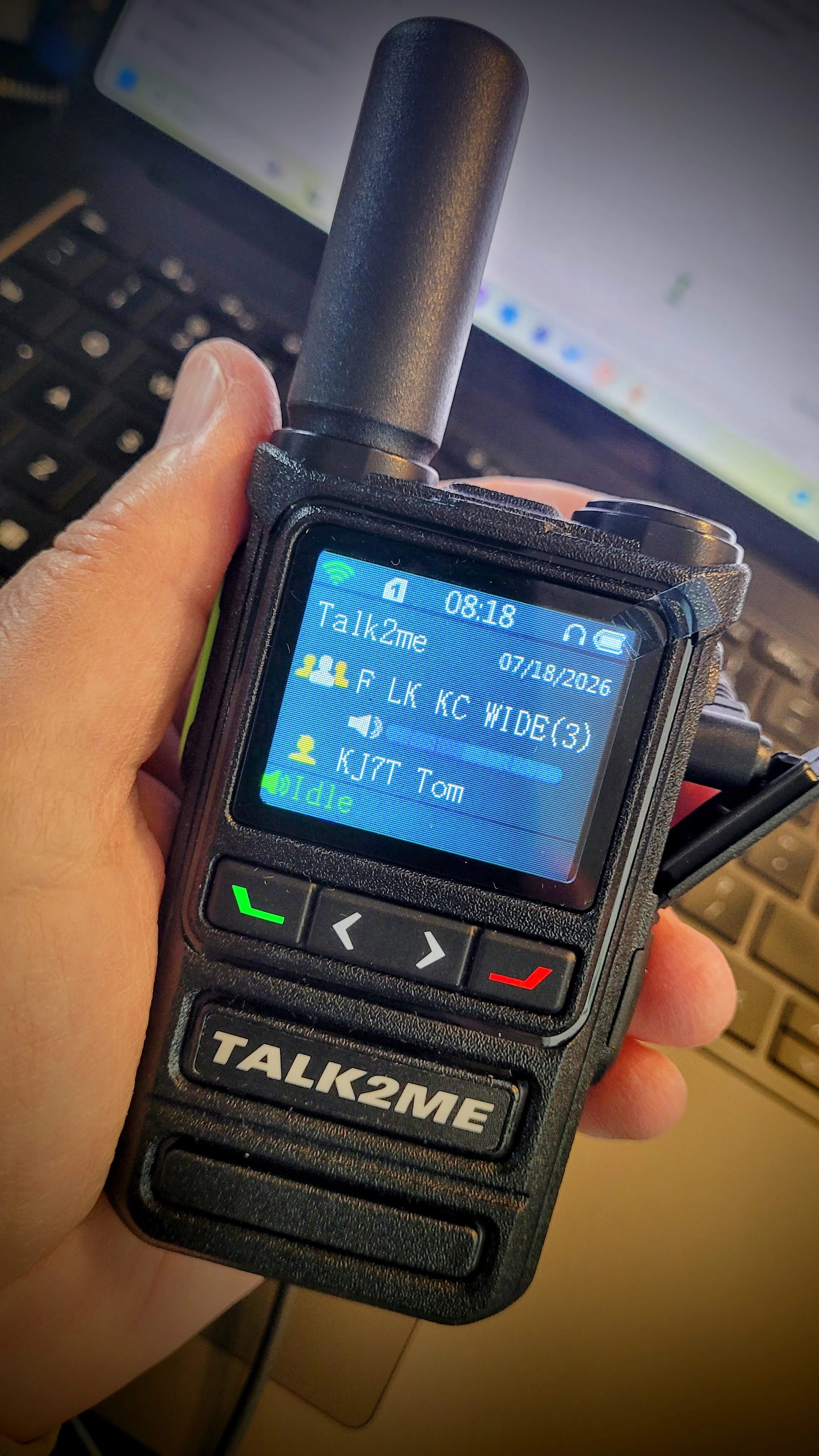
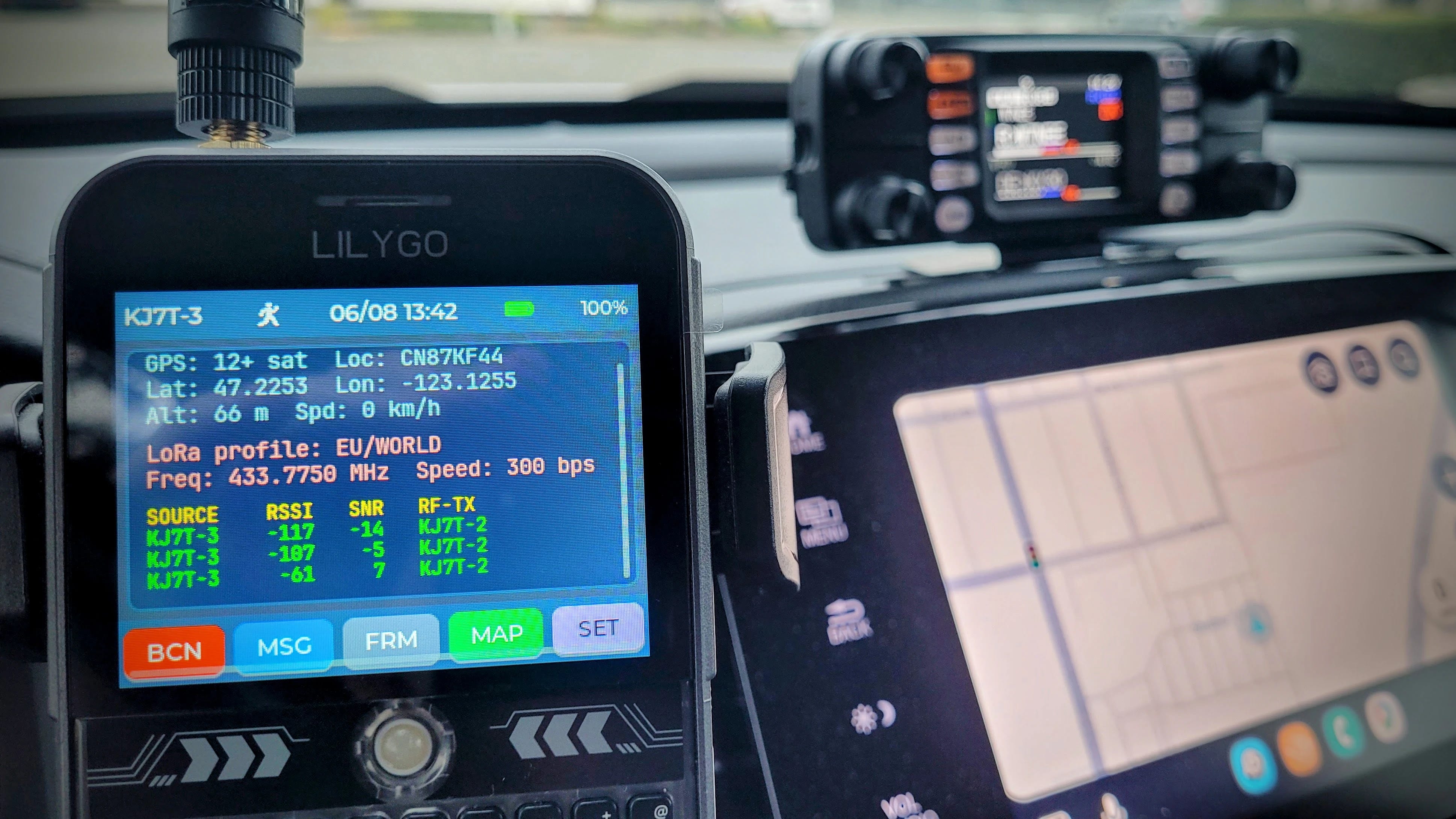
    • An APRS device I ordered

    • The ARRL radio comparison table

    • A new music player on my network-attached storage box

    • Some gadgets (headphones and USB hubs)

    • My Panasonic CF-54 ToughBook needs a battery

    • An opinion piece about using AI as an assistive tool for hams that need some help

    • And the Short Stack of Interesting Internet Finds

    01 Thank You, Walter Cronkite KB2GSD (SK)

    Walter Cronkite was born on November 4, 1916 in St. Joseph, Missouri. His family later moved to Texas, where he spent most of his childhood, and his passion for journalism ignited when he read an article in Boys’ Life as a young boy. He enrolled at the University of Texas at Austin to study political science, economics, and journalism, but left school to take a position at the Houston Post — and never looked back.

    His career accelerated during his time at the United Press, where he served as a World War II correspondent and afterward as Chief Correspondent for the Nuremberg trials. He joined CBS News in 1950 and was named anchor of the CBS Evening News in 1962. The defining moment that made him a household name was his announcement of President Kennedy’s assassination. Over nearly two decades behind that desk, he was the calm, steady voice that walked Americans through the moon landing, Vietnam, Watergate, and a string of national tragedies that might have broken lesser men.

    He is the last news anchor I fully trusted, and I don’t think I’m alone in that. There was something in his delivery — no spin, no wink, no performance. He became something of a national institution, known as “Uncle Walter” to many, with an unflappable delivery and a voice that guided viewers through national triumphs and tragedies alike. On March 6, 1981, he anchored his final newscast and signed off with: “Old anchormen, you see, don’t fade away, they just keep coming back for more. And that’s the way it is.” For me, the world felt a little less reliable after that.

    Now here’s the part that matters to us. At CBS, Cronkite was surrounded by hams — most notably his friend and the program’s radio engineer, Steve Mendelsohn, W2ML, who over time talked about the hobby often enough to ignite a slow-burning interest in his news anchor friend. Cronkite had even purchased a receiver and would listen on the bands from time to time, but he resisted taking the licensing exam because of the Morse code requirement.

    The breakthrough came in the studio one evening before the nightly broadcast, when Mendelsohn needed to test the tone of the audio recorders. He grabbed a copy of the New York Times and sent Morse code with the tone key for ten minutes. After the broadcast, Cronkite walked into the control room and presented his script — on the back of it was the entire text Mendelsohn had sent in code. Mendelsohn and CBS Evening News Director Dick Muller, WA2DOS, exchanged a look and told Cronkite he had just passed the Morse code test. Cronkite laughed and asked when the formal exam was scheduled — only to learn that with two licensed general class operators present as witnesses, he had already passed.

    Weeks later Cronkite took and passed the written test, and became officially licensed as KB2GSD. His first QSO was on 10 meters. He was immediately snubbed by a Midwestern ham who didn’t believe the famous newscaster was who he claimed to be: “That’s the worst Walter Cronkite imitation I’ve ever heard!” followed by, “Walter Cronkite is not even a ham, and if he was, he certainly wouldn’t be here on 10 meters.” Mendelsohn said the two of them laughed about that one for weeks. Walter Cronkite, KB2GSD, passed away on July 17, 2009 at the age of 92 — but this story of hams helping others become licensed is exactly the kind of thing that makes this hobby worth thanking people for.

    02 New on EtherHam

    03 Radios

    “Touch a radio every day!” is my closing tagline for this newsletter. I certainly did that this week. I organized the chargers for various handhelds:

    I discovered that when I rebuilt the hotspot I use for YSF/C4FM, I changed the frequency. Rather than revert to the old frequency, I chose to manually reprogram two radios. I got the FT-3D configured with split TX and RX frequencies but have not completed that task with the FT-5D radio.

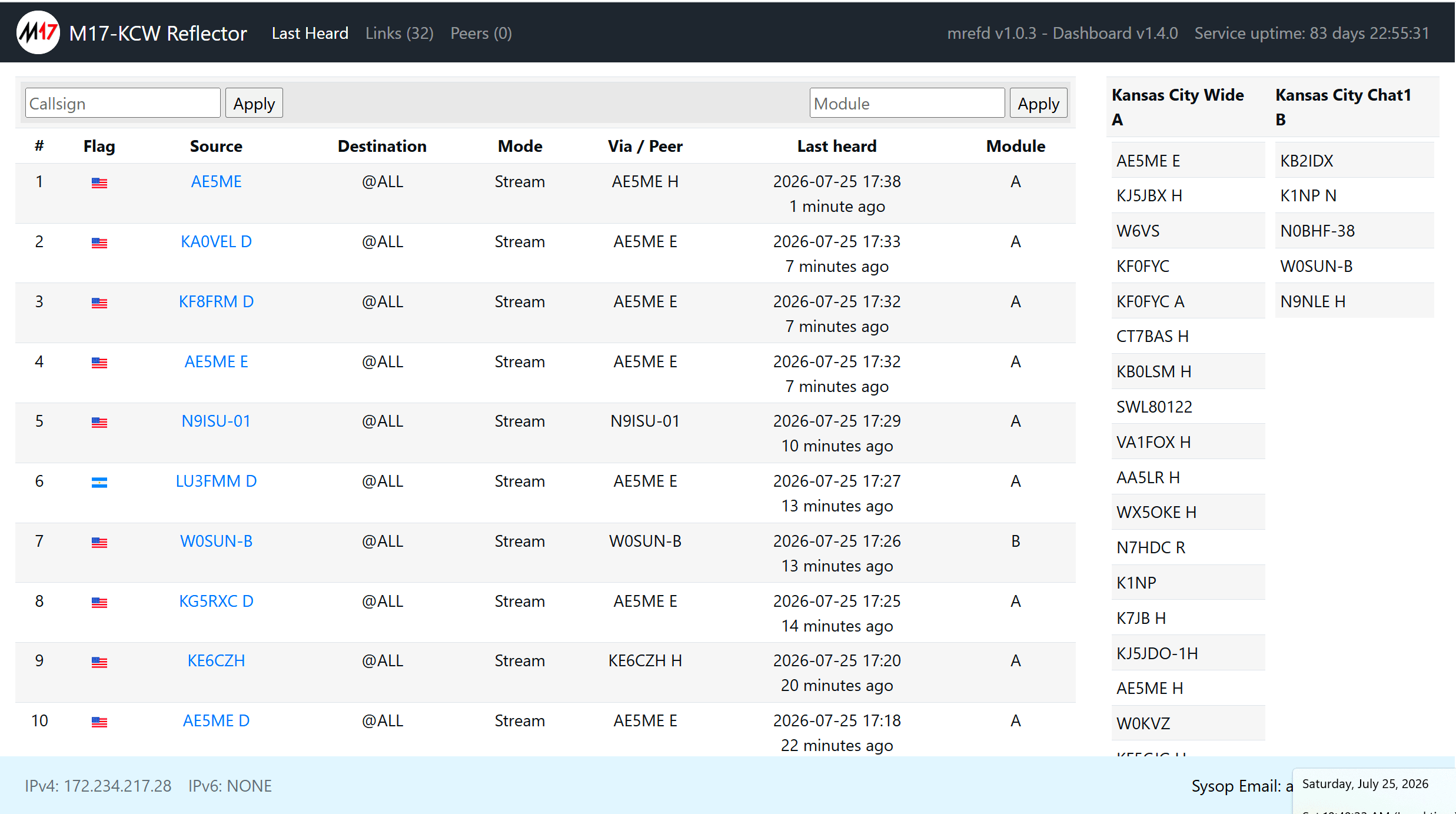
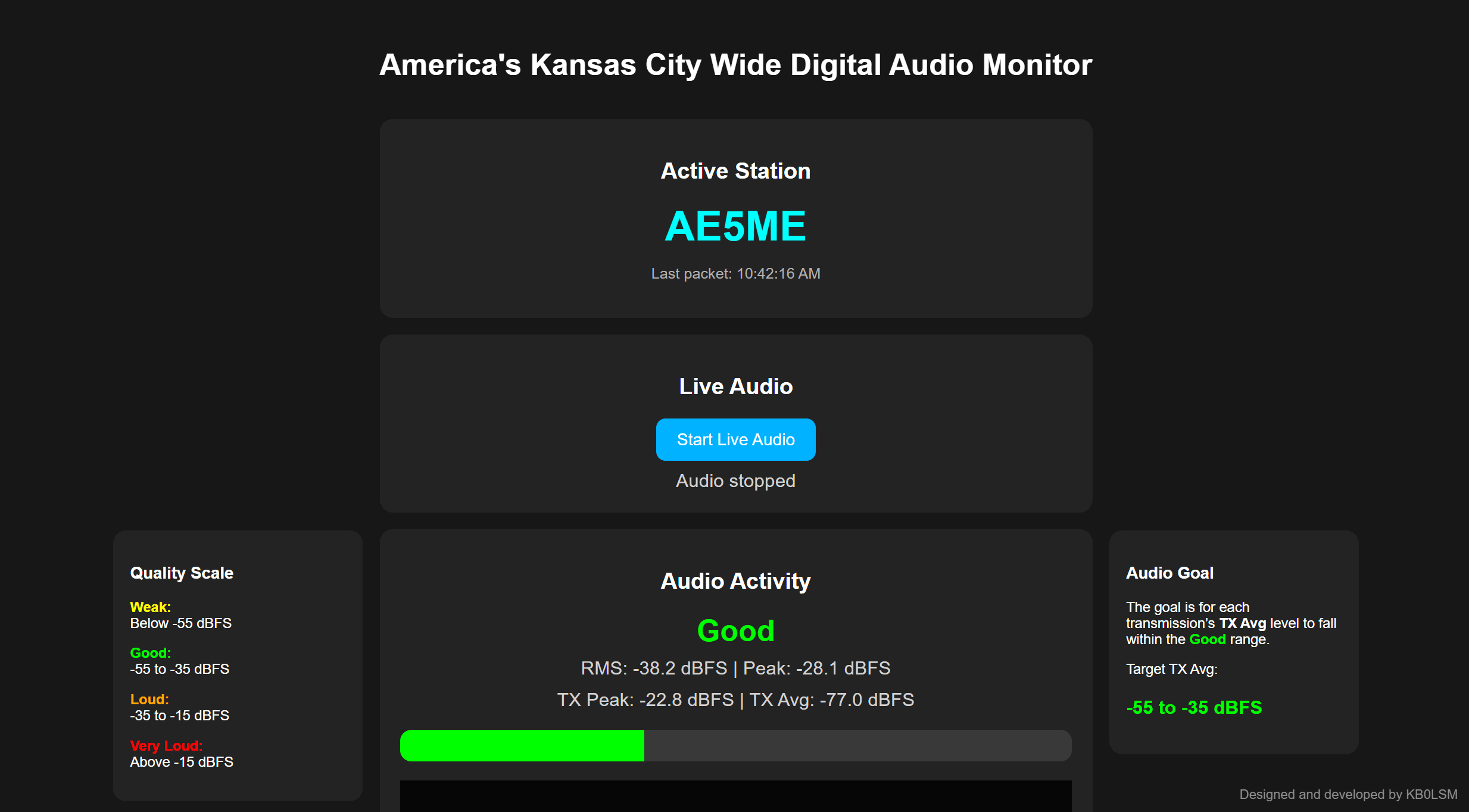
    While I was doing these things, I was listening to our local C4FM repeater, to the W6EK repeater, to America’s Kansas City Wide network, and to the ISS. These regular stops provide good company all week. I also participated in the weekly M17 net held every Saturday on KC-Wide; I always learn new things there.

    A radio friend asked for help so I spent some time testing an installation package for a radio system. Yes, I’m being a little cagey here because this package is not yet ready for prime time, but it is coming along very nicely. I’ll have more on this in a future issue.

    On the HF side, I started organizing my HF rigs, too. I brought multiple Ten-Tec Scout radios with me to the lake house to test and haven’t had time to try them. My tried-and-true Yaesu FT-450D is in a Pelican-brand case next to my desk. The Icom IC-7300 MK2 is in my wife’s room. The other radios are in Harbor Freight cases, ready to be shifted to the garage.

    04 APRS

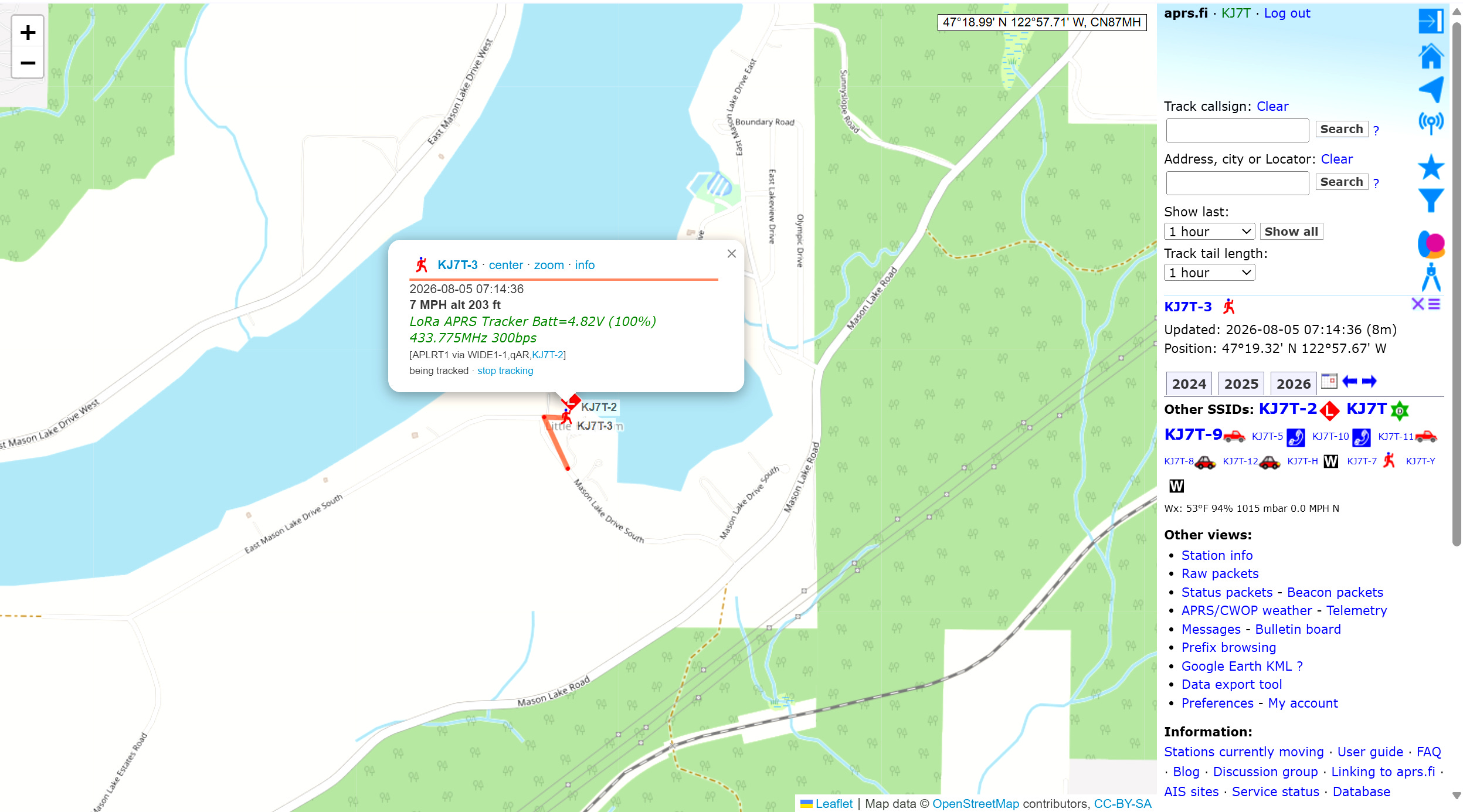
    I’ve been wanting to stand up a small fill-in digipeater, but I rarely have a lot of time to dig into projects like this. That’s why I was very pleased to see the LightAPRS Gateway by QRP Labs. I have one on order and am looking forward to getting it on the air.

    Since I’m using my sister’s lake house right now, I can’t really drill holes in the wall to pass coax through. However, there are a few unused TV cable pass-throughs available. I have the bits and pieces coming to run coax from the galvanized chimney cap to a TV pass-through. While I know the TV F-connector and cable have 75-ohm impedance and we want 50 ohms, I don’t think it is going to make a lot of difference for this application.

    What will make a difference is getting a good mag-mount above the roofline with a reasonable metal ground plane under it.

    Maybe this will work fine, maybe it won’t. As is my way, I’ll try it and let you know how it goes.

    05 ARRL Radio Comparison Table

    This may be useful for radio amateurs: Find the Right Rig: New Comparison Tool for ARRL Members.

    In the screenshot below, I tested by selecting handheld VHF/UHF radios with APRS capability:

    QST Product Review Database

    QST Product Review Database

    As you can see, there are a number of well-known APRS-capable radios missing from the list, including the Kenwood TH-D74/75 radios. Why? Because the database only covers radios tested by ARRL. If a radio wasn’t tested, it’s not in the database.

    Testing by the ARRL is generally thorough, so if a radio is listed, you can have confidence in the summarized results and the detailed review of the device. If a radio is not listed, that does not mean it performs poorly — it just means ARRL hasn’t reviewed it yet.

    06 New Music Player for the NAS

    I got tired of the OwnTone interface — slow, clunky, and not particularly friendly. This week, I installed Navidrome, an open source music player/streamer. It is working quite nicely. Fingers crossed that it continues to do so.

    I could have installed it in a Docker container, but there was no good reason to do so. Instead, I followed the Linux installation instructions to install it directly on the Beelink network-attached storage box. All went well and the interface looks very nice:

    Navidrome dashboard

    Navidrome dashboard

    There are a variety of client applications for iOS, macOS, Android, Linux, and Windows that can pull from the Navidrome instance. It’s nice to have choices.

    I’ve kept OwnTone for now because I have some audiobooks in it. In the meantime, I’ve installed AudioBookShelf as a potential replacement.

    07 Gadgets

    Headphones

    I’m always on the lookout for comfortable headphones that sound good. I’m not an audiophile — my hearing is no longer good enough to hear the very highest notes. I’m also not a bass head, so that opens up possibilities with off brands.

    I am pleasantly surprised by a pair of wired headphones that arrived this week:

    NUBWO Studio Monitor Headphones, Hi-Res Wired Over Ear Headphones with 1/4 inch to 3.5mm Jack, 45mm Drivers, Professional DJ Headphones for Piano Guitar APM Recording Mixing-HD01 (Black) (this is an affiliate link)

    They sound pretty good. I got them on a deal for $50 and so far, I think they are worth more than that. They are comfortable on my head and ears, and the sound is crisp and clear. These headphones come with two cables.

    At this price point, long-term durability is always a question. Nevertheless, I like them. My test? Listening to The Ultimate Yes, a three-disc album set. I’m pushing the volume and not encountering distortion. If you are a Yes fan, you know the bass work is exceptional, and while the bass is probably a little light for some folks, I find it just right. The sound has some sparkle in the upper registers, I can clearly hear the bass line, and the mid-range is ample.

    Even Nickelback and the Bee Gees sound good with these phones.

    USB Hubs

    I bought two USB hubs, one for the Arduino Uno Q and one for my desk. The UGREEN hub I bought for the Q did not work for me, but this Acer model did:

    acer 6 in 1 USB C Hub with Ethernet, 4K@60Hz USBC to HDMI Multiport Adapter, 100W PD Charging, USB A/USB C Data Ports USB C Splitter for MacBook Neo/Pro M5/Air, Acer, iPad, iPhone 17/16/15 (this is an affiliate link)

    The UGREEN got quite warm when it was connected to Ethernet but the Acer 6-in-1 hub is staying nice and cool. More important for me is I’m able to pass data and power through the single USB-C port on the Q. Also, the Acer hub is about the size of my Roku remote control, meaning it doesn’t take up much real estate on the desk.

    The other hub I picked up for the edge of the shelves beside my desk.

    ORICO Clip Docking Station, 8-in-1 Clamp USB C Hub with 4K@60Hz HDMI, 100W PD, Gigabit Ethernet, 4xUSB Port, AUX, 10Gbps Clamp Docking Station for Laptop, MacBook, PC (Adapter Not Included) (this is an affiliate link)

    This device clamps onto the edge of a shelf where it stays close at hand but still out of the way. Unlike many other hubs, this device features a variety of ports. Very handy.

    08 My Panasonic ToughBook CF-54

    I picked this up a few years ago, finding it to be a solid — if unspectacular — performer. However, the batteries (yes, there are two) are not holding a charge for very long. When I pulled them, I saw they are Panasonic-brand batteries which means they are probably original to this ruggedized laptop.

    Time to go shopping.

    Buying specialized batteries online can be a hit-or-miss proposition. In this case, I headed to Amazon and started looking at reviews. I found the reviews not entirely helpful. It feels like there is a lot of gaming of the system going on when it comes to battery reviews.

    Eventually, I picked one that had a very large number of reviews. It wasn’t the highest-rated battery, but a large review count feels more trustworthy than a handful of five-star ratings.

    I had one other surprise with the CF-54. With nice weather, I like to take a laptop or tablet out on the deck from time to time. My Kindle Paperwhite works brilliantly in the sunshine, but my laptops become very hard to see due to insufficient nits (brightness) and their highly reflective screens. Then I tried the CF-54 in full sunlight and was shocked at how well it performed, once I turned the screen brightness up. Of course, this consumes a lot of battery power, which is why (and now the story comes full circle) I need a new battery!

    09 Keeping Every Ham at the Table

    A friend of mine has some special needs that make conventional computer use difficult. Thinking about his situation in the wake of setting up a self-hosted AI agent on my home server, I realized: this could open a door for him that other technologies have kept closed. The agent can speak, listen, remember, and respond — offering an alternative path around the screen and keyboard entirely. That thought led to a bigger one: how many hams are in situations like his, and are we paying any attention to what technology like this could mean for them?

    Here’s the thing: you’ve probably already worked someone over the air who has significant special needs. You didn’t know, because they were smooth. They had figured out how to do what the rest of us unthinkingly do, just by a different route. That legally blind net control operator running a clean, efficient session. The ham with tremor who has adapted their keying. The operator whose memory isn’t what it was but whose passion for the hobby hasn’t dimmed one bit. They’re already in our community. They’re already on our repeaters. And most of us have no idea.

    We don’t talk much about accessibility in the amateur radio community, but we should. The demographics of our hobby are skewing older. A significant portion of licensed amateurs are in their post-retirement years, and with age comes a familiar constellation of challenges you’ll hear on many repeaters: vision changes, arthritis, tremor, hearing loss, cognitive shifts. These are not reasons to leave the hobby. They’re reasons to think harder about the tools we use and the tools we build. Organizations like Blind Hams (blindhams.network) and BlindHams.com have been doing this work quietly for years. The conversation is not new. What’s new is what technology now makes possible.

    What I’ve been experimenting with is called an AI agent. Specifically, I’m trying Hermes Agent, an open-source project from Nous Research. Unlike the chatbots most people are familiar with, an agent is persistent — it remembers what it learned. It can be given tasks and then carry them out autonomously. And critically, it doesn’t have to live in a browser tab on a bright screen. It can live on a server in your shack, accessible through a phone, a voice interface, or a messaging app. I’ve not seen it examined anywhere. Who has explored what this kind of tool could mean for operators with special needs? That gap is what this piece is trying to close.

    That last point is where accessibility enters the picture in a new way. One of the most interesting configurations I’ve been contemplating pairs the agent with Telegram, a messaging platform available on any smartphone. With that connection in place, a ham could interact with an AI agent entirely through voice messages. Speak your question into your phone; the agent transcribes it, thinks it through, and speaks the answer back. No keyboard. No screen that needs to be read carefully. No bright display in a dark room. On the other side of the microphone, you’d never guess the radio operator had any difficulty because the tools help instead of hinder.

    The applications practically write themselves. Imagine an agent that knows your callsign, your equipment, and your operating habits: one that can tell you current band conditions, look up a frequency, summarize what’s happening on a net, or walk you through a procedure step by step in plain language. For someone with macular degeneration, that’s not just a convenience. It’s the difference between staying active in the hobby and stepping back from it. For someone with arthritic hands who finds typing painful, a voice-commanded assistant could dramatically change the calculus of using a radio and logging contacts.

    Dexterity issues affect more hams than we acknowledge. Essential tremor, post-stroke motor changes, the simple stiffening that comes with decades of living: these make keying harder, tuning harder, and interacting with software harder. An AI agent that responds to voice, that can look things up and report back, that doesn’t require precise finger movements on a keyboard, addresses a real need we rarely discuss. The hams managing these challenges mostly figure it out on their own, quietly, without asking for help. We could be doing better by them.

    Cognitive support is another frontier worth taking seriously. Early-stage memory changes are more common than people let on, and they don’t disqualify someone from enjoying the hobby they’ve spent decades building. An agent with persistent memory, one that knows your station, your typical contacts, your preferences, can serve as a patient, non-judgmental assistant that helps fill in the gaps without any stigma attached.

    The self-hosted dimension matters here too. Many hams in this demographic are rightly cautious about privacy, about subscriptions, about depending on services that might change their terms or disappear. A self-hosted agent runs on hardware you own, on your local network, with no data leaving your house. It doesn’t require a monthly fee. It works when the internet goes down. These are not small things for someone on a fixed income who has learned, over a lifetime, to be skeptical of anything that requires a recurring payment and a Terms of Service agreement.

    I don’t have a complete solution to offer yet. The Telegram voice interface I described is still in development on my end, and there’s real work ahead in making any of this genuinely accessible rather than just theoretically possible. What I have is a working experiment, a growing conviction that this is worth pursuing seriously, and a question for the community: who among us has thought about this? The AI tools now exist to make amateur radio more accessible in ways that weren’t previously possible.

    The need is real, and the people who could benefit are already part of our community: running net control, logging contacts, maintaining repeaters, Elmering new hams, doing extra things we never have to think about, just to stay at the table. They deserve tools that make that easier. And the rest of us? We benefit, too. Those are experienced voices, hard-won skills, and decades of institutional memory. We are all made better when we keep the table full.

    10 Short Stack: Interesting Internet Finds

    Radio

    M17

    SDR

    • SDR++ Setup Guide: How to Install and Configure SDR++“For years, SDR# (SDRSharp) was the default recommendation for most SDR enthusiasts. While SDR# remains extremely popular, many hobbyists have migrated to SDR++ because of its modern interface, excellent performance, and support for Windows, Linux, and macOS.”

    • I Built My Own Flight Tracker with a Raspberry Pi For this project, I’m using the FlightAware Pro Stick Plus, which combines the filter, amplifier, and SDR receiver into one USB dongle. You plug it into the Raspberry Pi, connect an antenna, and install the software.”

    Meshtastic

    • Meshyface“Meshyface is a chat-first Meshtastic dashboard that runs as a single Python service and serves a single-page web UI over HTTP.” As near as I can tell, it’s a web interface that shows the topology of a Meshtastic network.

    AI

    11 KJ7T Shack Notes

    • Using the Groups.io Digest script means I can eliminate a bunch of daily emails in my inbox! Find the script on GitHub.

    • A subscriber made some needed corrections to my code in the HFWatch repo, and I appreciate those improvements.

    • The Great Plains Super launch is gearing up for the weekend. Many balloons beaconing on APRS.

    • I’ve been noticing more stations popping up on 6 meters in my HamClock display, so the “magic band” season must be upon us.

    • When I started reading about Tailnet Lock for Tailscale users, I became quite interested…until I realized this is really an edge case that is unlikely to affect my use case. Shared here in case it lands for you.

    • Internet failures are happening more frequently at the lake house than they have for several years, so I’m thinking about a low-cost cellular hotspot for resiliency.

    • You may be aware of a service called Ham.live that allowed net control operators to also check in people over the internet and have side chats during radio nets. Well, Ham.live is going dark but the dev has released the code on GitHub. Want to run your own version? Now you can.

    12 QRT: End Transmission

    I did not get as much writing time in this week as I wanted. Instead, I spent last weekend preparing for a board of directors meeting for my state association — the one meeting each year I think of as The Most Important Meeting. Why important? Because the board debates and decides on our annual budget, and this year, we had to pull from reserves to balance the budget.

    Why did it weigh on me so heavily? The state association exists to serve our 45 member districts, and they in turn deliver programs communities depend on. When the association hits a budget speed bump at the same moment state agencies are being squeezed, the ripple effects are real. That’s the context — and it’s why I didn’t sleep much last weekend.

    The good news? My board adopted the budget as proposed. The bad news? We know we’ll have a tremendously difficult challenge next January, so we’re going to be investing a lot of time and energy preparing for that. Making this even more complicated is the turnover in the state legislature — we won’t know until early November who will be representing Washington State citizens when the Legislature convenes in January.

    Fortunately, I have a lot of radio things and thoughts to keep my mind busy. Thank you for sharing this journey, and as always, please let me know your ideas and feedback. Without you, there would be no Random Wire newsletter or EtherHam.com website.

    73, and remember to touch a radio every day!

  • The ARRL Solar Update

    The ARRL Solar Update

    Solar activity has been at low levels this past week with most of the C-level activity originating from Region 4465, including the largest flare of the week, a C2.6 observed on June 10. There are currently 7 numbered sunspot regions on the disk with Region 4467 decaying to plage.  

    There was a Type-II radio sweep detected by the Radio Solar Telescope Network (RSTN) on June 10. That radio emissio…

    American Radio Relay League | Ham Radio Association and Resources Read More
  • Tom Salzer KJ7TRandom Wire 186: How will amateur radio and AI evolve?​Random Wire℠

    Tom Salzer KJ7TRandom Wire 186: How will amateur radio and AI evolve?​Random Wire℠

    This has been a very thoughtful, introspective week for me. I had a birthday a few weeks ago and my wife’s birthday was a few days ago. In a couple of months, we’ll celebrate 49 years of marriage. I am, quite simply, amazed…and when I look back in time, there is an awful lot to remember.

    But those marker moments are also cause for reflection, and some of my ruminations spilled over into the amateur radio realm. The first piece in this issue of the Random Wire is about where AI is taking our hobby: The Machine Learns to Listen. The second piece is about re-centering the Random Wire and EtherHam, and seeking feedback: The Journal and the Workbench.

    As a fun diversion, I wrote up how to use a small ESP32-powered device to mine for Bitcoin: Playing the Bitcoin Lottery at Home. The crossover with amateur radio? Learning about ESP32 devices in general. The ESP32 is everywhere in the maker/IoT world. I’m hoping the Bitcoin article will give hams a friendly on-ramp through something as immediately tangible as “plug it in and it does a thing.” Bitcoin lottery mining is probably the most motivating possible introduction to the platform — much more fun than blinking an LED. I expect to be learning, and sharing, about the ESP32 platform in future issues.

    I also did some Python coding to pull recent topics from a variety of Groups.io conversations into a one-page summary: Groups.io Digest with Python. I already learned something new from making it easier to harvest this information.

    Yesterday, I went looking for a traffic reporter for YSF/C4FM/WiRES-X, and that took me to a place of realization I didn’t quite expect. The full piece is on EtherHam at Walled Gardens and Unlabeled Mazes: Why C4FM Users Can’t Find Each Other.

    And I fiddled with some radios and added a fan to a Raspberry Pi 4-based AllStar node. Nothing special, but certainly enjoyable. Lots of projects on the bench to work on, including an Arduino Uno Q board — I’m really looking forward to playing with this platform. It has 4 GB of RAM and 32 GB of eMMC storage for just $59. Fingers crossed.

    The bench didn’t slow down just because I was feeling reflective. Let’s dive into the Random Wire topics for this week!

    A Thank You Long Overdue

    Some tools become so woven into how you operate that you stop noticing them. APRS is like that for me. The little icons moving across a map, a beacon confirming a friend made it over the pass, a weather object appearing before the storm does — it’s just part of the fabric of how I think about being on the air. My Yaesu FTM-300DR radio in the pickup truck runs APRS automatically.

    None of that would exist without Bob Bruninga, WB4APR (SK).

    APRS traces back to 1982, when Bruninga wrote his first data map program to plot the positions of U.S. Navy ships on an Apple II computer. A few years later he was running packet communications on a VIC-20 and C-64 to support an endurance race. By 1988 the program had moved to the IBM PC, and in 1992 it got the name we know: APRS. He kept pushing it — not just as a position reporting system but as a live tactical picture of whatever a community of operators needed to share.

    Bob was a retired U.S. Naval Academy senior research engineer who never seemed to retire from the work that mattered. He founded the Appalachian Trail Golden Packet event, fielding APRS nodes from Stone Mountain in Georgia all the way to Mount Katahdin in Maine every July. He wrote. He answered questions. He kept the vision alive long after he could have handed it off and walked away.

    Bob passed away on February 7, 2022, at age 73, after a battle with cancer complicated by COVID-19. His key is silent now. The network he built is not.

    I’m lucky to know someone who carries that tradition forward locally. Herb, KB7UVC, is one of those hams who has forgotten more about APRS than most of us will ever learn — and who will actually sit down with you and work through a problem until it makes sense.

    So: thank you, Bob. Thank you, Herb. APRS may mean “automatic” but I know the work to build and support APRS has been anything but.

    This “thank you” section is a weekly feature to share my gratitude and appreciation for radio amateurs that have helped make my journey more enjoyable.

    The Machine Learns to Listen

    Those of us who came up turning dials have watched amateur radio change beneath our hands. The rigs got quieter, then smarter, then started doing things we couldn’t do ourselves. I’ve been thinking about that arc lately — from the glow of a tube radio warming up, to FT8 pulling signals out of noise I couldn’t hear, to what comes next.

    Because something is coming next. Machine learning is already reshaping weak-signal decoding and interference rejection. Further out are transceivers that model your RF environment and learn your operating patterns over time — not radios that operate themselves, but genuinely intelligent partners. The hardware headroom already exists. This is a software problem now.

    I wrote a longer piece about all of this over at EtherHam — where the arc came from, where it appears to be going, and what I think the real question is for our hobby as AI starts showing up in high-end rigs. If you’ve ever felt the particular unease of watching a machine exceed your capabilities, or wondered whether the vintage operators and the SDR experimenters are in conflict or in conversation, I think you’ll find it worth the read. See: The Machine Learns to Listen.

    Exciting News: M17 Audio Over RF

    Jeff AE5ME posted this YouTube video early this week about using Greg W5GGW’s M17 app on iOS with a Mobilnkd TNC4 to send M17 audio over RF, and to receive it in the app from an RF signal. This is a great moment for M17!

    This nine-minute video describes and demonstrates how to configure the M17 app and the TNC4 to send and receive over-the-air M17 audio.

    Jeff’s video was also picked up by the M17 Project.

    The Journal and the Workbench

    I started writing the Random Wire because I wanted to capture what I was doing so I didn’t have to relearn it later. I had been keeping project notes and a radio friend suggested I publish what I was working on because “other hams are having the same problems.” So I did, and I named this journal of my amateur radio explorations the Random Wire newsletter.

    As time went on, the articles got longer and more detailed. Deep dives with plenty of workbench-level detail. Some of them amount to A-to-Z how-to guides. At some point I realized I was writing two different kinds of things: a journal of what I was experiencing, and a workbench record of what I actually did and learned. That’s when EtherHam was born.

    The Random Wire is the journal. EtherHam is the workbench.

    Everything published on both platforms comes from direct personal experience. I built it, or it broke and I fixed it, or I tried something and it didn’t work the way I expected. The knowledge sitting in my head does nobody any good if I don’t share it — and whatever problem I just solved, someone else has already hit that same wall, probably at 11pm with their soldering iron in hand.

    This split in style is not a true dichotomy because the two often overlap. You can’t really separate what you are experiencing from what you are doing. But they come at the same territory from different directions, and I think of them as a complementary pairing rather than competing platforms.

    Along the way, I added sections to the Random Wire — band conditions, radio history, a digital news digest — that felt like things a newsletter should have rather than things that naturally belonged here. Good content, wrong home. I’m moving those sections to EtherHam where focused reference material belongs, and the Random Wire goes back to being what it started as: a craftsman’s journal, written at the end of a week at the workbench.

    I wish I knew more precisely how subscribers and readers perceive these two platforms. The available metrics are genuinely useless unless you think total subscribers or page hits tell you something meaningful. I don’t. What matters to me is hearing from you that something I wrote was useful, or saved you an evening of frustration, or pointed you somewhere worth going. That’s the whole measure of success here.

    So here’s what I’d genuinely like to know: when something I’ve written has been useful to you, what kind of article was it? A build walkthrough? A troubleshooting story? A short take on something new? Tell me in the comments or drop me a note. That feedback helps shape what lands on the workbench next.

    Leave a comment

    TIDRADIO TD-H9: More

    Since I’ve always had good luck with programming software and cables from RT Systems, I ordered their programmer and special cable for the TIDRADIO TD-H9. I have two TD-H9 radios. One will probably be largely devoted to APRS work. The other will be for general analog use. Being able to program them both with one program and one cable will be efficient.

    The RT Systems package arrived and I loaded up the programmer on my old ToughBook. However, I was taken aback by the sparseness of the programming interface. I had hoped to be able to configure other aspects of the radio, such as APRS beaconing, through the programmer. I’m not seeing where to accomplish that from within the RT Systems software. This means that to get the radio working correctly for you, you’ll still need to dive into the radio menus through the front keypad.

    It’s easy to enter a frequency, specify whether it is simplex or a repeater frequency with an offset, and set the power level. That is truly more convenient than wading through the menus in the radio. But if you want to enable GPS, turn APRS on or off, and enable beaconing, you’re stuck doing that directly on the radio.

    I don’t regret buying the RT Systems package for the TIDRADIO TD-H9 radio. It works brilliantly for what it is. But I wish it did more than just the basics of frequencies, channels, offsets, and power level.

    Groups.io Digest with Python

    I monitor a lot of Groups.io mailing lists — ARDC, PNW DMR, LinuxHam, TinySA, and a bunch of others — and I got tired of checking them one at a time. So I built a Python script that does it for me. When I want to catch up, it hits the Groups.io API, pulls recent activity from every group on my list, and generates a digest report that opens in my browser with everything ranked by activity and every thread title linked directly to the discussion. It took longer to figure out the API quirks than to write the script, but the result is exactly what I wanted.

    The script is free, requires no external Python libraries, and runs on Windows, macOS, and Linux. I wrote it up in detail on EtherHam — including how to handle subgroups, restricted groups, and scheduling it to run automatically every morning. Grab it at etherham.com or directly from the EtherHamRadio GitHub repo (and thank you to the subscribers who urged me to set up a GitHub space for code like this).

    Listening to W6EK on Baofeng UV-5R Mini

    While grinding up my wife’s morning meds, I grabbed the Baofeng UV-5R Mini transceiver to listen to traffic on the W6EK repeater. I never thought I’d say that I like a Baofeng radio…but I do like this one. It sounds fine, it slips easily into a pocket, and is just a very convenient package to use:

    BAOFENG UV-5R Mini Ham Radio Long Range Handheld Two Way Radio, Bluetooth APP Programming Walkie Talkies 2 Pack, 999CH One-Key Copy Frequency, NOAA Weather, USB-C Charging, Dual-Band, Green (affiliate link)

    I added a stubby antenna to make it even more convenient at home:

    ABBREE Ham Radio Antenna Dual Band VHF/UHF 144/430Mhz 1.96inch AR-805S SMA- Female Long Range Stubby Short Antenna for Baofeng UV-5R Mini 5RM BF-F8HP PRO, K5 Plus, DM32, UV32 Radio Accessories, 2 Pack (affiliate link)

    In this photo, the radio is sitting on the kitchen stove while I listen to the W6EK repeater through my AllScan ANF101 node that is transmitting to the Baofeng.

    Later, while finishing this section, I listened to ASL node 516221 which carries ISS radio traffic, passing through my local ASL node 588418.

    I shared my first impressions of the tiny UV-5R Mini back in February. I continue to be surprised at how much I like this little transceiver.

    B.B. Link Adapter: Last Chance

    If you use an iPhone or iPad and have a Kenwood TH-D74 or D75A transceiver, this alert may be for you. Georges WH6AZ reached out to me last week with an aloha and a note about the last stock of his B.B. Link adapter.

    Meet B.B. Link, the adapter that allows iPhones and iPads to connect to Kenwood TH-D75 and D74 radios via Bluetooth. iOS devices, which are limited to Bluetooth Low Energy (BLE), can’t pair natively with these radios. With this adapter, iOS applications like RadioMail can access the radio’s built-in KISS TNC packet modem for off-grid communication. Simply plug the adapter into a USB-C port for power, turn your radio on, and you’re set.

    Georges authored Transceive, an AllStar app I use on my iMac. Transceive received a rare Random Wire Recommended sticker from me. I like Transceive.

    His B.B. Link product is reaching the end of its production run and he does not plan another run. He writes:

    Nearly two years ago, I introduced the B.B. Link, an adapter that allowed apps like RadioMail, Packet Commander, and now Radio Messenger to use the built-in packet TNC of the Kenwood TH-D74 and TH-D75 radios. At the time, iPhone-friendly ham radio interfaces were scarce, and B.B. Link filled a real need.

    The landscape has evolved. We now have capable audio adapter options such as the Digirig Lite and AIOC, which let software modems interface over audio directly. We also have reasonably priced HT radios like the UV-PRO and VG-N76 that expose their TNCs over BLE.

    I hope radio manufacturers continue this trend and ensure future hardware exposes a TNC, or at least a Bluetooth or Wi-Fi–accessible audio interface, so more people can participate with less friction.

    I never set out to become a hardware maker. I built the first prototype for myself and hoped I might sell the initial batch of 100 to recoup my cost. Demand far exceeded that, and I’ve been humbled by the reception.

    But B.B. Link has always been a handcrafted project. Managing supply chain challenges, tariffs, assembly, testing, order fulfillment, and support has been meaningful work, but also time consuming. It’s time for me to reclaim that bandwidth and focus fully on software development, where I can deliver the most impact for the community.

    With that in mind, B.B. Link availability will end once the current batch sells out. I expect most who want one already have it, but if you need a spare (or know someone who would) now is the moment.

    The firmware remains open source for anyone who wants to build their own DIY version.

    If you use an iPhone or iPad and have a Kenwood TH-D74/D75 radio platform, this is a “last chance” notice to get a useful tool that eases access to the TNC in those radios. I do have a TH-D74A so this notice applies to me, too!

    Playing the Bitcoin Lottery at Home

    A friend of mine has been running a tiny Bitcoin miner on her home network for the better part of a year. She knows — with complete mathematical certainty — that she is almost certainly never going to find a block. She does it anyway. “It’s the cheapest lottery ticket I’ve ever bought,” she told me, “and it never expires.” That was enough to get me curious.

    The device is called a NerdMiner — an ESP32 microcontroller running open-source firmware called NMMiner — available on Amazon for around $22. It draws a fraction of a watt, connects to your WiFi, and quietly submits hashes to a solo Bitcoin mining pool around the clock. Your odds of finding a block are approximately those of winning the Powerball. But the hardware costs less than a tank of gas and runs indefinitely on any USB charger, so the ongoing cost is a few cents a day.

    Setting one up is more involved than plugging it in — the shipped firmware is out of date, there’s a specific pool configuration that actually works for low-powered devices, and there’s one bootloader quirk that will stop you cold if you don’t know about it. I’ve written up the complete walkthrough, including the COM port gotcha that would have saved me time if I’d known it going in.

    If the idea of a perpetual lottery ticket running quietly on your shelf sounds like your kind of thing, the full article is at EtherHam.com.

    Added a Fan to the RPi4 AllStar Node

    My AllStar node 588410, built on a Raspberry Pi 4 platform with an uninterruptible power supply (UPS) hat, was running rather warm. Not the 80°C temperature where the SoC (system on a chip) begins to self-throttle, but much warmer than I liked.

    I bought a very inexpensive 30mm fan from Pi-Shop that was made to fit my tall RPi4 case. It fit perfectly. Even though it is a 5-volt fan, I powered it from a 3.3V GPIO pin on the hat. Why? Because the fan runs slower at 3.3V, and slower means quieter. It is running silently and doing a good job of bringing the 60°C temps down to the mid 40°C range: quite acceptable.

    I’m happy with this small addition to the package. Node 588410 now has the RPi4 and UPS and cooling fan inside a single case.

    During this journey, I learned of a useful alternative to the Enhanced Parrot node 55553, and that is AllStar node 2002. I knew this but had forgotten it until I read this in the SHARI Groups.io group: “…call Allstarlink node 2002, which is a parrot that has a built-in IAX ping diagnostic. If after you connect, it comes back and says ‘your node is unreachable’, then either your port is not forwarded correctly, or something upstream is blocking incoming packets to that port, i.e., CG-NAT.” Node 2002 provides useful information, whether you are testing the accessibility of your node or just checking your transmitted audio volume.

    Walled Gardens and Unlabeled Mazes: Why C4FM Users Can’t Find Each Other

    If you’ve ever keyed up on a WiRES-X room and heard nothing but silence, you’re not alone — and you’re not doing anything wrong. The problem isn’t your radio or your node. It’s that the C4FM ecosystem was never built to help you find where the conversation is happening. This week on EtherHam I went looking for the monitoring tools that should exist for YSF and WiRES-X users — the kind DMR and AllStarLink operators take for granted — and what I found was a more interesting story than I expected.

    It turns out open protocols don’t automatically produce open, navigable ecosystems. Somebody still has to build the town square. WiRES-X and YSF aren’t just two names for the same thing — they’re two fundamentally different systems with different governance, different infrastructure, and different reasons why the tools that would make them navigable never got built. One is a classic corporate walled garden. The other is something stranger: an open protocol that the community never quite organized around…but still could.

    The full piece is on EtherHam. It gets into why this happened, what partial solutions exist, and whether it’s fixable. Spoiler: one side of that answer is more hopeful than the other.

    Weekly Reports Moved to EtherHam

    I’ve moved the Band Conditions, Digital Radio News, and Groups.io Digest reports to the EtherHam website. This week’s post is Weekly Report: June 11, 2026.

    I’ll use the same header image as shown here for each weekly report. That will make it easier to key in on this regular informational feature. In general, I run my routines once a week, on Thursday, for publication by Friday morning.

    Short Stack

    APRS

    Shortwave

    Windows

    AI

    Support

    Occasionally, I remind subscribers that supporting the Random Wire and EtherHam is very helpful. There are many ways to give support as described on the Support EtherHam page, should you choose to do so.

    I’ve been trying to add a summer hat in time for Field Day but my EtherHam store is rejecting the custom embroidery for some reason. Looks like a nicely ventilated booney hat will have to wait until I get that sorted out.

    As I noted several issues back, the location of the EtherHam logo on the Champion sweatshirt was not quite right. I adjusted it and the new location looks better.

    Thank you to all who support the Random Wire and EtherHam. Support doesn’t mean you contributed money — it also means you subscribe and read and comment from time to time.

    And who are EtherHams? We are. Since we all use computers in some aspect of our amateur radio activities, I think we are all EtherHams.

    Home

    I found a box of old compact discs in the closet. It’s a box of memories, really, of the many great times my wife and I shared with music. She was a music educator her entire working life, so music was ever-present in our lives. For many years, I also functioned as her roadie, setting up music concerts, repairing band instruments, and fixing amplifiers and wires. Those are great memories, both of helping my wife and of all of her great students.

    Many of the CDs are so old they don’t have metadata encoded on the disc. When I rip the music to my network storage, it often shows up as Unknown Artist and Track 1, Track 2 instead of names, and doesn’t show any cover art.

    To fix this, I started using Mp3tag to edit the metadata for tracks I’m saving on the new network-attached storage box. This is a bit time consuming, but it also lets me dwell a bit on the songs. (Lots and lots of memories!) After editing the metadata, I open the album in MusicBee and ask it to find the cover art…and it usually does. Then I re-scan my music folder on the NAS to add the album and named tracks to my music library.

    But then I discovered a shortcut — I found I can rip CDs directly into MusicBee. The app does a good job of finding metadata and album cover art as part of that process. I rip the CD to my laptop, then copy the entire folder to my NAS drive and tell OwnTone to rescan my music library. Very easy.

    Music really does touch the soul. When I listen to these songs, I’m remembering where we were, what we were talking about, how we were feeling. What’s more important is that these old songs evoke memories and emotions in my wife, despite her cognitive challenges. It’s truly amazing and I’m happy to help her experience such moments.

    Right now? We’re listening to a two-disc collection of Tom Jones greatest hits. There are a ton of memories embedded in those tunes!

    73, and remember to touch a radio every day!

  • Washington Governor Highlights Amateur Radio Volunteers Ahead of ARRL Field Day

    Washington Governor Highlights Amateur Radio Volunteers Ahead of ARRL Field Day

    Washington Governor Bob Ferguson has issued a video message recognizing the important role Amateur Radio Operators play in supporting communities across the state and encouraging public awareness of Amateur Radio as ARRL Field Day approaches later this month. In the video, Governor Ferguson highlights the critical service radio amateurs provide with communications support during emergencies and…

    American Radio Relay League | Ham Radio Association and Resources Read More
  • The ARRL Solar Update

    The ARRL Solar Update

     Solar activity went from low to high this week. Activity was

    dominated by Region 4455, which produced frequent C-class flaresalongside three significant flare events: an M9.3/Sf on June 1; aswell as an M7.7/1b and an X1.0/1n on June 3.  There are eight numbered regions on the visible disk. Region 4455remains complex, maintaining its anti-Hale configuration anddisplaying a newly developed delta … American Radio Relay League | Ham Radio Association and Resources Read More
  • Find the Right Rig: New Comparison Tool for ARRL Members

    Find the Right Rig: New Comparison Tool for ARRL Members

    ARRL The National Association for Amateur Radio® is pleased to introduce a new member benefit: the QST Product Review Comparison Database. This online tool makes it easier to compare amateur radio transceivers, receivers, amplifiers, and transmitters by allowing users to sort and filter equipment based on their own selection criteria.

    “This tool, introduced by the ARRL Lab, offers a familiar exp…

    American Radio Relay League | Ham Radio Association and Resources Read More
  • Tom Salzer KJ7TRandom Wire 185: reRouter as AllStar node, APRS working on TD-H9, Better home NAS & DroidStar IAX fix​Random Wire℠

    Tom Salzer KJ7TRandom Wire 185: reRouter as AllStar node, APRS working on TD-H9, Better home NAS & DroidStar IAX fix​Random Wire℠

    00 QRV: Are You Ready?

    Welcome to Random Wire 185.

    On the amateur radio side, I’m very pleased to share a positive outcome after a month of trying to get APRS beaconing working reliably on my TIDRADIO TD-H9 handheld transceiver. As is often the case with stubborn problems, the solution ended up being a simple on-off setting, but finding that took extensive trial-and-error testing. It’s a small thing that felt like a very big thing when I finally cracked it

    On the technology side, I’m also happy to share my new network-attached storage (NAS) solution using a Beelink ME Mini PC. It’s affordable, quick, and should be reliable. This project is well within reach of anyone who runs Linux on a computer, and it’s a great learning opportunity if you’re just getting started.

    Find links to these below in the New on EtherHam section.

    01 Thank You…America’s Kansas City Wide Network

    This week’s thank-you goes to the team behind America’s Kansas City Wide Network — one of the most reliably busy watering holes on the digital amateur radio scene. Dedicated volunteers keep the lights on, and a very active group of regulars keeps it from ever getting too quiet.

    I tune in when I travel. There’s a Portland repeater on the network, which means I can monitor and participate whenever I’m in range — a small thing that makes a long drive considerably more interesting. What I especially appreciate is that KCWide hasn’t stood pat. They’ve linked an M17 instance, extending a warm welcome to the new kid on the block. That kind of openness matters.

    If you haven’t found your way to KCWide yet, consider this your invitation. Thank you to everyone who keeps it going.

    02 New on EtherHam

    It was a very satisfying week with several big wins.

    The TIDRADIO TD-H9: A $70 APRS Radio Worth the Effort

    The TIDRADIO TD-H9: A $70 APRS Radio Worth the Effort

    The TIDRADIO TD-H9: A $70 APRS Radio Worth the Effort

    The TIDRADIO TD-H9 offers 10 watts, VHF/UHF, AM airband, a built-in TNC, GPS, APRS, Bluetooth, and a spectrum analyzer for around $70. The hardware delivers on that promise. Getting APRS automatic beaconing to work reliably, however, took two radios, weeks of testing, packet log analysis, and a lot of time on aprs.fi. The culprit turned out to be an undocumented interaction between two settings — and once identified, it was a one-sentence fix. This is what I learned, so you don’t have to learn it the hard way.

    The full writeup is on EtherHam: settings, firmware notes, real-world packet data, and more. Make the jump to Getting APRS Working on the TIDRADIO TD-H9 for the details.


    An AllStar Node on the Seeed reRouter CM4

    The Seeed Studio reRouter CM4 1432 is a compact mini-router built around the Raspberry Pi Compute Module 4 — and unlike standard Pi builds, it stores its operating system on onboard eMMC flash rather than a microSD card. For AllStar node builders who’ve lost a node to card corruption, that’s a compelling detail. This article walks through converting the reRouter from its factory OpenWRT installation to Raspberry Pi OS, installing ASL3 on Debian 13, and building a fully functional AllStar node — including UCI radio interface setup and thermal testing of the passive cooling system.

    Read the complete article: An AllStar Node on the Seeed reRouter CM4.


    Retiring the Pi 4: Building a Better Home NAS with the Beelink ME Mini

    Retiring the Pi 4: Building a Better Home NAS with the Beelink ME Mini

    Retiring the Pi 4: Building a Better Home NAS with the Beelink ME Mini

    The Beelink ME Mini is a purpose-built NAS mini PC that competes directly with a Raspberry Pi 5 kit on price but wins decisively on performance, thermal design, and expandability. It ships with an Intel N150 processor, 16GB LPDDR5, a 1TB NVMe, dual 2.5GbE ports, and six M.2 slots — all in a compact enclosure with a substantial internal metal heatsink and a built-in power supply. If your Pi-based NAS is running out of steam, this is worth a serious look. Here’s my experience migrating a home NAS and OwnTone music server to this platform, running Debian 13 and OMV 8, including the gotchas worth knowing before you start.

    Visit Upgrading the Home NAS: From Raspberry Pi 4 to Beelink ME Mini for more.

    DroidStar IAX Still Broken — But the Fix Exists

    DroidStar IAX connections

    DroidStar IAX connections

    DroidStar’s IAX/AllStar connection mode stopped working for many users in early 2026 — the Connect button simply does nothing. This article traces the bug to its root cause, tests available prebuilt Android APKs, and then builds DroidStar from source on a Raspberry Pi 4 utility machine to confirm that the fix is real, the IAX handshake works, and the problem is that nobody has shipped a working Android build yet.

    Learn more at DroidStar IAX Connections: Broken Builds, a Working Fix, and a Rabbit Hole Worth Falling Down.

    03 Gadgets

    USB Cable Tester

    I got a little frustrated last week trying to find a USB-C cable that carried data. It seemed like every cable I pulled out of the box was a charge-only cable.

    Time for a cable tester. I ordered this one, even though it requires the user to interpret the LED lights displayed when testing:

    Treedix USB Cable Tester USB Cable Checker Data Wire Fast Detection for Type-C, USB-A 3.0, Micro-B 3.0, Micro-B 2.0, Mini-B 2.0, and for Lightning Cables by Checking the LEDs (this is an affiliate link)

    It is rated 4.5 stars by more than 100 users. For $19, I think this will save me a whole bunch of frustration. There is a less expensive version with clear acrylic panels and open sides, but since this will get tossed in the radio bag, I was more comfortable with an enclosed case.

    Marking tested cables was the next problem — I didn’t want to test the same cable twice. I thought about heat shrink, but that seemed like overkill. Colored electrical tape would work, but cables hit the floor and tape ends lift, collecting lint and dirt. The solution I landed on: red and green gel nail polish. Charge-only cables get red. Data-capable cables get green. I cure the dots with the UV flashlight I carry when I travel.

    365nm Black Light Flashlight, UV Flashlight Rechargeable with LCD Display, Powerful Ultraviolet Lights for Pet Urine Detection, Resin Curing, Rockhounding, Scorpion, Uranium Glass, A/CLeak (this is an affiliate link)

    That seemed to work. It took about a minute of exposure to cure the nail polish dots to the point they were firm and no longer tacky.

    Curing the dots

    Curing the dots

    And I have another use planned for the red polish. Mom used to love going trolling for trout. Her favorite lure was a Dick Nite spoon. She always used a spot of red polish to put an eye on her lure. She called it her “Tricky Dicky” lucky lure. Good memory.


    Earbud for AllScan UCI80M

    I went looking for a way to monitor conversations on AllStar using one of my nodes configured with an AllScan UCI80M USB Communications Interface. The UCI80M uses a Motorola M1 speaker-mic connector. I found an earbud with an M1 connector and gave it a try. These are common in K1 (Kenwood) configurations but harder to find in M1.

    Earbud with PTT mic for M1 connection

    Earbud with PTT mic for M1 connection

    It works. The push-to-talk mic tested as “good audio” with the Enhanced Parrot on node 55553. Transmitted audio isn’t studio quality, but it’s understandable.

    More interesting is the earbud itself. It’s a single unit with a rubbery tip that fits comfortably in the ear canal. When I first plugged it in, the audio level was painfully high and distorted.

    In AllStar, TX and RX audio levels are set in /etc/asterisk/simpleusb.conf. It’s somewhat counterintuitive: the audio you hear is set on the TXMIXASET line, and the audio you transmit is set on RXMIXASET. I worked my way down from the default of 500 — tried 400, 300, 100, 50. Still too loud. At 40, still too loud. At 30, clear and comfortable. Below 30, no output at all. So 30 it is.

    The package also included an acoustic tube earbud. I normally skip those — never liked how they feel — but tested it anyway. Surprise: barely any audio at 30. Cranked TXMIXASET back to 500 and got excellent, clear audio at a comfortable level. Pro tip: if the standard earbud is too loud, try the acoustic tube before fiddling with the config. Also, if you’re getting static, try rotating the plug slightly in the PTT housing.

    TXMIXASET setting in simpleusb.conf

    TXMIXASET setting in simpleusb.conf

    2 Pin Earpiece M1 Ear Piece Headset Ptt Mic to 3.5mm Aux Audio Earphone for Motorola cp100 cls1410 gp300 cp200d bpr40 CLS 1110 1410 cp185 dlr1060 rdm2070d dlr1020 rmu2040 rdu4100 dtr700 (this is an affiliate link)

    This device has only 3.1 stars on Amazon, but from a sample of seven reviews. I thought it was worth the gamble at around $20. I’d give it 3.5 stars myself — maybe 4 if it proves durable. It does exactly what I needed: a way to monitor and participate in AllStar conversations through the UCI80M.

    Fair warning: overmodulated stations really punch through when the speaker is millimeters from your eardrum. Great in a noisy environment. In a quiet room, bring TXMIXASET down.

    04 Run Your Own NotebookLM — Locally

    If you’ve used Google’s NotebookLM, you already know the appeal: drop in a document, ask questions, get answers grounded in your actual source material rather than whatever the model feels like inventing.

    Open Notebook is the self-hosted version of that idea. Same workflow — upload PDFs, web pages, or documents, chat with an AI about the content, generate notes and summaries — but running entirely on your own hardware, with your choice of AI provider. It supports Ollama, so if you’re already running local models, you’re most of the way there.

    I spun it up in a morning in an LXC container on my Proxmox server, pointed it at my existing Ollama instance, and had it ingesting a budget document within the hour. The install is Docker Compose — two containers, a config file, and you’re done.

    The Open Notebook project is at github.com/lfnovo/open-notebook. If you’ve got a home lab and you’ve been curious about NotebookLM but prefer keeping your documents off Google’s servers, this is worth your time.

    05 Digital Radio News Digest

    Digital radio news is a bit light this week.

    Recent developments in amateur radio digital voice and VoIP linking modes include updates to AllStarLink, with improvements to QSO One stability and the introduction of YAAMon, a new AllStarLink monitor. The MMDVMHost repository has also seen an update, and the app_rpt repository has received several commits, including fixes for call failures and additions to non-blocking PTT kick pipes. The Amp-ASL amp-server repository has been working on a custom Pi image to streamline installation.

    06 Band Conditions This Week

    With a solar flux of 144 and a sunspot number well into the triple digits, the higher HF bands are in fine shape right now — 10 through 20 meters should reward anyone willing to spin the dial, and DX contacts are well within reach. Today’s K-index of 1 points to quiet, stable conditions, but don’t let that lull you into thinking it’s been a smooth week; a max K of 4.3 tells us the geomagnetic field threw a minor tantrum at some point, likely giving the polar paths a rough go and knocking the low bands around for a stretch. If propagation felt frustrating earlier in the week, today’s the day to get back on and make up for lost time.

    • Solar Flux Index (SFI): 144.0 — Good — solid conditions on 10m through 20m

    • K-Index (current): 1.0 — Quiet — excellent conditions

    • K-Index (7-day max): 4.3 — Minor storm — HF disruption likely

    • A-Index: 42 — Minor storm (predicted)

    • Sunspot Number (NOAA/USAF daily): 211

    • Sunspot Number (SIDC daily EISN): 149

    • Active Solar Regions: 14

    Source: NOAA Space Weather Prediction Center (swpc.noaa.gov) + SIDC (sidc.be)
    Generated: 2026-06-04 21:03 UTC

    07 Radio History

    Sixty-three years ago this week, radio amateurs put their second satellite into orbit.

    OSCAR 2 lifted off from Vandenberg Air Force Base on June 2, 1962, riding piggyback as ballast on a Thor-Agena B rocket carrying a classified military reconnaissance satellite. The irony is hard to miss — while the Air Force was running a spy mission, a group of volunteer hams had quietly hitched their homebuilt spacecraft along for the ride.

    OSCAR 2 was nearly identical to OSCAR 1, which had launched just five and a half months earlier in December 1961. The team had learned from the first flight. They adjusted the thermal coatings to keep temperatures lower inside the spacecraft, tweaked the temperature-sensing system to get better data as the batteries aged, and dropped the transmitter power from 140 mW to 100 mW to stretch battery life. The satellite operated for 18 days before going silent, re-entering the atmosphere on June 21.

    What’s remarkable isn’t the hardware — it was a simple battery-powered beacon in a metal box — it’s what it represented. By June 1962, amateur radio operators had already placed two satellites into orbit, making them among the earliest civilian participants in the Space Age, arriving only four years after Sputnik. That Project OSCAR lineage runs in a direct line to today’s AMSAT satellites, CubeSats, and the ARISS station aboard the ISS.

    Not bad for a bunch of volunteers working on weekends.

    08 Short Stack

    Digital Radio

    SDR

    LoRa

    Antennas

    Gadgets

    AI

    Security

    09 Privacy-Focused Document Software

    Do you need an alternative to Microsoft 365 or Google Workspace? If so, you’ve probably looked at LibreOffice and OnlyOffice, or maybe Nextcloud. These are document creation and editing packages, sometimes self-described as content collaboration systems.

    Something new is on the near horizon: Euro-Office. This software is based on OnlyOffice but comes with a consortium of vendors backing it. It is being updated for the European market with an initial release date of June 9.

    Euro-Office doesn’t have the email offering that draws people to M365 or GW. However, it appears that Office.EU will combine Euro-Office and email into a Europe-focused suite, compliant with GDPR and avoiding the U.S. Cloud Act (but I’m not a lawyer, so don’t bank on this conclusion). If all that sounds attractive to you — and it kind of does to me! — head over to https://office.eu/.

    If privacy-centered software is your cup of tea, you may also want to think about where your website is hosted. Hetzner, based in Germany, is an affordable option with a solid reputation.

    10 If I Win the Lottery: Coffee, Curiosity, and Radio

    I’ve often thought: if I win the lottery, I’ll build a clubhouse for my local amateur radio club. It would be great to have a space with different operating stations, maybe some workspaces for making and repairing gear, and since we’re hams: coffee — lots of coffee.

    This is purely a thought experiment. As I’ve pondered this, I’ve started to wonder if this might be a way to attract new people into the hobby: a coffee shop with amateur radio operating stations. Certainly the local hams would visit, so we’d often have licensed, experienced people available. But would younger people visit? Maybe — if it was positioned as a coffeehouse where makers and radio operators were doing things with hardware and software and radio waves.

    Is that enough of a draw? I don’t know. I do know it’s different than what I hear in conversations about attracting people to the hobby. Clearly, what brought licensed hams into the community over the years has varied. Service in the military is one group of people. Silicon Valley folks another. I’m a Sputnik/Apollo kid, so NASA and hearing radio coming to Earth live from space was a big deal for me. Later, we’ve seen preppers getting licensed.

    People in each of these groups saw amateur radio as something they could use to do something with. And for most of them, worldwide communication was not something they carried around in their pocket. That has changed. Getting connected is no longer the draw — the smartphone solved that problem decades ago, and younger generations have never known a world without it.

    But maybe, just maybe, connecting locally over a cup of coffee in a tech-oriented space would pull the curtain back on this mysterious thing called amateur radio, at least for some people.

    Will I ever do this? I would have to buy lottery tickets, and that’s something I almost never do. But if I did, and if I won, I think creating a radio maker space with coffee would be a grand thing to do. The best part: I’d never run out of coffee.

    11 QRT: End Transmission

    New Mini PC by HP

    HP announces new OmniDesk Mini PC: World’s first “AI Mini PC” with Intel Core Ultra and Thunderbolt Share — I do love me a good PC by HP. No idea how much this is going to cost (undoubtedly too much) but might be worth watching for on eBay in a few years!

    The Knack

    I overheard some conversation on the W6EK repeater in California about “the knack.” This brought back memories of how I would disassemble many things in my childhood…and only occasionally getting them put back together again in working order. I share this Dilbert YouTube in case you find the humor entertaining. I do.

    I’m guessing that “The Knack” is a real thing. The disassembly-to-reassembly success ratio in childhood is probably a reasonable predictor of career trajectory in this great hobby of hobbies: amateur radio.

    73, and remember to touch a radio every day!